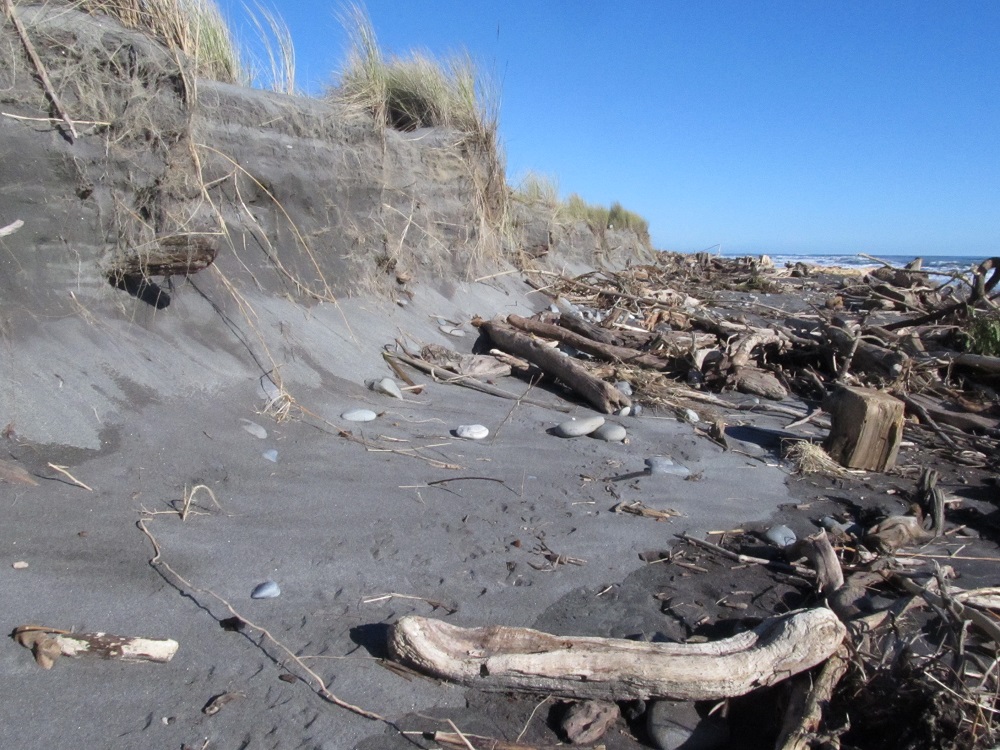
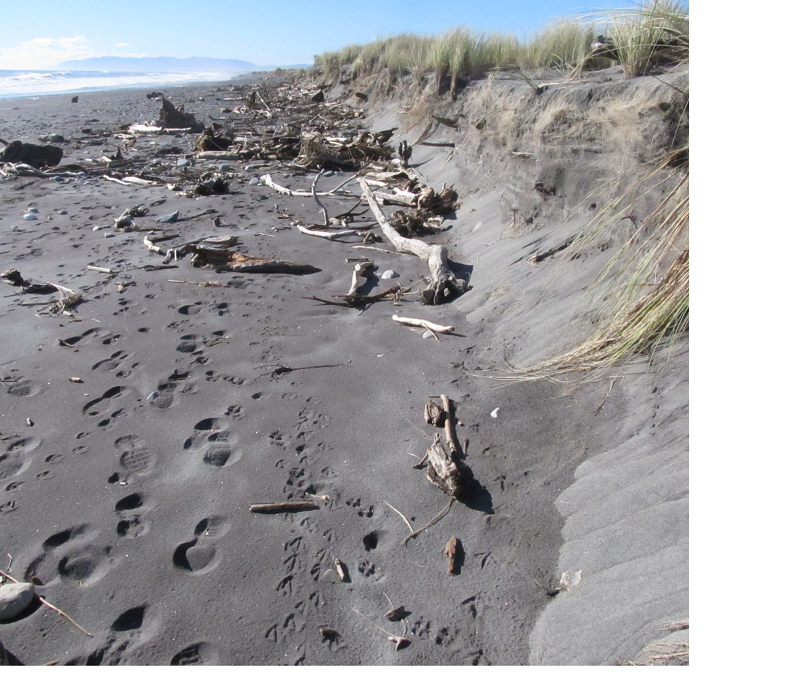
 Massive coastal erosion up and down the West Coast is dramatically reducing the habitat of little blue penguins and obstructing the rare birds’ access to their burrows.
West Coast Blue Penguin Trust chairwoman and seabird expert Kerry-Jayne Wilson says erosion on many sandy beaches on the West Coast has created cliff faces up to 3 metres high. That restricts the places the little blue penguins can come ashore because many areas have become too hard for them to climb.
Department of Conservation Hokitika-based marine scientist Don Neale says erosion and the rockwork to control it have increased on the West Coast. “The often scrubby areas penguins like to nest in are now being eroded and all that they are left with is the farmland behind,” he says. “There are currently quite a few efforts to beat back the sea and some of these responses could also increase the challenges for penguins.”
Blue Penguin Trust coordinator Inger Perkins is concerned the changes put the rare blue penguins’ safety at risk. “Penguins need to look harder for a way up to their burrows and will be out on the beach longer. This makes them more vulnerable to attack from stray dogs.”
Paroa resident Bill Johnson, a trust volunteer, has previously lined access routes with white stone markers to lead the little blue penguins to safe breeding areas. He says a strip of vegetation 100m wide has been eroded between the Taramakau River and Camerons, the worst erosion he has seen in 60 years. Only one dune remains between farmland and the sea in the area that once hosted a large penguin colony, forcing him to keep moving nesting boxes back to safer ground.
A dog-proof fence has also been swept away by the river at Camerons and some dogs have recently damaged a number of penguin nesting boxes, says Johnson, a volunteer for Guardians of Paroa-Taramakau Coast Area.
Trust ranger Reuben Lane says erosion is a natural phenomenon but makes it hard or impossible for little blue penguins to access burrows in some areas. While the birds are able to be fairly plastic in their choice of burrow sites, the amount of coastal development means they have fewer suitable places to nest, he says. “The only thing I think we can do to help is to continue dune restoration work, with no more paddocks going right to the sea, and most importantly, help restore wetlands, swamps, and creek mouths, which stabilize access points and give shelter.’’