We are grateful to have Luisa Salis-Soglio on the team this year. Luisa has been volunteering as our Ranger at Charleston while writing up our blue penguin monitoring data for her Masters. She has provided a report for the season to date.
I feel very blessed and excited to be 2019’s Penguin Ranger and volunteer for the West Coast Penguin Trust. On holiday with my partner from Napier, I bumped into the right people, Manager Inger Perkins and Chair and Scientist Kerry-Jayne Wilson, at last year’s Community Conservation Symposium in Shantytown, presented by the Trust.
Kerry-Jayne knew a couple of my lecturers at my German University (Georg August Universität in Göttingen) and so the plan was made that I would come over in August 2019 to perform the monitoring at the Charleston colonies and analyse some of their breeding data for my Master Thesis. I have been a penguin lover from the age of three so this really is a dream come true.
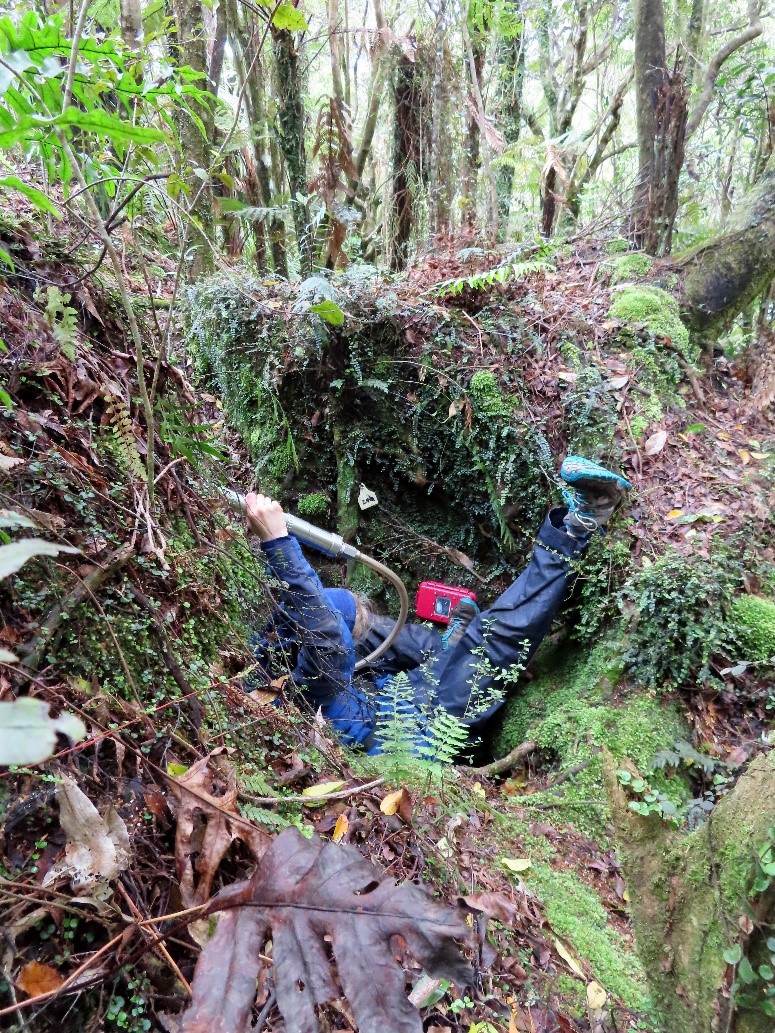
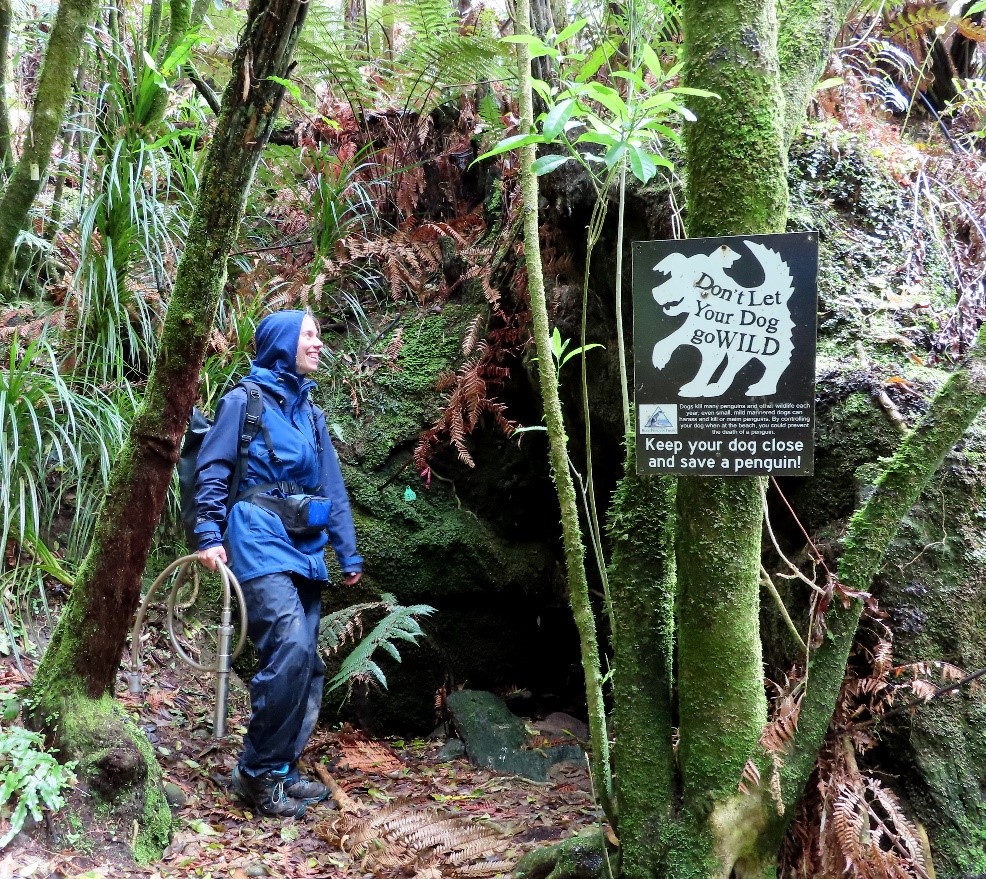
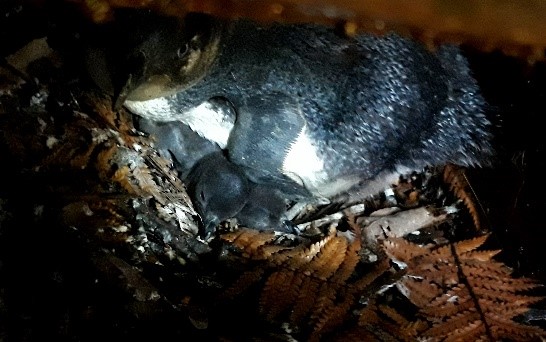
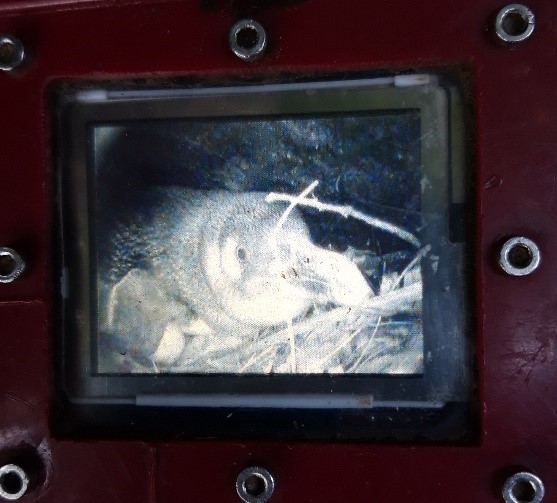
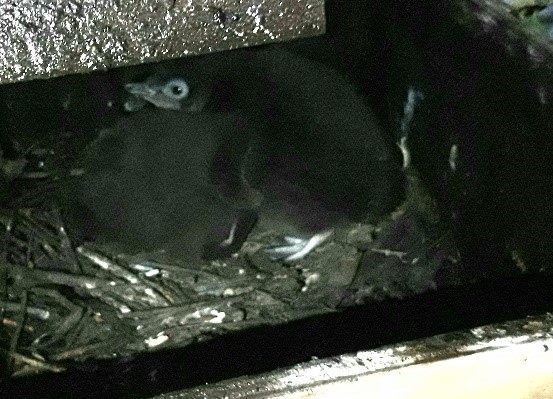
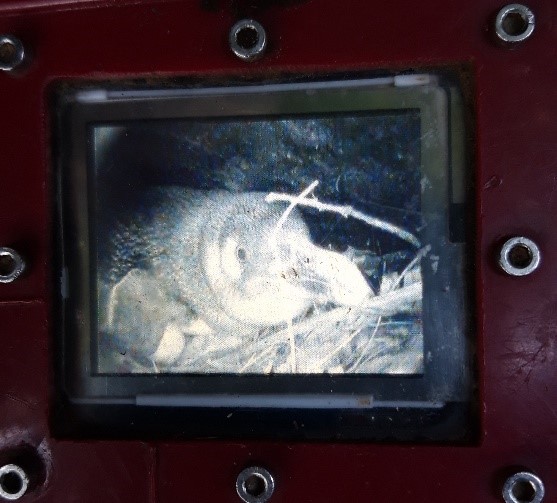
For the past three months I have been checking the burrows and nest boxes of the Blue Penguin colonies in Charleston, first determining the active burrows by looking for the presence of these birds (guano, feathers and fly accumulation) and later documenting their breeding progress.
Unfortunately, it seems that the Charleston penguins are having a rough breeding season this year. We found several dead chicks that had died of starvation and dehydration – as a post mortem report from Massey determined. Also, at two colonies, a number of birds deserted their eggs, a behaviour that occurs when their partner stays at sea for several days and longer than usual. If this happens at the beginning of the egg guarding stage, it may not impact the eggs at all and the returning adult may still be able to successfully incubate its eggs. In our cases, all deserted eggs failed except for one.
On a positive note, 17 chicks have already fledged at the Nile River colony with a few more to come, and two penguin couples, whose first breeding attempts failed, are currently guarding chicks.
At Joyce Bay and Rahui colonies, a couple of birds have returned for their annual moult.
I was fortunate to also experience the penguins or kororā coming ashore at night. I love sitting on a rock and melting into the darkness and wait and sometimes wait and wait and wait longer for the ‘keck, keck, keck’ as the penguins return from a day of fishing, shooting through the water like little jet boats and soon breaking into their squeaky rowing-boat chants. I have heard the chicks standing outside the burrow screaming for a feed with an urgency in their call like that of a hungry (human) baby.
If you are out on your local beach listening for penguins, be mindful not to sit in their way and to use a torch sparingly, as it can damage the penguins’ eyes. Often the moonlight and the stars will give enough light to see what’s going on. Give them time to let them go where they need to go if you share the same way from your hiding spot to your car. And as you drive away, watch out for clumsy penguins, leaping out of the high grass onto the road.
My time in Charleston has nearly come to an end and I will relocate to Hawkes Bay at Christmas. I will continue the data analysis and continue writing my thesis from there. While I have a lot of things to look forward to in Napier, I dread my departure a little. I will miss the peaceful remoteness and the kindness of the West Coasters. Climbing around in the mud, I was in my true element. It will be an interesting change of scenery – going from a wildlife-rich off grid-lifestyle to suburbia. But there will be penguins in Napier too. I have already sniffed them out (one of the skills I have acquired on the job).
I would like to thank the West Coast Penguin Trust from the bottom of my heart for this amazing experience, their trust, ongoing guidance and support! Thanks for teaching me and helping me to become a scientist.