End of spring update from the coastline
Blue Penguin
Breeding:
Monitoring from Punaikaiki to Cape Foulwind is showing a good breeding season. Numbers of breeding pairs is similar to last year, with the exception of 2 pairs re-establishing at our Punakaiki monitored site, where the colony appeared to have been lost.
Two chick nests are dominant with one chick nests representing 20% of breeding attempts. We are entering the final period of the breeding season so hoping Santa keeps delivering the moana kai to complete fledging, for new fishers and feed up the adults before they moult.
Foraging:
In early September, with the help of NZ Penguin Initiative‘s Richard, Thomas and Hanna, 7 GPS loggers were deployed on blue penguins at Nile, Knoll and Rahui colonies. Each datalogger recorded a single foraging trip of a chick-feeding adult. A further 4 deployments were made at Rahui on post-guard chick-feeding adults in mid-October. Further analysis of 2020 dive data and travel data and comparison with previous seasons data will follow. Our data set of breeding season foraging behaviour is growing and we hope to work with others in order to analyse in relation to marine conditions.

Tawaki
Predator Monitoring:
The predator monitoring of three tawaki colonies has finished for the season. Catherine Stewart has performed another sterling effort at Gorge River (where there is no predator management), as have Andre de Graaf at Jackson Head (low predator management through trapping) and Sarah Kivi at Knights Point (1080 management 2019). at Gorge River.
Preliminary results show all sites had successful breeding seasons. Stoats were detected at Jackson Head and Knights Point, with the former colony appearing to having had a sub-colony impacted by stoat predation/disturbance at the egg and early chick stage. Nest footage has been collated and is awaiting analysis.
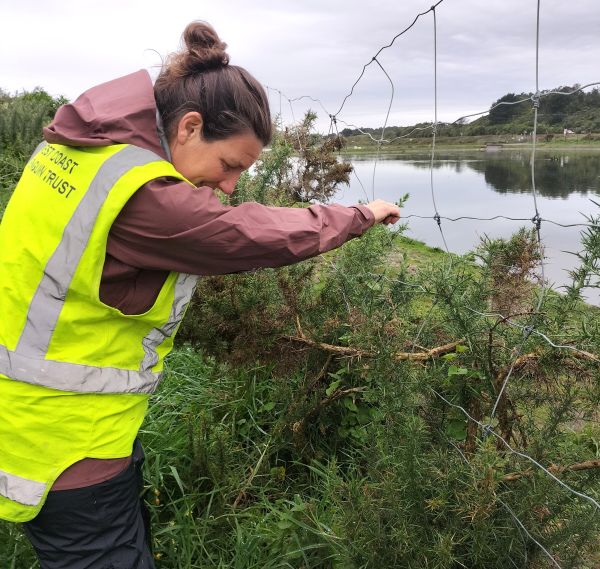
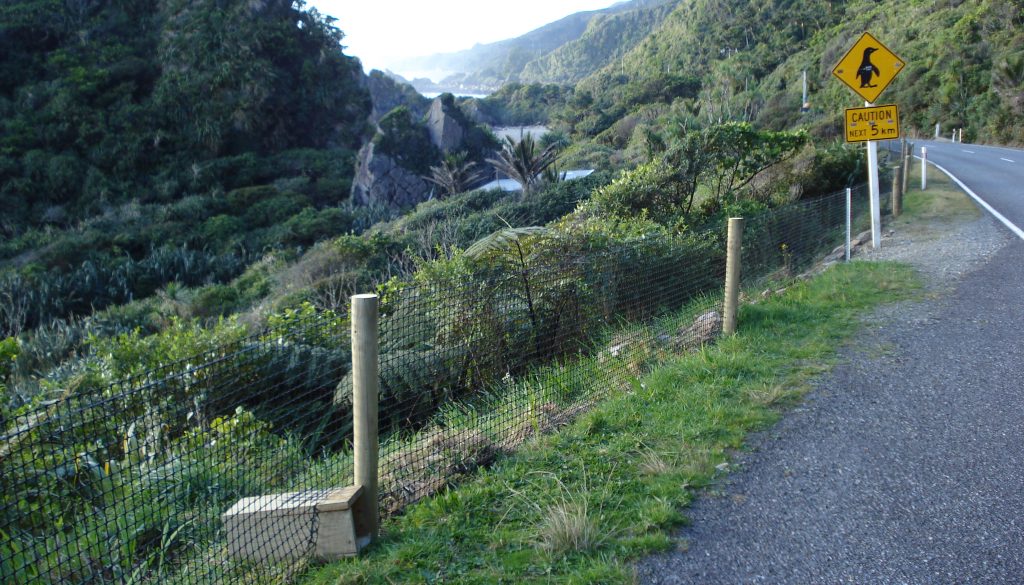 While materials were chosen that would stand up to the harsh coastal conditions, those same coastal conditions are conducive to plant growth! Occasional checks of the fences have been carried out by volunteers and rangers so that any maintenance needs can be identified and remedied. The never-ending need for maintenance is managing the vegetation that can grow through the fence, for example gorse, blackberry and hydrangea, pushing it to breaking point in places, or flop over causing damage from the weight of rank grass, rushes and weeds such as montbretia.
Volunteers recently spent a few hours tidying up the main fence along Woodpecker Bay north of Punakaiki so a big shout out to them - thank you Fiona, Jony, Reef, Katrina, Mandy, Marty, Teresa and Deb! Flax had been pressing down on the fence, but now the fence has been freed up by these wonderful volunteers - and they picked up a fair bit of rubbish too.
While materials were chosen that would stand up to the harsh coastal conditions, those same coastal conditions are conducive to plant growth! Occasional checks of the fences have been carried out by volunteers and rangers so that any maintenance needs can be identified and remedied. The never-ending need for maintenance is managing the vegetation that can grow through the fence, for example gorse, blackberry and hydrangea, pushing it to breaking point in places, or flop over causing damage from the weight of rank grass, rushes and weeds such as montbretia.
Volunteers recently spent a few hours tidying up the main fence along Woodpecker Bay north of Punakaiki so a big shout out to them - thank you Fiona, Jony, Reef, Katrina, Mandy, Marty, Teresa and Deb! Flax had been pressing down on the fence, but now the fence has been freed up by these wonderful volunteers - and they picked up a fair bit of rubbish too.
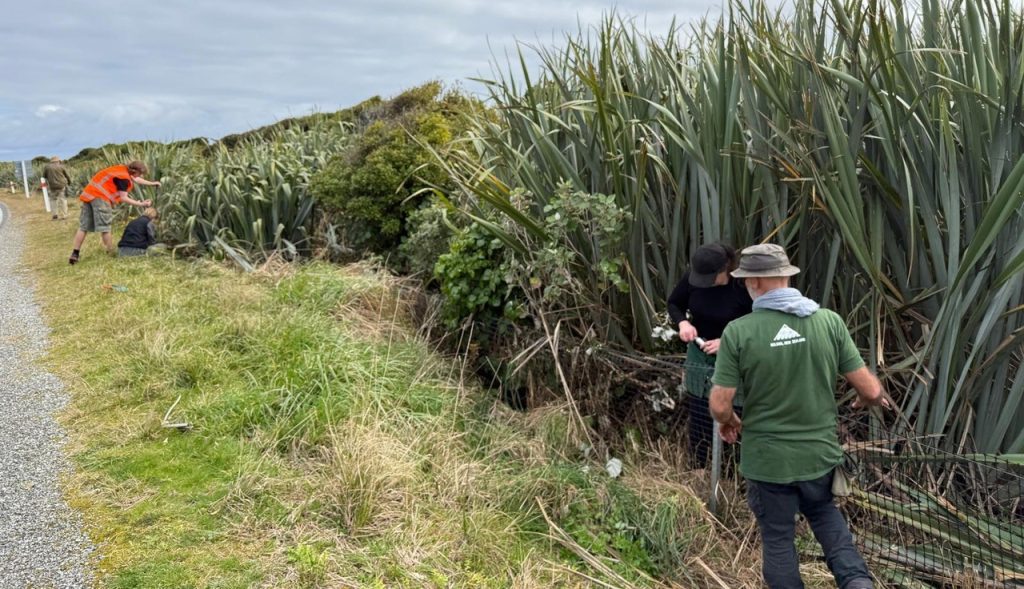 Volunteer Natassja Savidge has offered to check and help maintain the Hokitika penguin protection fence and joined Ranger Lucy Waller and Manager Inger Perkins in May to inspect the length of the fence. Some minor issues were found but the main finding was the extent of the vegetation growth that was damaging the fence in places. Big thanks to Natassja!