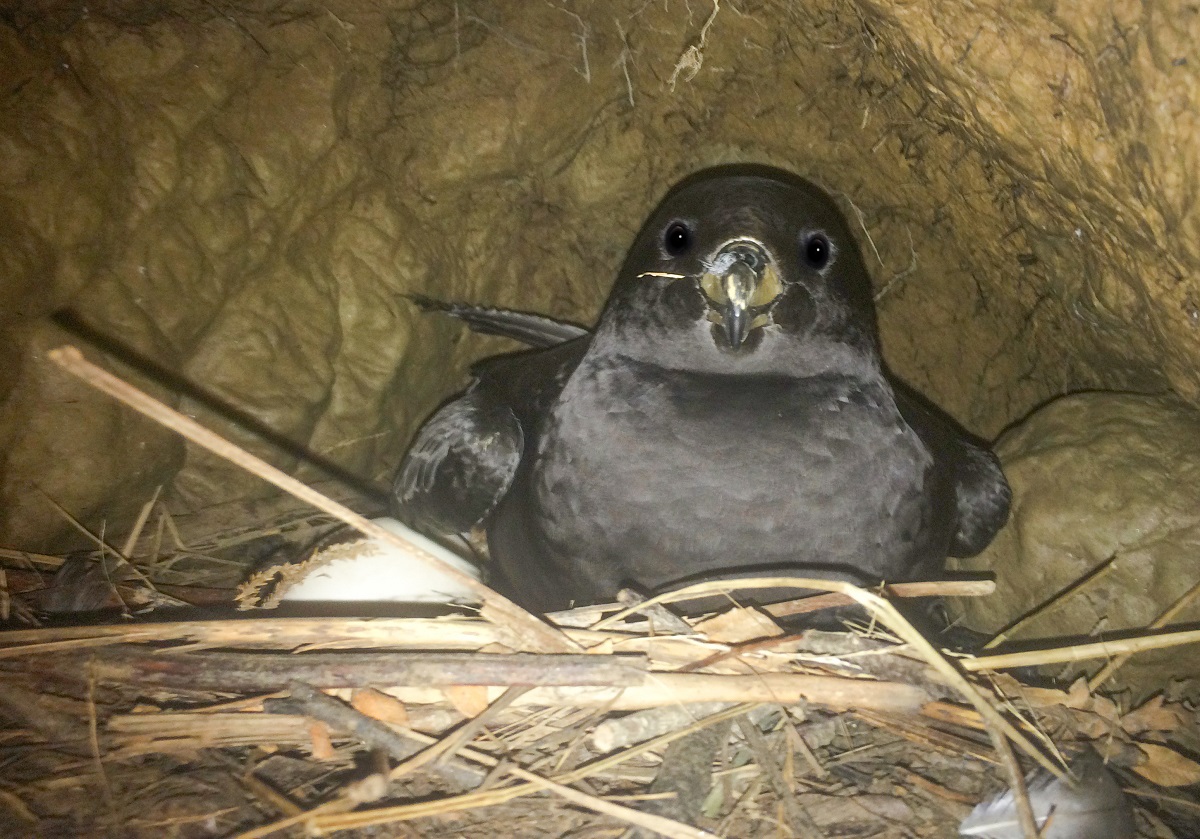
The Conservation Services Programme(CSP) funding means more work is underway to understand and better protect Westland petrels – tāiko.
The CSP monitors the impact of commercial fishing on protected species, studies species populations and looks at ways to mitigate bycatch. Funding comes from levies on fisheries and it is a fundamental principle of CSP that once a bycatch problem is successfully addressed, levies will no longer be charged for that interaction.
CSP research projects include interaction studies, bycatch mitigation, population management plans and populations studies. New work is now underway to examine the population dynamics of the Westland petrel, led by DOC Buller/Kawatiri and with the help of ecological field contractors, Reuben Lane and Matt Charteris, both closely connected to the West Coast Penguin Trust.
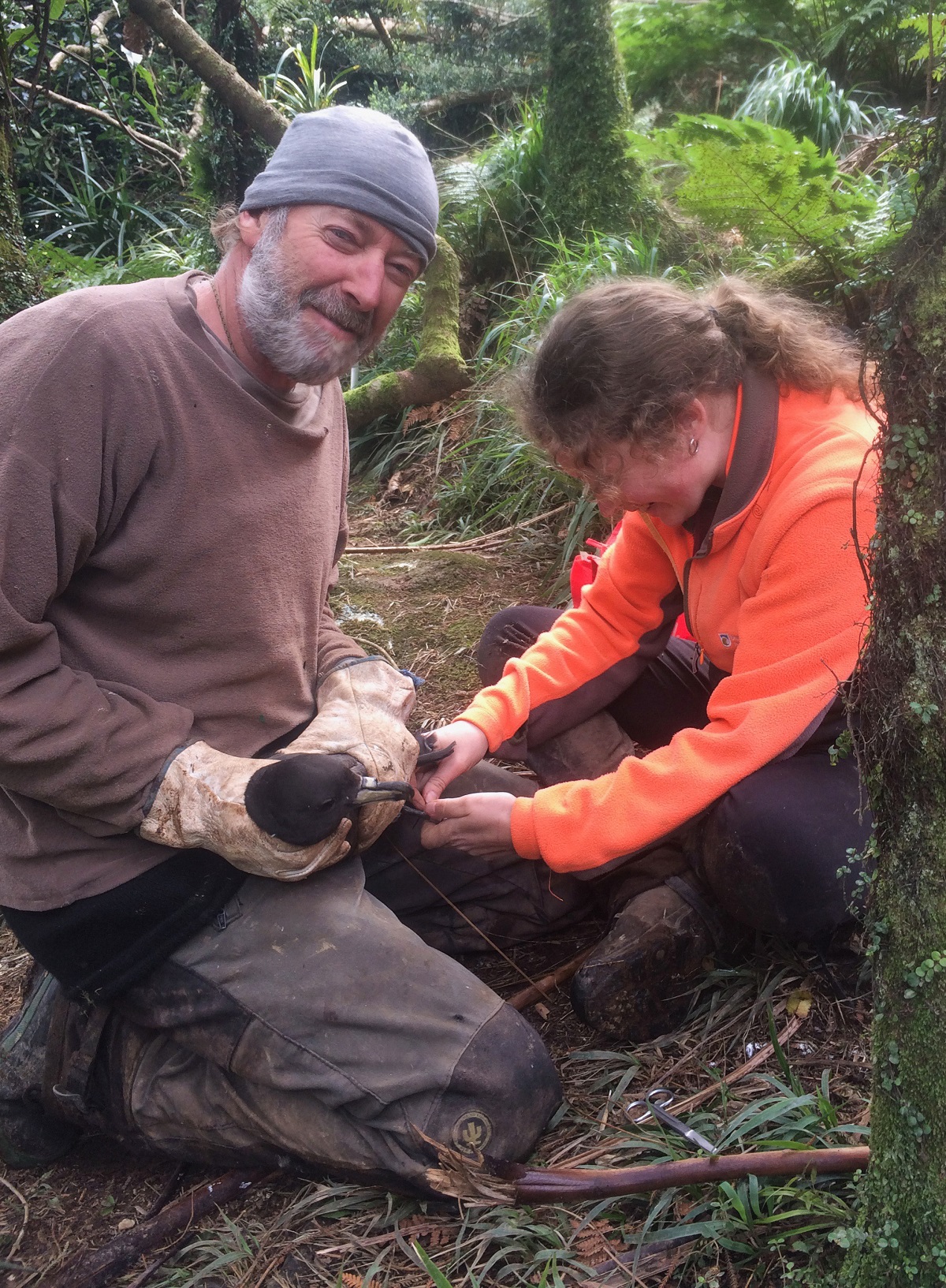
Work is underway to attach tiny GIS dataloggers to the legs of breeding and non-breeding birds. These tiny loggers are expected to remain in place for 1-2 years. Data collected from foraging trips is downloaded during field visits when the birds are in their burrows.
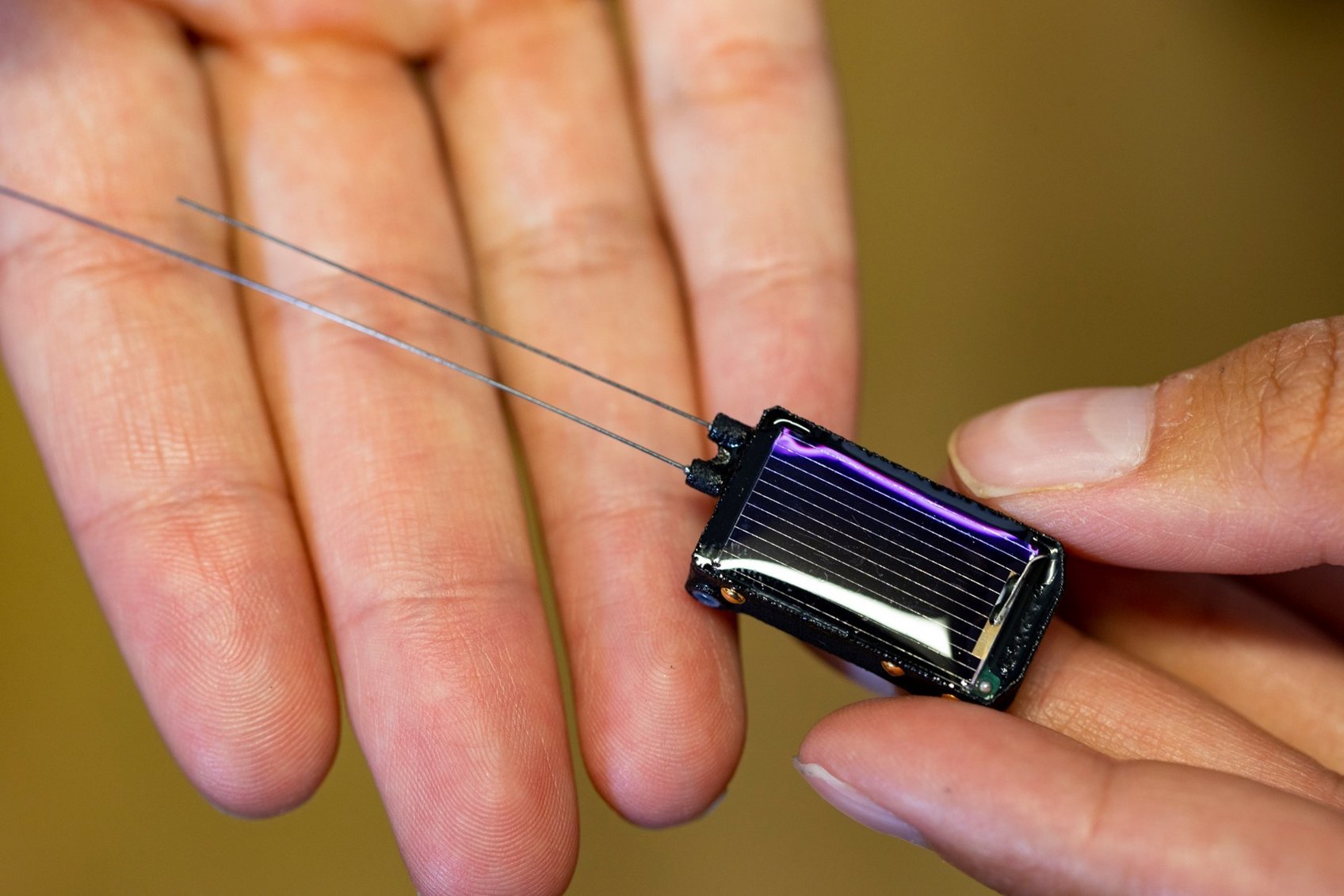
In addition, a new GPS transmitter is being trialed for the first time with Westland petrels, the Icarus tag. Also tiny and incorporating a miniature solar panel, these transmitters are attached to tail feathers and will transmit location data continuously. The tail attachment has been found to be better than on the back of petrels in studies with the Chatham Island tāiko, allowing the birds to preen their feathers more easily and reducing the potential risk of it rubbing it off when coming and going from the burrow.
Matt and Reuben have been out with DOC biodiversity ranger and project leader, Kate Simister recently, monitoring birds and adding the tags.