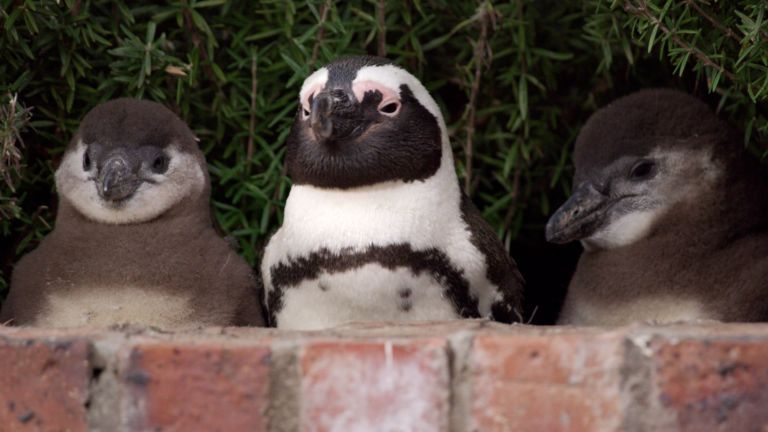
The Southern African Foundation for the Conservation of Coastal Birds (SANCCOB) want the world talking about the African penguin, a penguin that requires urgent conservation intervention. They have shared their concerns among the global penguin community and we are sharing their concern through our networks as follows:
The African penguin census for South Africa in 2021 is in, and we are now looking at ~10 400 breeding pairs.
- This represents an additional loss of 25% (about 3000 pairs) of the population from 2019 when the last assessment was done.
- There are NO colonies in South Africa with > 5000 breeding pairs, actually, none with >2000 breeding pairs
- 5 colonies have gone extinct since 2005
- The species is now easily at <3% of historical numbers
You are all well aware of the threats they face and what’s being done to prevent mortality, promote breeding success and recruitment. It’s the improvement of their access to food that we are particularly worried about.
We (3 NGOs of SANCCOB, BirdLifeSA and WWFSA) have been engaging on a number of fronts to address this, not the least of which is with the Minister (Forestry, Fisheries and Environment). The Minister has initiated a process within government to look at the state of knowledge (as relates to island closures); assess knowledge gaps and come up with recommendations. That synthesis report has been drafted, and the team are now busy drafting recommendations. This is a very good thing. The decision on the way forward on Island Closures will be made by the Minister before the end of this year.
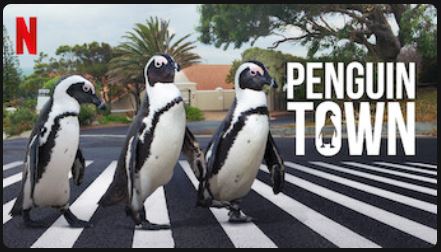
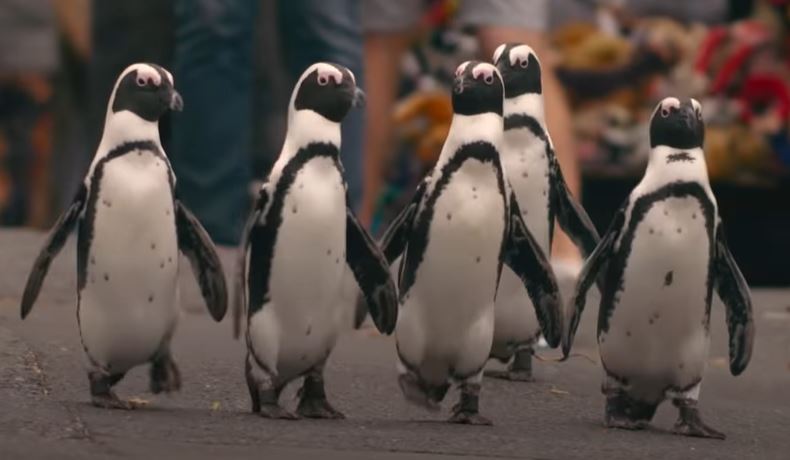
Recently, a company called Red Rocks produced a documentary for Netflix called ‘Penguin Town’. It was filmed at Simon’s Town, with a little bit on site at SANCCOB too. It is a series of 8 episodes, each about 30min each. They have taken a rather different approach from the usual documentary and have used the science to construct a story that enables the whole family to watch. Despite the anthropomorphic take on it, the series does a great job of story-telling, yet at the same time provides very good subtle messages that older audiences will get – just how hard life is for these birds. So if you haven’t watched it yet, please do!
Following on from this fun Netflix series, we have just filmed a more ‘serious bit’ with some of our partners where we are trying to get the more serious conservation message across. While the video lists some of the threats, we focus on the food availability issues, and are hoping that information it provides enables people to voice their support for the conservation of the species. You can find the video here:
How To Save Th African Penguin Panel Discussion – YouTube
We’d like to get this out as far and wide as possible and get the world talking about the African penguin. It’s the only species in Africa, and one of 18 (currently) in the world. I know you all know this, but we want to get the message out that this is a global issue, not just a South African/African problem.
The other critical message of course is that conservation is everyone’s responsibility, not just for the authorities or NGOs and other conservation related organisations. People need to be using their voices; make environmentally sound decisions etc. So can I ask you to also encourage your networks to engage on: #SaveTheAfricanPenguin so we can keep the conversation going about the plight of African penguins, and also encourage each other to do what we can to make a difference.
For further background information, there is the IUCN RED list species fact sheet that people can look at, and we have also created a page dedicated to the African penguin and what people can do at the following link: Save The African Penguin
Dr Lauren Waller
Leiden Conservation Fellow
SANCCOB | S A Foundation for the Conservation of Coastal Birds