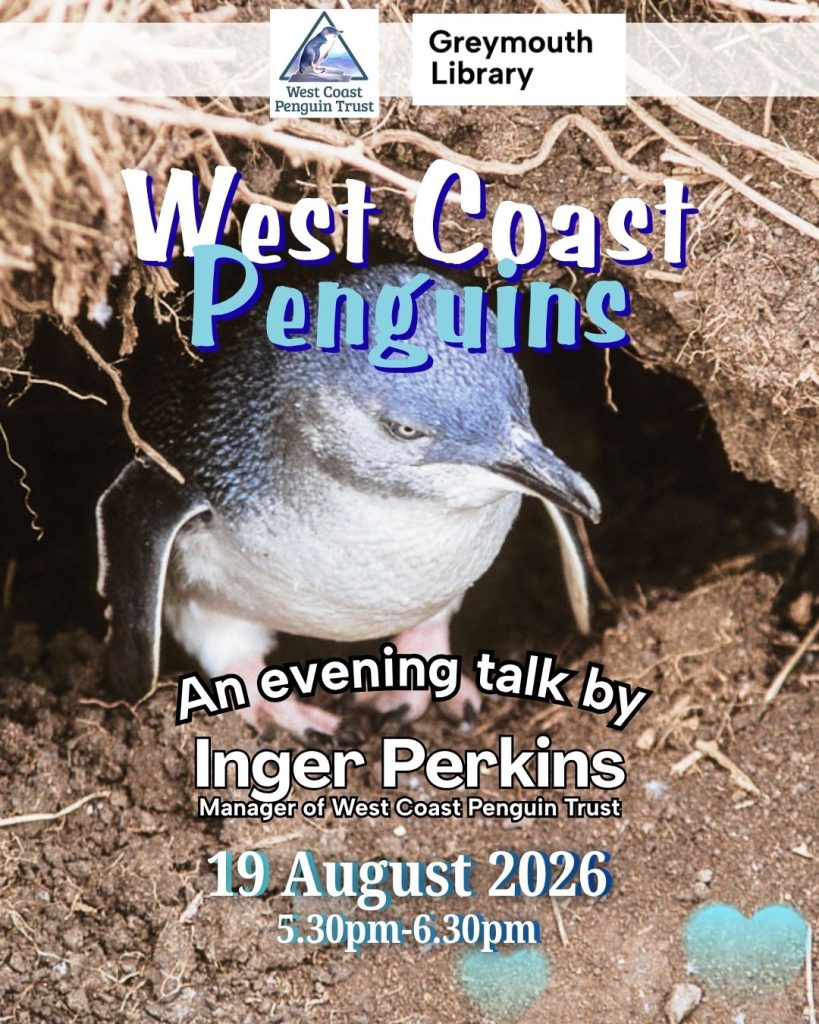
We would love you to have a walk on your local beach and let us know if you find any penguin tracks as part of the annual count.
An early morning walk will help you rediscover the beauty of your local coastline, discover whether penguins are using the beach and help us build a clearer picture of where blue penguins are on the West Coast – as well as energise you for the day!
We have selected dates when the tide will be low early in the morning to keep you safe and to offer the best chance of seeing penguin tracks crossing the freshly washed sand. You can add your observations any time, but always pay special attention to tide times and conditions.
We’re getting back to paper and pencil this year! Here’s a simple form: 2021 blue penguin count form to print and take with you or take some paper for a tally and note the key observations. And then share your results with us either on our super simple Google Form, or email them to us – scan the form or just email your findings.
Alternatively, you can use i-Naturalist (look for our Project) – more about that on our penguiin count website page.
The key things to look for are fairly straight lines of footprints heading from the dunes to the sea from those penguins that have left early. They will be foraging at sea all day and returning after dark to feed chicks at this time of year – we’re keen to count the numbers who have headed out again before dawn. The spread of the three toes make an angle of less than 90 degrees, nearer 70 degrees, whereas many other seabirds have their toes spread wider than a right angle. They are also a little turned in, or ‘pigeon toed’! (We can rename it penguin toed!)
We have put together some information to help identify tracks here: Penguin and other footprints.
And as an aside, if you like being a detective at the beach, have a look at this excellent footprint identification resource from NZ Tracker.
Please think of safety before you venture out. Walking on our wonderful beaches soon after sunrise is often a magical experience but there are a few safety messages. Check the tides before you go and remember to watch out for the waves – never turn your back on them, and if you come across a seal, give them a wide berth of at least 20 metres if possible. Tell someone where you are going and when you expect to be back.
Why not go for a walk with family or friends?!
Have fun, and thank you – we look forward to hearing how you get on and please send us photos from your walk!