The West Coast Penguin Trust has maintained an active interest in the Ōkārito kororā colony since it was first surveyed in 2008 and has resurveyed the colony every few years since then.
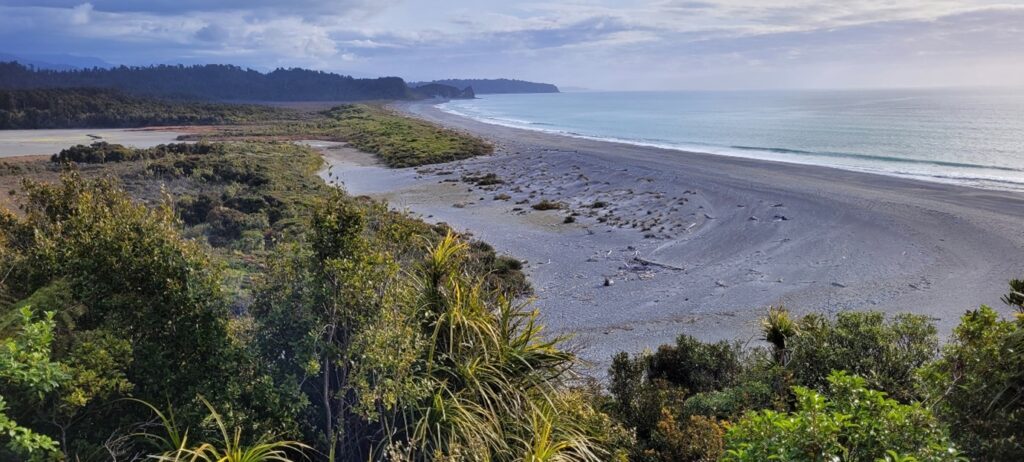
In late October, Ranger Linden Brown resurveyed the colony for the first time since 2018. Unlike most kororā colonies on the West Coast, the penguins here are safe from dogs and cars, and human disturbance and the effect of introduced predators are minimal; it is little surprise that the penguin colony here is the largest on the West Coast.
Stepping onto the beach it is obvious that there are a lot of penguins; the sand is almost continuously criss-crossed by penguin tracks! Almost a step back in time to what things would have been like before humans and introduced predators.

The colony is split into distinct north and south areas. Penguin numbers have stayed more or less consistent over the years, and this year was no different with over 40 breeding pairs. It is highly likely there are more pairs than this in area, however thick gorse and supplejack makes finding them tricky sometimes!
As we are seeing in our monitored colonies in the Buller, breeding has been later than normal this year, with the majority of adults still sitting on eggs during the late October visit; in previous surveys at the same time of year, the majority of eggs have hatched, with some chicks fledging by this time.
Numbers of breeding pairs at the Ōkārito colony
| 2008 | 2013 | 2015 | 2018 | 2022 | |
| Ōkārito North | 18 | 21 | 13 | 10 | 17 |
| Ōkārito South | 33 | 34 | 26 | 14 | 22 |
| Total | 51 | 55 | 39 | 24 | 39 |
The Ōkārito colony is a healthy and safe kororā colony; a reminder of how things would have been in the past, but also a vision of something to work towards for other kororā colonies on the West Coast.