Women around the world currently make up more than half of the college-educated workforce. However, STEM fields are made up of only 28% women. Women and girls who desire to learn more about STEM often face a challenging set of circumstances in fields that are traditionally dominated by men. That’s why AFS Global created a program dedicated to the future of women in STEM fields (Science, Technology, Engineering and Maths). By providing an opportunity for girls from around the world to explore their interests in science, technology, engineering, and mathematics, we can start to change this trend and open up more possibilities for the perspectives of women in the greater goal of reaching a sustainable future.
A local, talented, young woman won her place on the programme, embarked on the journey this year and we were lucky enough to be part of it. Grace Lockington, student of John Paul II in Greymouth carried out a penguin dissection class with us and at the same time her mother was starting a penguin project with her primary class and it all slotted into a perfect collaboration.
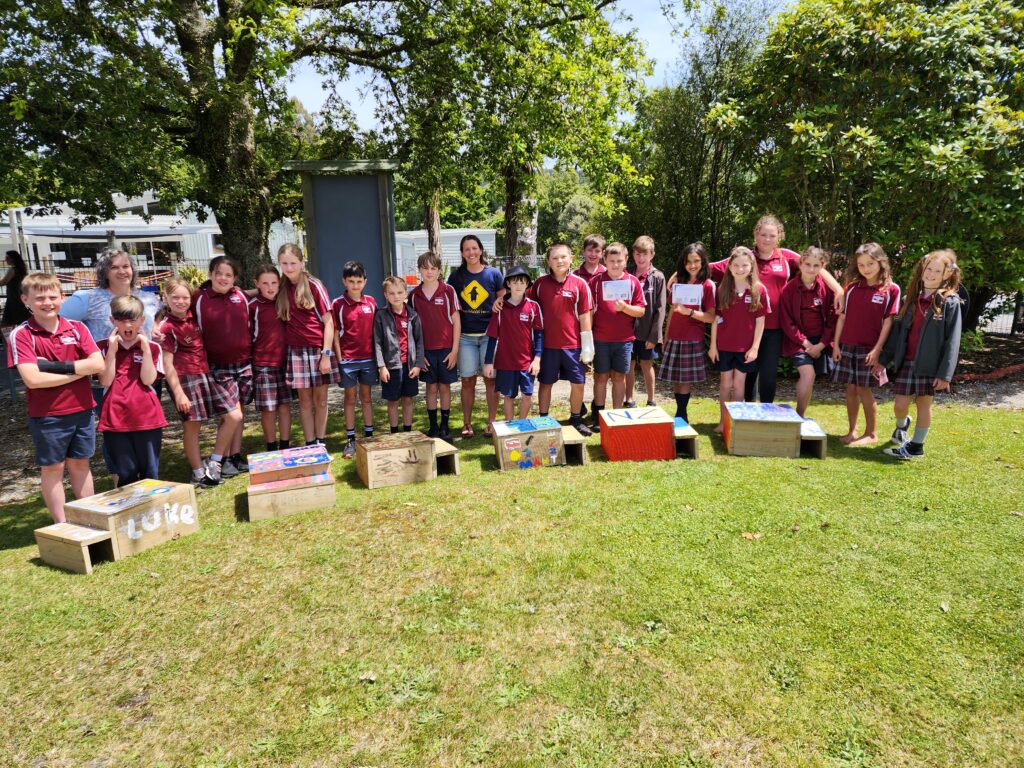
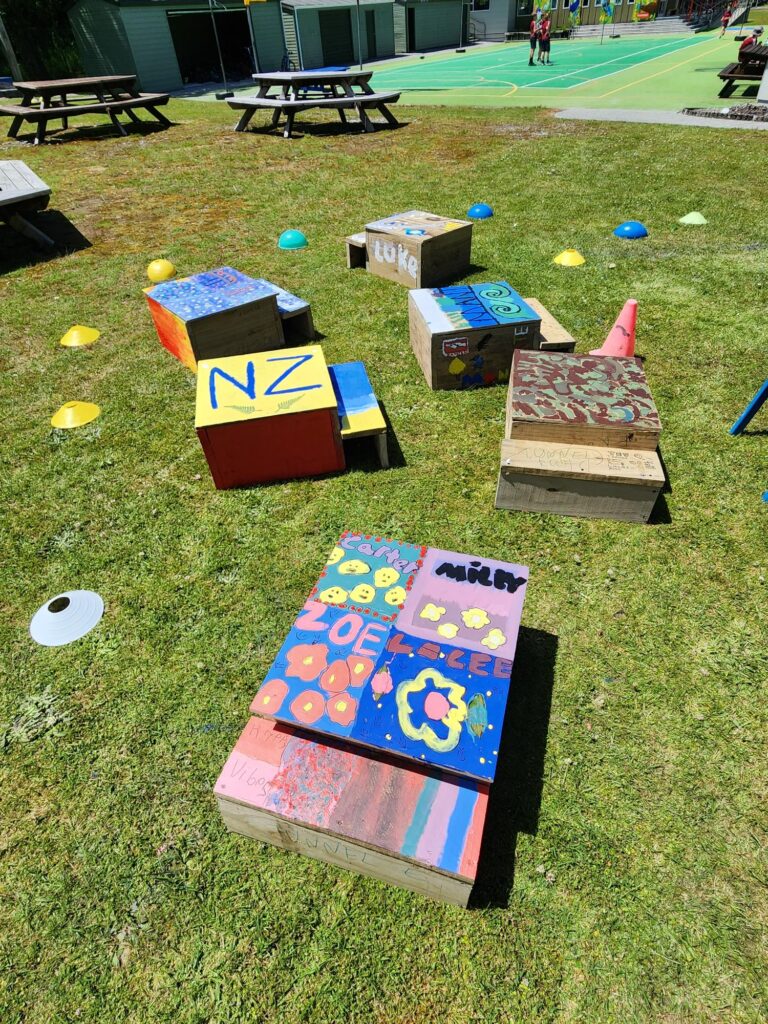
Grace organised and ran the project, sourcing all the resources needed and preparing all the wood and screws ready for the students to make the nest boxes.
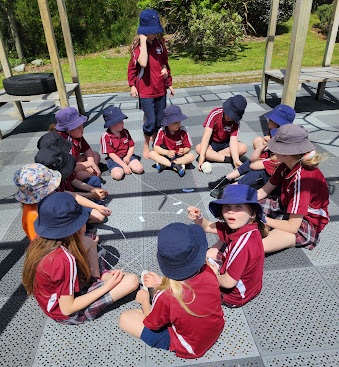
Planning stages – preparation with some activities from the educational resource book
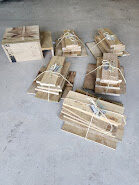
Grace pre-cut all the wood, labelled the pieces like a jigsaw and bundled them up for each team
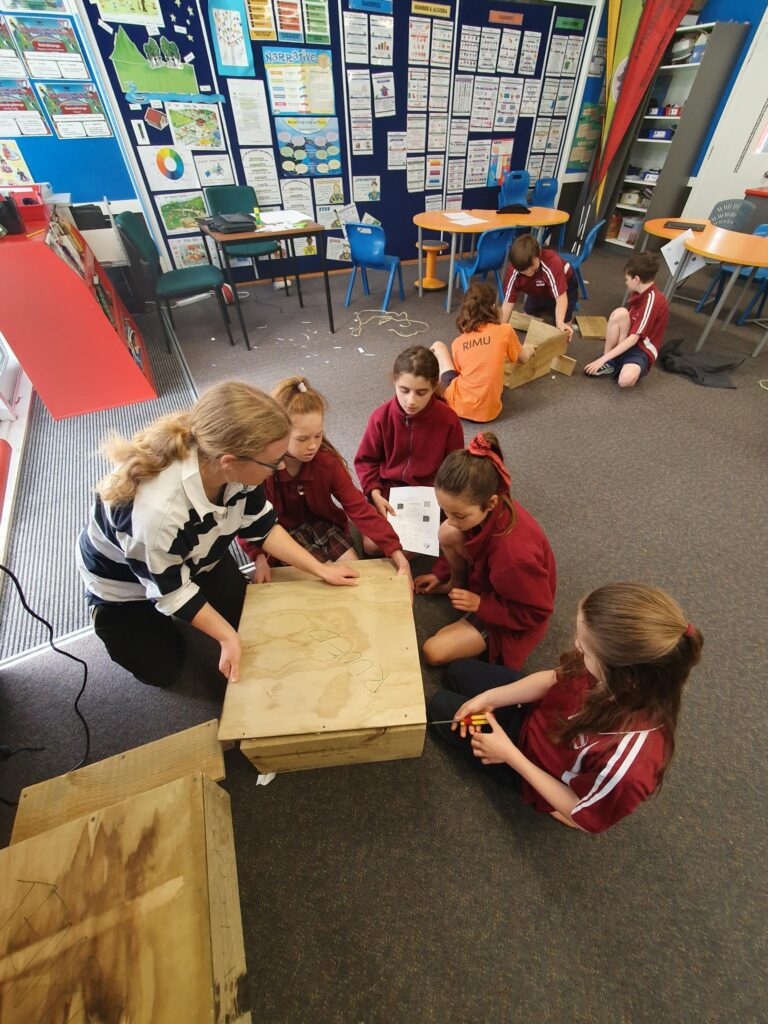
Grace assists a team on building day
Proud of their work
Fancy nest boxes
I interviewed Grace to find out more about the AFS Global STEM Accelerators Programme:
How did you hear about your programme?
A couple of my teachers found something about it online, thought it would be a good opportunity and some of us would be interested, and they emailed it to all the girls in my year (plus a few other years).
What did you have to do to qualify for a place?
There were a few requirements, for example you had to be between the ages of 15-17 and a girl to apply. Then you applied online. I can’t remember exactly what questions there were, because it was back in July I applied, but many of the questions were asking things like academic achievements, opinions on sustainability/climate change (as the course had a focus on STEM and sustainability), and things like that. It was quite a long application. They then got back to us informing us whether we got into the program or not in August.
What does the programme entail?
First off, there were online lessons the University had set up, that we complete in our own time each week (they say it’s about 3 hours per week, but it definitely wasn’t that much). Then there were weekly online “facilitated” lessons, where about twenty of us plus two AFS facilitators talked about and learned about topics relating to STEM, social innovation, sustainability, climate change etc., as well as getting to know each other better. Finally, one of the requirements of getting the completion certificate at the end of the program, was a capstone project, where we design a prototype and test it in the real world. My “prototype” was the educational service of building nesting boxes.
Why did you choose to use the West Coast Penguin Trust nest boxes as your project?
I was a bit stuck on what to do for my capstone project, struggling to come up with ideas of how to create a meaningful positive impact on the community. I had just done a penguin dissection at my school and Mum coincidentally happened to be doing a penguin project with her class so we came up with the idea of constructing nesting boxes for the Penguin Trust with the students at Kaniere. I got on board and helped run things, and that became my project. I thought it was perfect as it fit in well with the project criteria as well as touching on 2 of the United Nation’s Sustainable Development Goals- basically what it sounds like- a “global set of goals to create a better future”- in this case, the UN SDGs the project touches on are 4- quality education and 15-life on land.
What was the motivation behind the project?
I’ve always been pretty interested in conservation, we’ve got some bush behind our place and about a year or two back, we set up some predator traps for rats and stoats, which I’ve been monitoring. I think the importance of conserving the natural environment and species that live there is really important. It’s always pretty sad seeing the stats about our native wildlife, and the devastating affect that introduced species have on it. I also think its pretty special the West Coast has a population of such unique penguins, and think we should do what we can to keep it that way.
What did you find difficult?
The most difficult part, funnily enough, was actually finding the resources necessary for the boxes. The 250x50mm H4 treated wood we needed for the boxes had a shortage across the West Coast- several times we tried McMullans, both Greymouth and Hoki’s Mitre 10, and although we managed to get some from McMullans, it was only enough for about 2 boxes, nowhere near the at least 5 we were intending on making. Eventually we managed to get a decent amount of 250s, enough to make about 4 boxes, and for the remainder, we had to improvise by connecting 200s with 50s, to make the 250, and had enough to make six boxes.
What were the most enjoyable parts?
Definitely seeing that the kids were so eager and had so much fun building the nesting boxes. I was impressed by how quickly many of them managed to figure out the box and start putting it together.
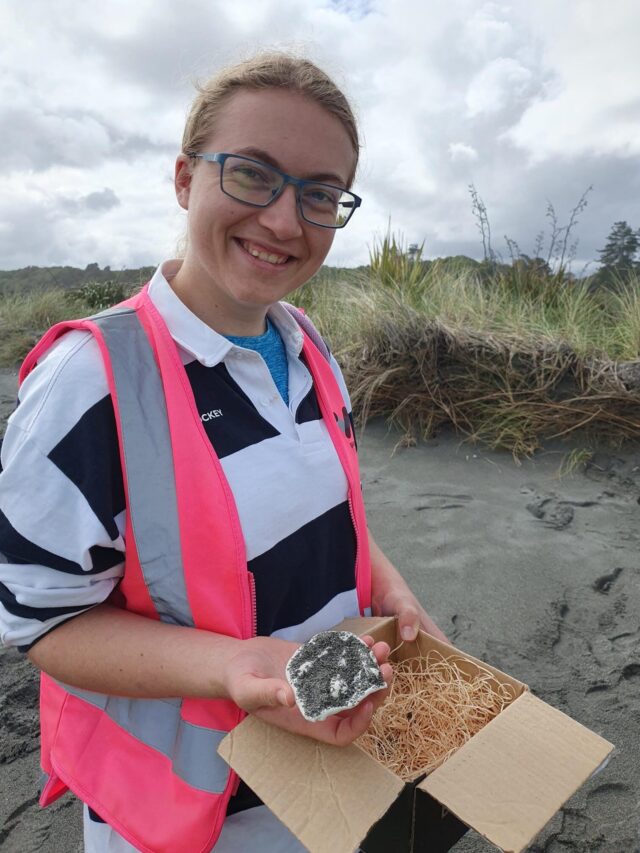
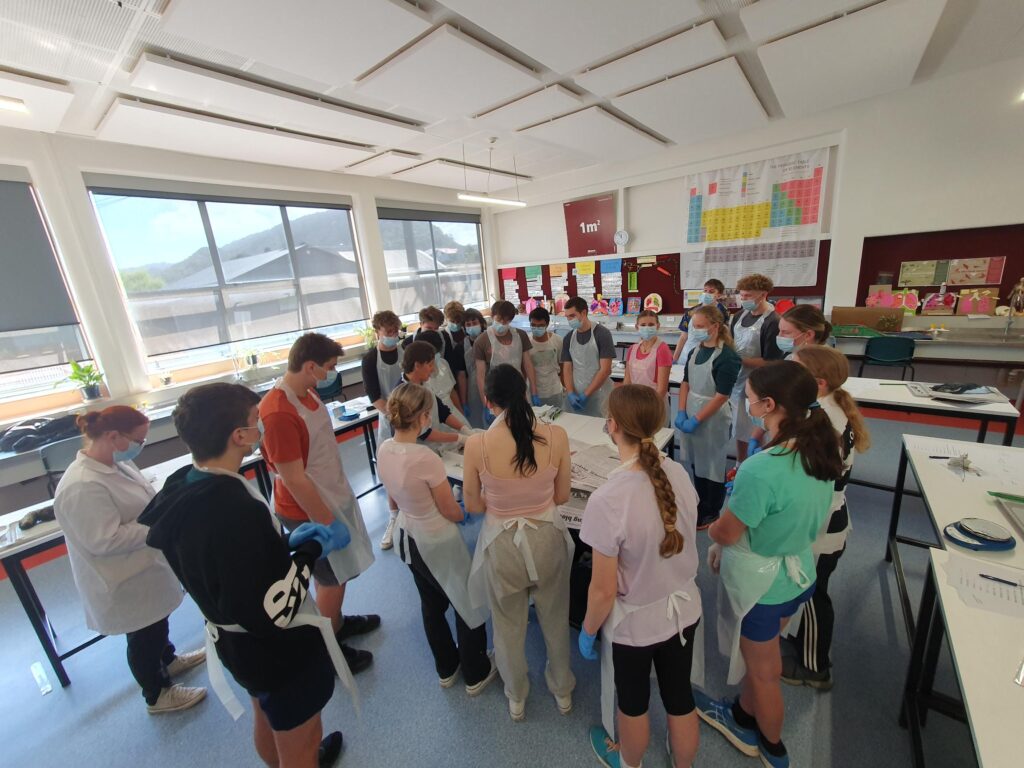
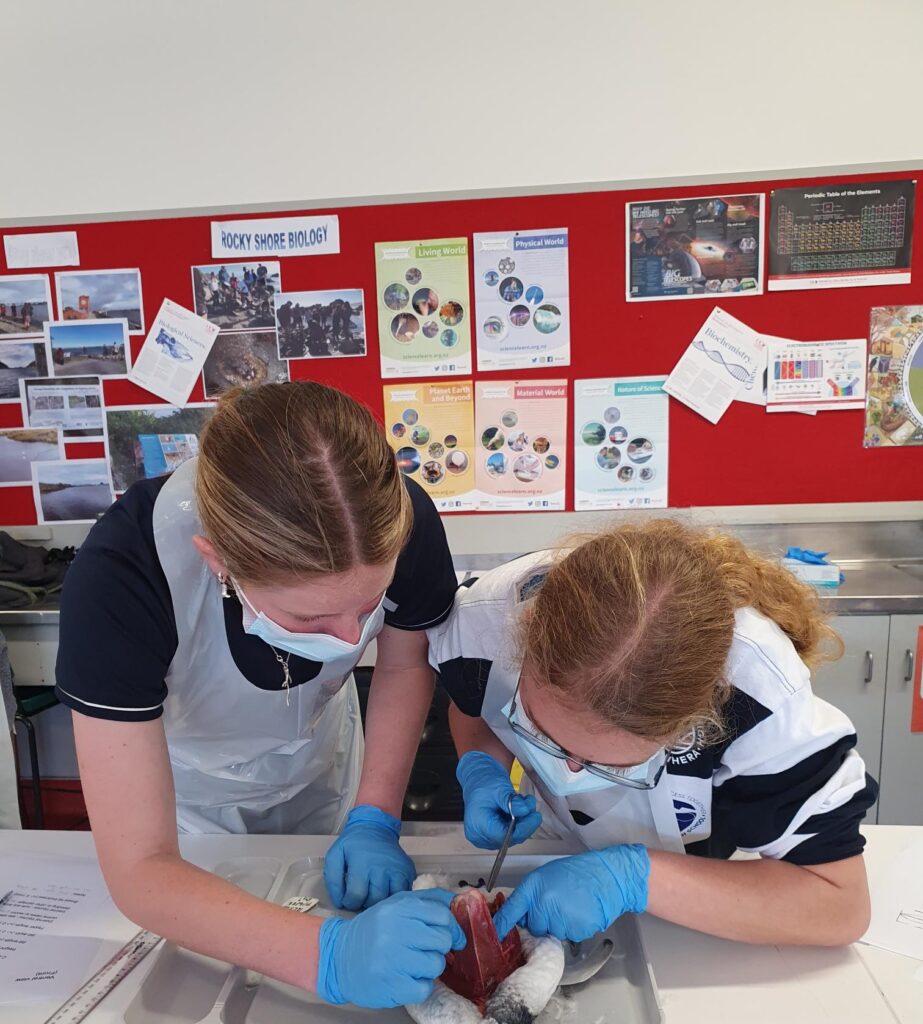
John Paul II carrying out a penguin dissection class – their mission in teams was to find out condition of the bird, look at its adaptations and find possible cause of death. They weighed, measured bill depth and length to determine sex, measured fat layer and observed muscle and tissue atrophy, checked stomach contents and bone structure.
Grace and team mate trying to find cause of death, which turned out to be dog attack. Little did she know her next step was to run a penguin nest box project to help protect this species.
A little treat after all that hard work for penguins ….some actual penguins
A visit to the colony monitoring
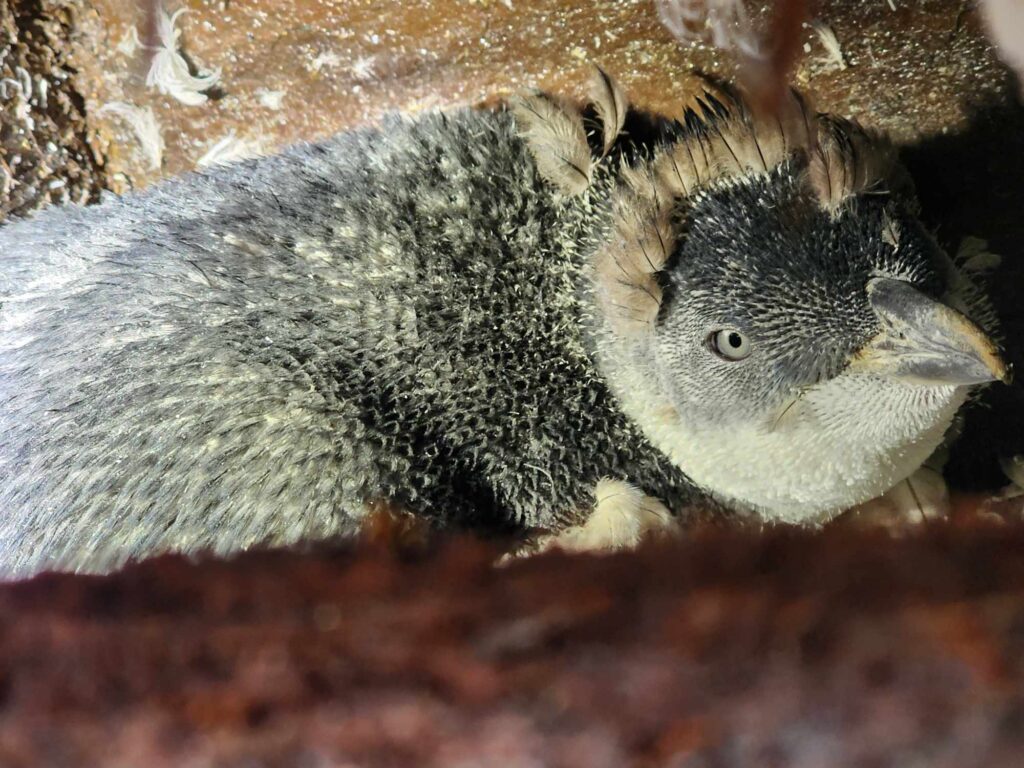
A fledged chick
Interesting for Grace and Maria to see what a moulting penguin looks like
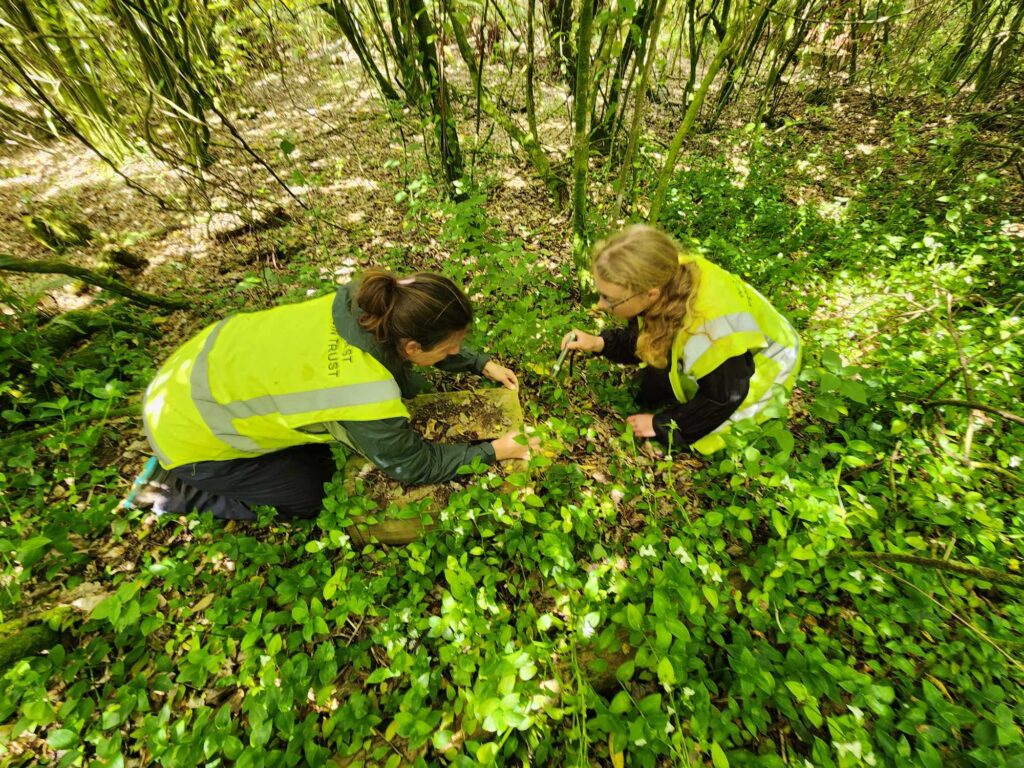
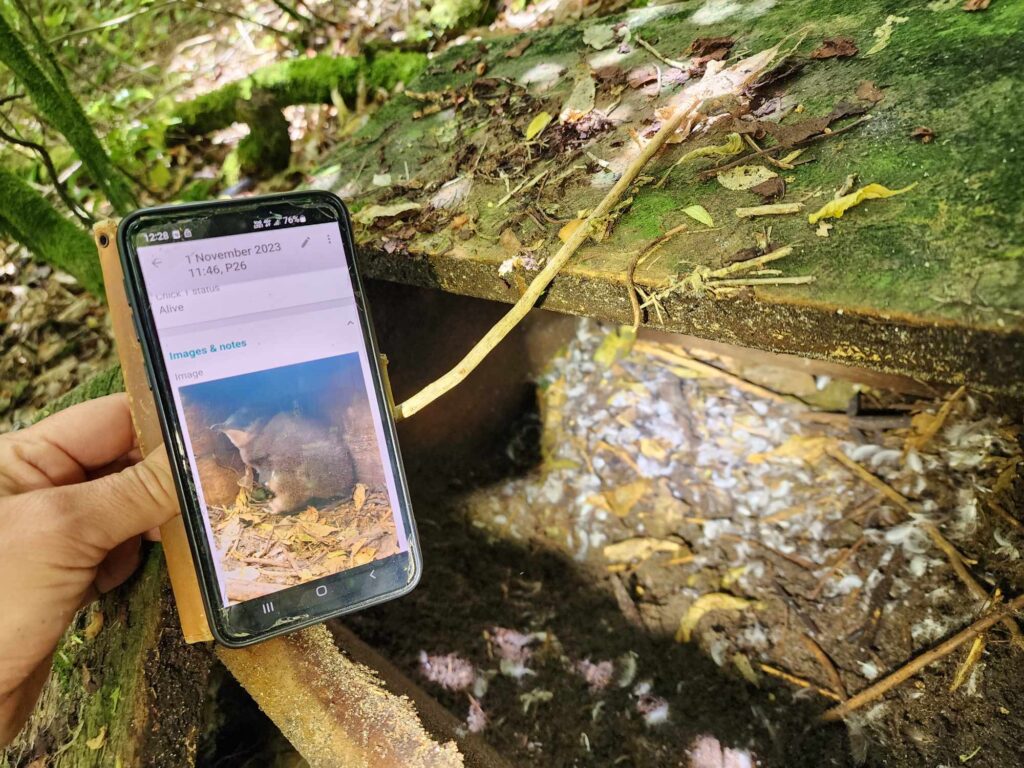
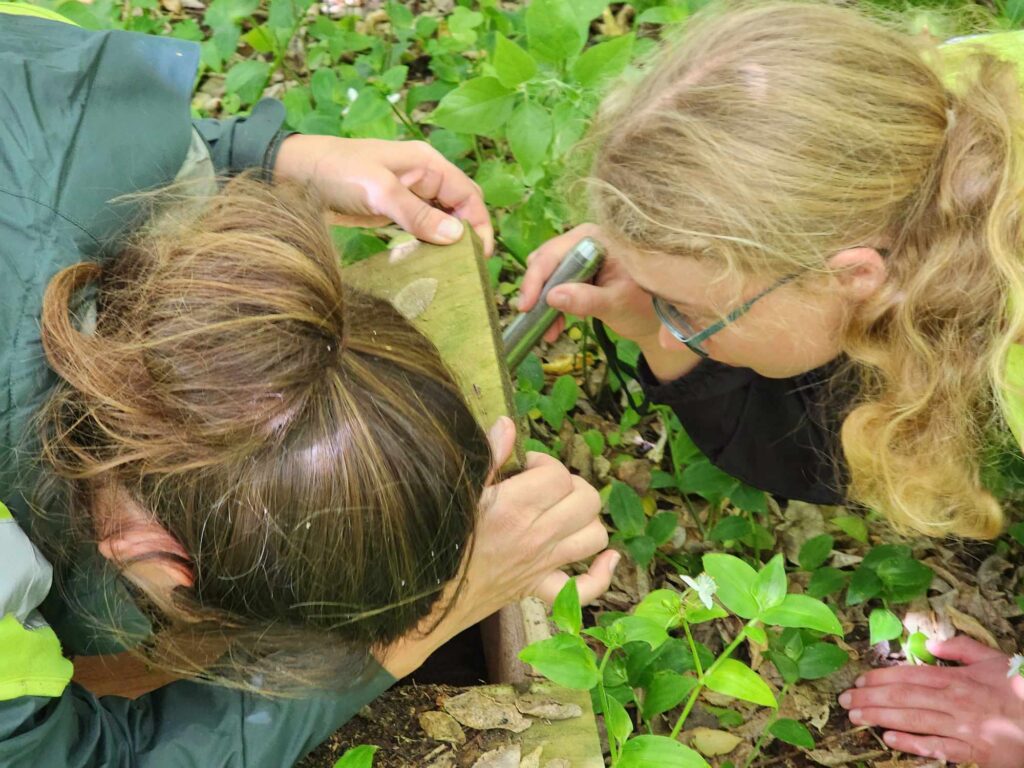
Monitoring nest boxes with Grace and Maria
Grace is now off to Spain in January on a 4 month exchange programme as part of AFS Global. We wish her good luck and all the best. Thank you and well done Grace!
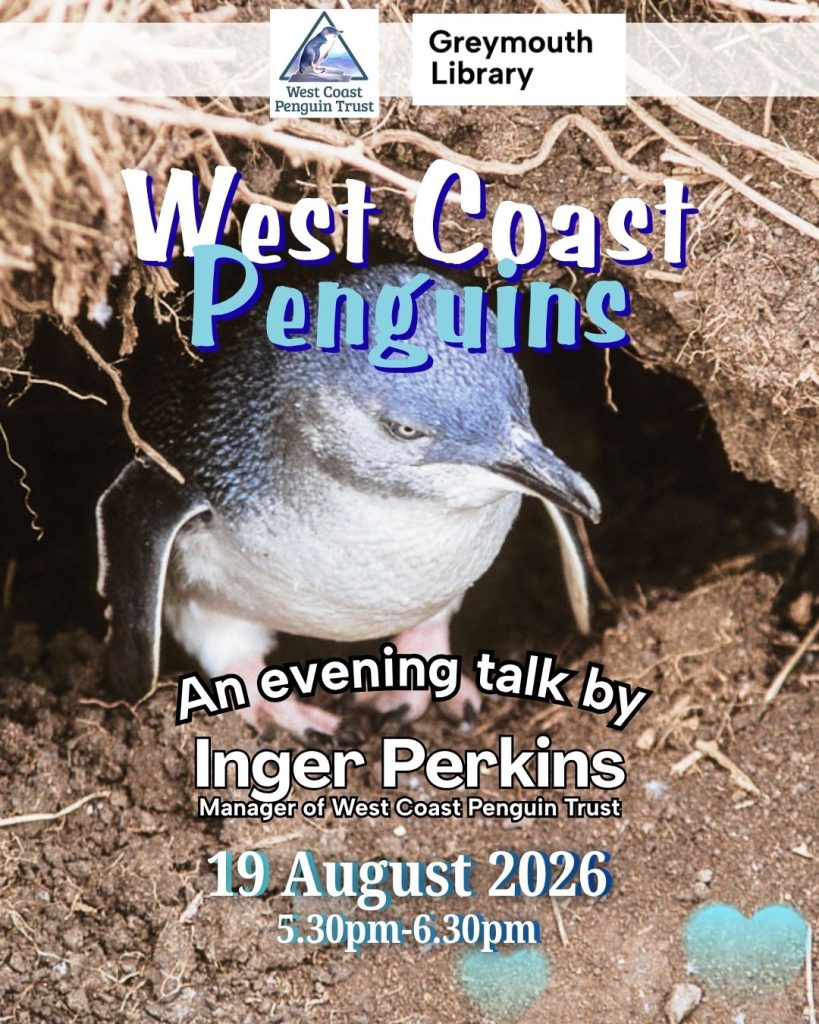
We have been invited to speak about our penguins and our work at the fabulous new Greymouth Library and that's happening tomorrow!
It would be lovely to see you there.
Come along and find out the latest from the last breeding season for both West Coast Penguins, how the Trust has evolved over its 20 years, and some other perhaps more surprising information!
When out and about, especially on beaches, keep an eye out for wild birds showing signs of bird flu.
The most obvious sign of HPAI is sudden death in several wild birds. Other signs can include weakness, tremors, paralysis, difficulty breathing, lack of co-ordination, blindness, trembling, and diarrhoea.
If you see 3 or more sick or dead wild birds in a group, report it immediately to the exotic pest and disease hotline on 0800 80 99 66so we can investigate the cause.
Added by DOC - OR report it if you see a single sick or dead high-risk seabird. These include skua, giant or cape petrels, and albatross, which are rarely seen on the Coast, and white-fronted tern, which nest on rock stacks and in river estuaries.
Do not touch or collect sick wildlife - birds or seals.
Keep pets away from wildlife as the disease can spread to other animals.
Avoid disturbing wildife congregating on shorelines.
Clean your shoes and gear before and after visiting beaches, parks, reserves, or farms, to stop the disease from spreading.
When reporting sick or dead birds, provide as much detail as you can, including:
a GPS reading or other precise location information
photographs and videos of sick and dead birds
species name and estimate of the numbers affected
how many are sick or freshly dead, and the total number of birds present.
MPI will note the details and one of our specialist biosecurity investigators will assess the information and contact you.
Sick birds can recover from this disease, so leave sick birds alone, and reduce stress or disturbance around them.
It's important to note that recent reports including this skua have been isolated incidents, just single birds. So it's important to be aware of unusual bird behaviour.
Do not hesitate to ring the MPI hotline if you have any concerns.
Thank you for doing your bit.
Information we provided a couple of years ago:
https://www.westcoastpenguintrust.org.nz/news/being-prepared-for-avian-influenza-or-bird-flu/
Results from the 2025 penguin breeding season are in. Here on the West Coast, as they do around the world, penguins face ever-changing challenges. Despite notable losses at key breeding sites, our Little Penguins (kororā) and Fiordland Crested Penguins (tawaki) continue to respond with remarkable resilience. Your support helps us to understand and respond to the rapidly changing conditions that our penguins face every day and we are enormously grateful.Here’s some of what we achieved and learned from the 2025 season.
31 kororā microchipped this season (now 77 in total)
Kororā travelled up to three times further offshore than usual, staying away much longer than expected to find food during egg incubation
Lower breeding success at key sites reflects likely environmental stress
Joyce Bay colony strongly rebounded in breeding activity
Tawaki had a stable season despite some unexplained chick deaths
No stoats seen at the tawaki colony monitored with cameras, demonstrating the success of DOC’s predator control efforts in 2025 (as per our advocacy) and benefitting penguins breeding there.
Little Penguin (kororā): 2025 season updates
31 new penguins microchipped
Young kororā chick from our study colony held for microchipping | 202531 kororā were microchipped this season, bringing the total to 77 across two seasons. We aim to microchip all penguins in the study colony that can be reached, both adults and new chicks each year, once they are big enough, giving us information about individual birds - their arrival, their survival and their return. Next year, after three years of data collection, this dataset of the demography of these penguins, along with breeding success data, will reach a point where it will start revealing survival rates and colony growth or decline. We will then be able to link that to foraging patterns and changing marine and weather conditions. Critical insights like these are key to guiding and informing future conservation decisions and efforts.
Foraging study reveals surprising findings
Using tiny GPS and dive loggers, we were shocked to find that kororā from our study site travelled up to three times further offshore to find food during the egg incubation stage. It seems they were out at sea much longer than in previous years too. With daily checks on the nests, one took nearly 3 weeks instead of the expected 5-7 days to return. For these breeding birds, that indicated a much tougher time finding food, and a tougher time for the increasingly hungry parent left to keep the eggs warm. Kororā in nest box with foraging study logger during egg incubation | 2025Extreme distances travelled by penguins while foraging in the egg incubation stage | 2025Approx. scaleExtreme journeys early in the breeding season are a likely indication of reduced prey availability within the usual foraging range. This may have been due to higher sea surface temperatures associated with weak La Niña conditions. Thermal stratification locally (warm surface water) may lock nutrients and small schooling fish at depth and sediment in the top warmer layer, reducing visibility, essential for penguins to find prey fish. We will be investigating this in the coming months with the help of our scientists and will report back.Find out more about our foraging study and last year's results here
Breeding success down from the previous year
Breeding success chart, Kororā, 2020-2025, WCPT study sitesOverall, we recorded more nest failures, underweight chicks, and early chick losses than in most previous seasons. At our main study site at Camerons near Greymouth (replacing the 'Knoll' site near Charleston), several nests failed, and many produced only one chick from the two eggs laid. With no evidence of predation, and taking into account tracking data from our foraging study, the signs point to environmental stress, probably reduced prey availability early in the breeding season.Find out about the 2025 kororā breeding season hereThe very poor season in 2022 also appears to be related to environmental stress, most likely La Niña conditions that peaked in early spring, part of a rare three-year 'triple-dip' phenomenon extending to March 2023. Those conditions led to elevated risks from weather extremes and we saw unprecedented marine heatwaves accompanied by dropping indicators of primary production such as chlorophyll levels, an indicator for phytoplankton, the base of marine food webs. There was a weak La Niña in 2025. We assume these conditions push prey fish out of the usual foraging range of kororā and we will be doing more work to understand that.Read our article about La Niña and El Niño here
Resilience and recovery
Kororā chicks showing new feathers in their nestbox | 2025Despite tough conditions, kororā on the West Coast continue to show remarkable resilience. Many penguin parents successfully raised chicks despite significant early foraging challenges. Some colonies, notably at Joyce Bay, experienced a strong rebound in breeding activity compared to previous years. This is incredibly promising evidence of the adaptability of Little Penguins, and indicates that even when hope is fading, colony recovery is possible.
Fiordland Crested Penguins (tawaki): 2025 season updates
A steady breeding season
Tawaki parent feeding a healthy chick, caught on trail cameraEncouragingly, camera-monitored tawaki nests at our key study site showed high breeding success rates (~90%), though lower success was found using broader monitoring measures (~65%). Varied results likely reflect monitoring limitations, and the camera-monitored figure will be more accurate. Monitored chicks appeared well-fed and showed normal growth rates, suggesting that food availability, unlike for kororā, was not a major issue for tawaki this season. Tawaki breeding success monitoring chart 2019-2025Read our tawaki season news here
Mysterious chick deaths
A small number of healthy tawaki chicks were found dead without signs of predation. Possible causes include parental loss or unknown environmental factors. We aim to continue and improve our camera monitoring so that we can learn more about such scenarios.
Predator management success for tawaki
Tawaki ranger Catherine adjusts a camera without disturbing the tawaki on its nest.We have used cameras to monitor the risk of predation of tawaki eggs and chicks since 2014. This season, no stoats were seen at the tawaki colony monitored with cameras, which demonstrates the success of DOC’s landscape-scale predator control efforts there earlier in 2025. From our previous monitoring, we have concluded that stoats are a major threat to tawaki when these mustelids are in plague proportions, so predator management will certainly benefit penguins breeding there.Trail camera captures tawaki adult with two healthy chicks in their nest
What’s happening in 2026?
Over nearly 20 years, we have seen the challenges our penguins face grow, but we have continued to develop our ability to understand those challenges and respond.Where we have already responded, with penguin protection fences, campaigns to protect penguins from loose dogs, and our much-valued education programme, we have seen reductions in the numbers of penguins killed on the road and by dogs as a result.With your support, our ongoing penguin monitoring and research efforts will drive improved knowledge of kororā and tawaki, ensuring we continue to make a lasting impact on their future here on the West Coast and continue to work towards our Vision:
"Sea and shore birds, and their habitat across the West Coast Te Tai Poutini, are healthy and thriving."
Two healthy young kororā chicks in a nesting box.Here’s our focus for 2026:
Continue microchipping new kororā chicks as well as adults that may be new to the study colony or that we haven’t been able to reach before. This will build a long-term dataset that tracks survival and population trends, and, with our foraging study, help us better understand how changing environmental conditions may be affecting West Coast penguins
Continue our kororā foraging study during egg incubation and chick guard stages
Upgrade kororā nest boxes at our study site
Maintain penguin protection fencing that is serving so well to save kororā lives
Improve tawaki monitoring with better cameras and batteries, and improve our understanding of the variable timing of egg-laying and thus chick rearing to improve our data collection and analysis
We will be monitoring forecast El Niño conditions and hope that they will not impact penguin breeding success. The last major El Niño event led to almost total breeding failure for tawaki in 2015
Maintain our education programme, supporting teachers and youth leaders to deliver educational resources through lessons, activities and beach visits
Work with DOC and District Councils to update beach access signage that will encourage responsible dog ownership: keeping dogs safe reduces the risk of dog attacks on penguins and other wildlife
Maintain our advocacy programmes to protect penguins, other endangered seabirds, and their nesting and foraging places here on the West Coast
And we might find a way to celebrate 20 years since the West Coast Penguin Trust was born!
Awhono School have been learning about penguins with Ranger, Lucy Waller (left, back row)
Woodpecker Bay is the bay encompassing Fox River, just north of Punakaiki, on the wild West Coast of New Zealand’s South Island. Our West Coast accommodation consists of 6 self-contained baches situated along the coast of Woodpecker Bay.
Woodpecker Bay offers remoteness and unmatched natural beauty and all of our baches have stunning ocean views and are right on the water’s edge. All baches have fully equipped kitchens and all linen is provided, all of our baches have free and fast WiFi. They are suitable for couples, friends and families looking to explore the beauty of the West Coast.
We are thrilled to have been supporting the West Coast Penguin Trust since 2016.
Funds are raised from visitor admissions and donations. To date, the fund has raised over $5,000,000 to support a wide variety of conservation projects aligned with the work of Auckland Zoo.
We also provide financial resources for external organisations and individuals to carry out vital field conservation work in New Zealand and overseas.
West Coast Penguin Trust's education programme was fortunate to be supported by the Auckland Zoo Conservation Fund in 2024-25. The theme for grant support changes each year and conservation education was the focus of that funding round, fitting our work with schools perfectly.
Westland Mineral Sands (WMS) is proud to announce its partnership with the West Coast Penguin Trust, strengthening its commitment to conserving the unique biodiversity of the region and supporting vital efforts to protect the kororā (Little Penguin). This partnership with the West Coast Penguin Trust reflects WMS’s commitment to balancing operational excellence with environmental stewardship. By prioritising the protection of the region’s precious wildlife, WMS aims to ensure the kororā can continue to thrive in their natural habitat for generations to come.
Partnership announcement, 10th December 2024:https://www.westcoastpenguintrust.org.nz/news/wms-partners-with-west-coast-penguin-trust-to-support-penguin-conservation/WMS Group website:https://www.wmsnz.com/
Our Vision
“Building an intergenerational business for New Zealand”
We are committed to becoming a world leader in critical minerals that advance the shift toward a sustainable future. As we work towards achieving this, we will build a resilient business that benefits our company, the West Coast, and New Zealand for generations to come.
Caring for our local habitat
We are lucky enough to live and work so close to the magnificent coastline which gives our region its name. But we’re well aware it’s not just our home and we consider it our duty to protect the wildlife around us through thoughtful planning of our sites and monitoring in our day-to-day operations.
The West Coast is home to kororā or little blue penguins. We consulted with experts and brought in a penguin-tracking dog to help us identify where penguins are nesting and to help us understand their movements. As a result, we altered our traffic management plan to ensure our trucks were not travelling either side of dusk or dawn to avoid disrupting kororā and their migration patterns.
The purpose of PIC is to pay the pensions of current and future policyholders. This focus delivers value for stakeholders.
Why the PIC penguins?
Emperor penguins have been central to PIC’s brand from the start. That’s because they’re memorable and intrinsically appealing, as well as striking to look at. Emperor penguins embody qualities that the PIC team works hard to emulate every day. They are:
Loyalty
They form lifelong partnerships, working together to protect and nurture their young and cooperating for the wellbeing of the group. Like them, our team invests time in building long-term relationships, showing ourselves to be dependable and dedicated.
Adaptability
Penguins have evolved to live successfully in water and on land, in many different climates. We too are adaptable, staying agile in a changing environment and evolving our business with innovative solutions to meet client needs.
Resilience
There are few animals on earth as tough as Emperor penguins, who withstand long Antarctic winters and endure months without food. PIC stays strong even in the harshest economic conditions and in the face of the most volatile markets.
The West Coast Penguin Trust is thrilled to share a love of penguins with PIC and to have received generous donations from them.
Since 1985 we have returned over $1 billion back to the community, supporting thousands of good causes all around New Zealand.
Our Values
INTEGRITY – Do the Right ThingCOMMUNITY – Stronger Together INNOVATION – Change for the BetterACHIEVEMENT – Strive for Success
A grant was made by the Lion Foundation in 2023 for the Trust's education ranger to deliver our education programme to West Coast schools.
The Brian Mason Scientific & Technical Trust was established in July 1991 to receive and allocate grants for the advancement of scientific and technical objectives in Canterbury and Westland
We are fortunate to have had a grant from this Trust to research and publish information about threats to Westland petrels - tāiko, the information proving invaluable in our advocacy work.
A second grant was awarded in 2022 for little penguin - kororā - foraging study taking place over 2023 and 2024 breeding seasons.
The Sargood Bequest is a charitable trust founded in 1939 by Sir Percy Sargood of the firm Sargood Son & Ewen. Sargood Bequest actively supports community groups and individuals within New Zealand.
The purpose of the fund is to make grants to projects and activities in the Children & Youth, Cultural, Sports & Outdoors, Educational and Environmental categories with a focus on Access, Participation and Inspiration. The majority of grants made by Sargood Bequest are under $5000. The Trustees favour projects to which funds are specifically targeted. From time to time the trust also makes larger grants or pledges over a number of years at the discretion of the trustees.
The Trust has been fortunate to have been awarded grants principally for our Education work, but also for the Community Conservation Symposium.
Westland Dairy Company - formerly Westland Milk Products, based in Hokitika.
Westland. A place, a people, a brand and a spirit.
It is this naturally determined, adaptive spirit that enables our customers to find their edge, to nourish life through our products we have made beautifully for generations.
Westland Dairy Company have supported the Trust to print wildlife awareness signs for beach access points across the region and have been at pains to ensure penguins are protected at and around the pipeline drilling project site on the north edge of Hokitika. Following that project, they remained committed to protecting penguins and have installed a penguin protection fence in the area to prevent penguins being killed on the state highway. They have also generously assisted with the cutting of access ramps for penguins when erosion results in barriers between nest and sea.
The Trust's relationship with Westland continues to grow and their support is hugely valued and valuable.
https://www.westland.co.nz/en/company/purpose-and-values/
Wellington Zoo is New Zealand’s first Zoo and Wellington’s oldest conservation organisation, caring for animals since 1906. The Zoo is a not for profit charitable trust, and has been that way since 2003. The Trust runs the Zoo on behalf of Wellington City Council.
They are proud to be the world’s first carboNZero certified zoo and they became the first zoo to win the Environmental Sustainability Award at the World Association of Zoos and Aquariums (WAZA).
The zoo follows the WAZA commitments to excellence in animal welfare and conservation.
They are also part of the Zoo and Aquarium Association - a regional organisation for zoos in the Australasian region. ZAA manages the coordination of breeding programmes and sets the level of professional standards and practice for members. They are proud to have been accredited under their Animal Welfare standards.
The West Coast Penguin Trust is hugely proud to be a Conservation Partner, sharing an interest in improving the conservation management of Fiordland crested penguins and sharing information and resources that contribute to penguin conservation generally.
Lottery Environment and Heritage provides grants for plans, reports and one-off projects that will protect, conserve and promote New Zealand’s natural, cultural and physical heritage.
The Trust has received grants for three major projects, namely developing an education resource (2015), presenting the Community Conservation Symposium (2018) and the little penguin - kororā - foraging study 2023-2024.
"A great journey is easy, safe and connected. Waka Kotahi NZ Transport Agency is focused on providing one integrated land transport system that helps people get the most out of life and supports business.
"We look after the national transport system with our partners, today and for the future. We’re innovating to make sure the system is efficient and sustainable, unlocking opportunity and keeping New Zealand moving.
"We’re working to deliver our customer promise – great journeys to keep New Zealand moving."
Waka Kotahi NZTA recognised the risk posed to drivers on the Coast Road (state highway 6) at night, where penguins on the road could cause drivers to swerve off the road. Their focus on safety fitted with the Trust's aim to protect penguins and keep them off the road and the Trust was hugely grateful for the agency's support managing the safety of the fence construction project. Waka kotahi NZTA continue to support the penguin protection fence through an annual amount allocated to fence maintenance and extension, and used for this purpose by Westport based road contractor, WestReef, also very supportive of this project.
The Department of Conservation has been the main sponsor of the Trust since its inception and continues to support our work with advice, collaboration and encouragement.
We're very fortunate to work with such a passionate group of people throughout the West Coast region.
The West Coast Community Trust manages its investments and apply income by way of grants for charitable, cultural, philanthropic, recreational and other purposes in Buller, Grey and Westland.
The Trust has been fortunate to receive grants for its education and its awareness programmes.
We know next to nothing about tawaki’s marine ecology, their foraging ranges, which prey species they consume and at which water depths they forage. Critical information is missing to assess how human activities might impact on tawaki, be it ongoing climate change, fisheries activities or pollution of the marine habitat with mining effluents or oil-leaks.
This project will address the key aspects of tawaki’s marine ecology throughout the range from South Westland to Stewart Island.
We will:
examine their foraging strategies across the different marine environments they inhabit
study the spatial distribution of their diving activities to determine whether there are specific hot spots at sea
investigate which marine and terrestrial aspects affect the species’ population dynamics
We also collaborate with the West Coast Penguin Trust to further knowledge and conservation management for tawaki through our collaboration as The Tawaki Coalition.
Enviroschools is a nationwide programme supported by Toimata Foundation, founding partner Te Mauri Tau, and a large network of regional partners. Early childhood centres and schools commit to a long-term sustainability journey, where tamariki/students connect with and explore the environment, then plan, design and take action in their local places in collaboration with their communities.
We are fortunate to be able to use key structures from the Enviroschools programme in our education programme and we join forces with Enviroschools - coordinators and schools - where we can for even greater environmental education outcomes.
The Trust has also worked with Enviroschools for the West Coast to establish a network of environmental educators in the region.