September 2025
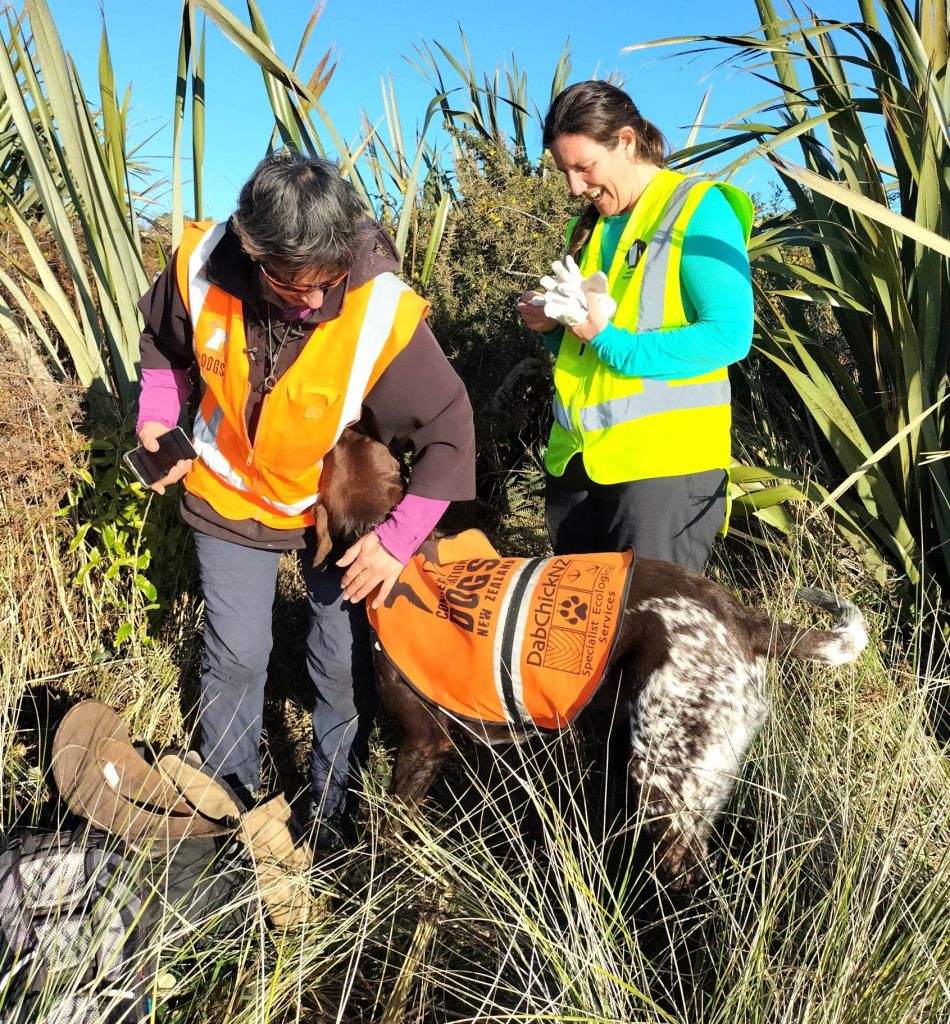
Conservation dog handler Joanna Sim was on the Coast recently with her dog Miro. They were here to search for penguins in coastal areas at the request of current and potential mining operations as part of resource consent processes. While Jo and Miro were here, we were fortunate that they could fit in some survey work for the Trust at Cape Foulwind, Punakaiki and Hokitika. Ranger Lucy Waller and Manager Inger Perkins were privileged to join them both while searching on the coast side of the Westland Milk Products Penguin Protection Fence at Hokitika.
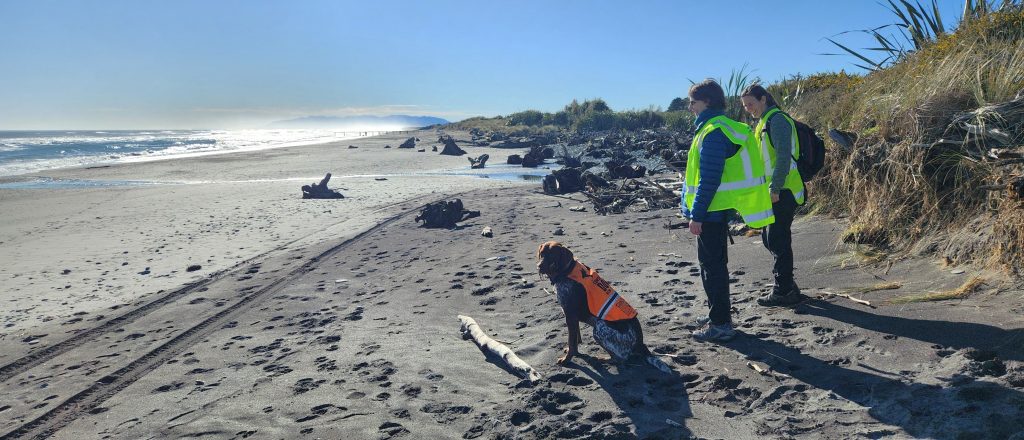
The Hokitika area has been a stronghold for little penguins or kororā no doubt for thousands if not millions of years before humans arrived. During penguin counts immediately north of Hokitika around 15 years ago, the number of fresh tracks heading out to sea could be over 100. That could mean perhaps 40-50 breeding pairs nesting in the narrow strip of scrubby vegetation between paddocks, rugby grounds and sewage ponds and the beach.
Before the Hokitika penguin protection fence was constructed in 2021, penguins were occasionally trying to find nesting sites on the wrong side of state highway 6 and a number were killed on the road. Access for penguins has been impacted by erosion in recent years and that seems to have driven some away despite efforts to cut and maintain ramps for access up the erosion face. Another impact on this dispersed penguin colony has been loose dogs, with nine reported likely to have been killed by a dog between 2009 and 2015. And then there’s the changing climate, for example illustrated by the marine heat wave in summer 2021-22. We know the warmer water made feeding, breeding and survival extremely difficult for little penguins.
But kororā are hanging on and Jo and her energetic and obedient dog Miro identified sixteen definite or highly likely nest sites during the Hokitika survey at the end of July. There may be more but gorse, rabbits and weka can confuse things no matter how clever the dog! Miro also found six sites at the north end of Tauranga Bay, Cape Foulwind. Despite Lucy finding three nests at Punakaiki River mouth last season, she and Jo and Miro had no success there on this occasion.
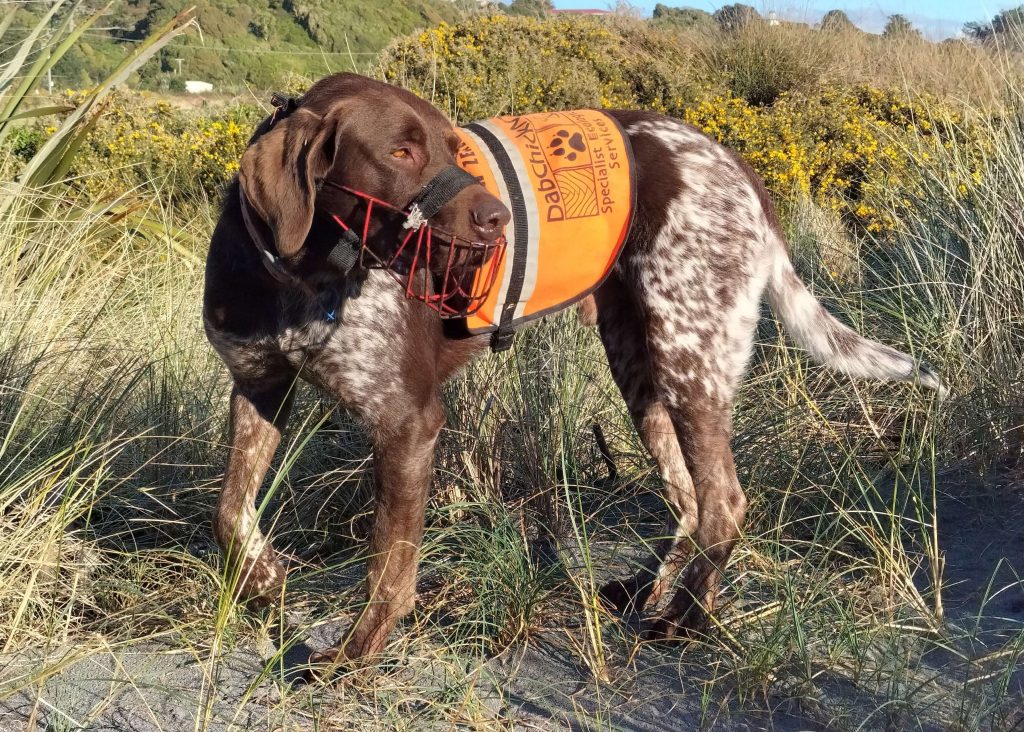
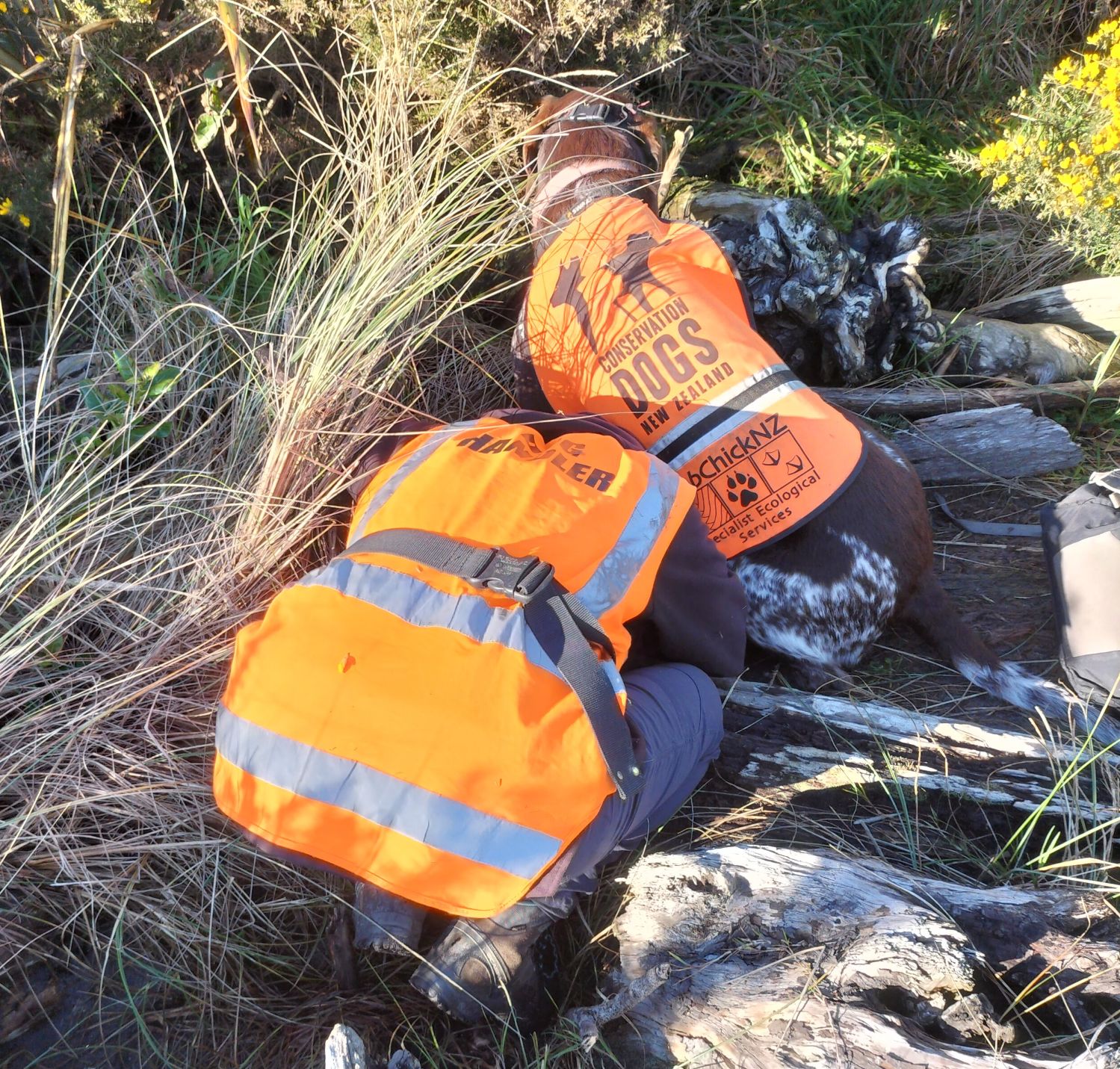
Surveying for penguins is a laborious process. Miro has been trained for up to two years for this work and he takes his time to check carefully and comprehensively, with Jo close by. If Miro is certain of a penguin’s presence, he will return to Jo to encourage her to follow further into the scrubby vegetation to confirm. There is plenty of gorse and blackberry here, not a dog or human’s best friend, but here it can protect penguin nests as dogs are not keen to push past the prickles.
Here’s a brief video showing the images as a camera is inserted into a hole identified by Miro as a penguin nest site. He was right!
Most of Jo and Miro’s last survey day on the Coast was spent at Hokitika covering a painstaking 1.8km. With so many pressures on little penguins, we are very pleased that penguins have been confirmed along this stretch of coast and that they are protected from the highway by our Westland Milk Products penguin protection fence. It seems that dog lovers are also penguin lovers with no penguins reported to have been killed in this area for ten years. We hope that record continues and we are extremely grateful to Westland Milk Products for their ongoing support of our penguin conservation efforts.