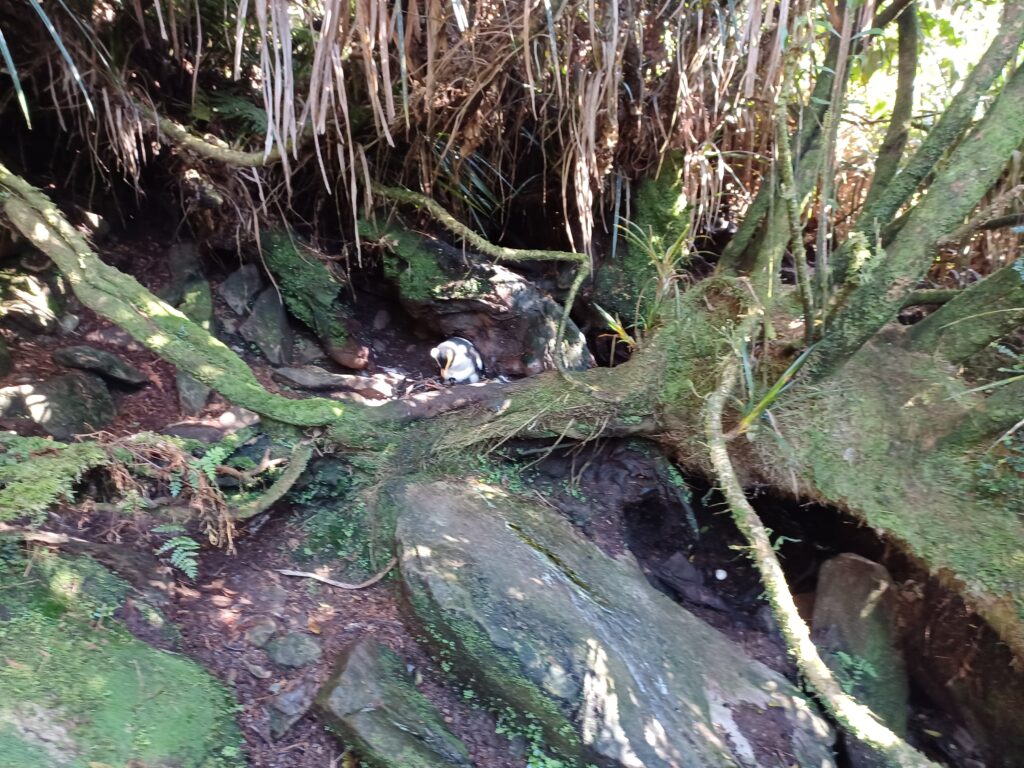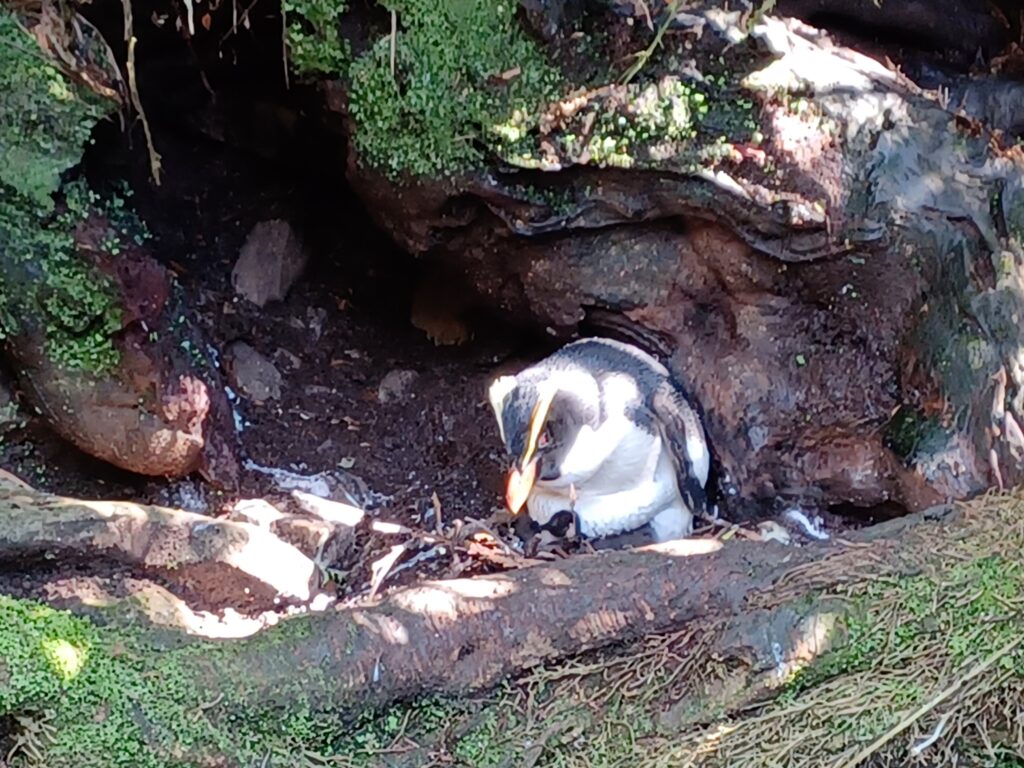
Catherine reports on the latest Fiordland crested penguin / tawaki news from Gorge River:
“Despite the late, shaky start with some lack of egg-laying, the chicks that made it seem to be doing really well. Yesterday I saw one moving down the creek with its parent, probably ready to leave. As I couldn’t get up the creek past them I circled back around and saw another and its parent at the same stage in its nest at the top of the creek. It may have been the same one having chickened out and gone home. I saw two others at the same stage and four not far behind, which I would say is definitely not late for here. They also are not in order of hatching i.e. some have caught up and passed the oldest.“There were three one year old juveniles on the beach below that creek, coming in to moult.“I am just resetting the lure cameras for the end-of-season, and actually, post predator control count. I’ve been held up by the lack of dead possums to use for bait so they are getting lamb chops! But disappointingly, we’ve just caught three possums this week, and there is certainly no lack of rats in the ceiling.”
When quizzed on how to identify juvenile penguins from the last breeding season, Catherine explained:
“I got it worked out with help from Thomas [Dr Thomas Mattern of The Tawaki Project] and Robin [Robin Long, daughter and Tawaki Ranger] 3 or 4 years ago.
“The new fledglings have white cheeks and chins, not much of a crest and a black beak. The first time Robin and I saw one at Jackson bay 15 years ago or more, we assumed it was a blue penguin until we looked closer at the photo later.
“The one year old juveniles, prior to moulting, look much the same with white cheeks and chin but the crest seems a bit big and when you look again you realise that the beak is orange. Their voice has broken and yesterday they were arguing with each other and pecking. Apparently they can also be very clumsy, having not set foot on land for a year.
“I think that by the next year they are normal black and white in the face, apart from the cheek stripes which are not fully developed until they are adult.”
More about tawaki juveniles here with photos, from The Tawaki Project.