A shout out to our cool West Coast kaitiaki tamariki!
We are so lucky here on the West Coast to have such cool, proactive and enthusiastic children and youth, tamariki and rangatahi, who give up their time and energy to help protect and advocate for our local wildlife, particularly our penguins!
Whether it’s through school projects, girl guides, scouts, or volunteering, the young people of the West Coast are always keen to help support our cause. Aged 4 years to 19 years old!
There are hundreds of you out there that we would like to thank, so we cannot possibly mention you all by name, and some of you wouldn’t want your names out there either, so we say a very huge, heart-felt thank you to every single one of you! You know who you are!
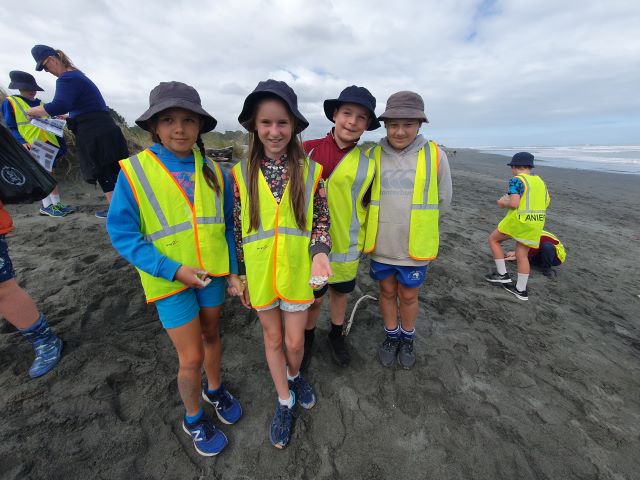
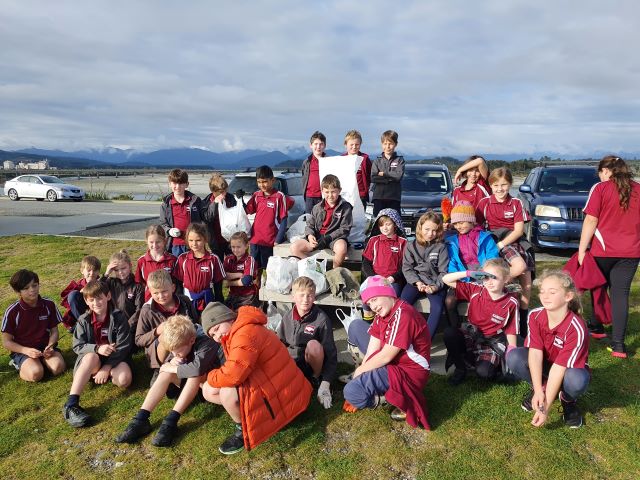
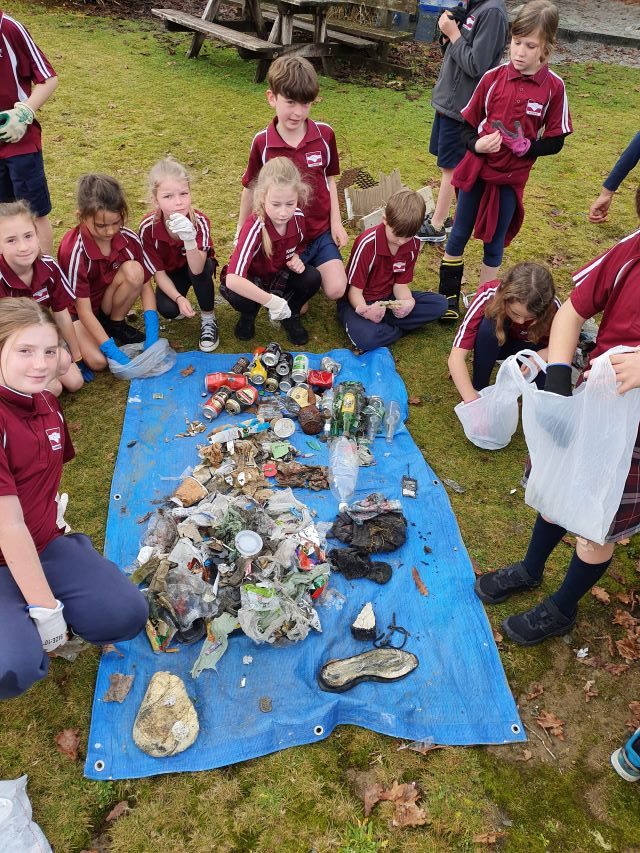
Hours spent picking up litter along the local beaches and taking it back to school in bags to study and separate for a litter survey with Sustainable Coastlines.
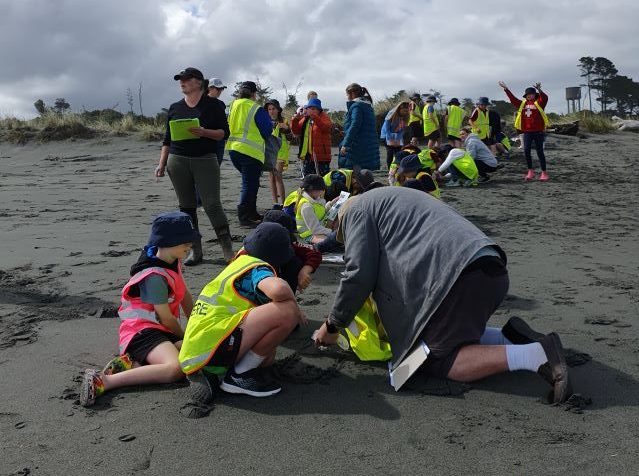
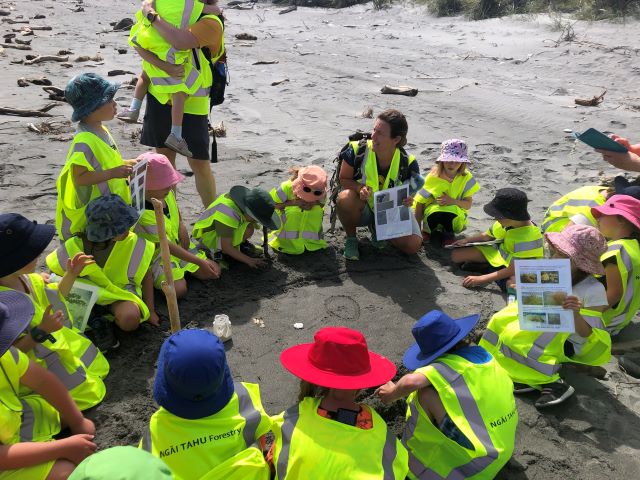
Persuading grandparents and parents, uncles and aunties to come down to the beach for the morning to spot and count tracks, make plaster of Paris footprints, and study a penguin’s habitat.
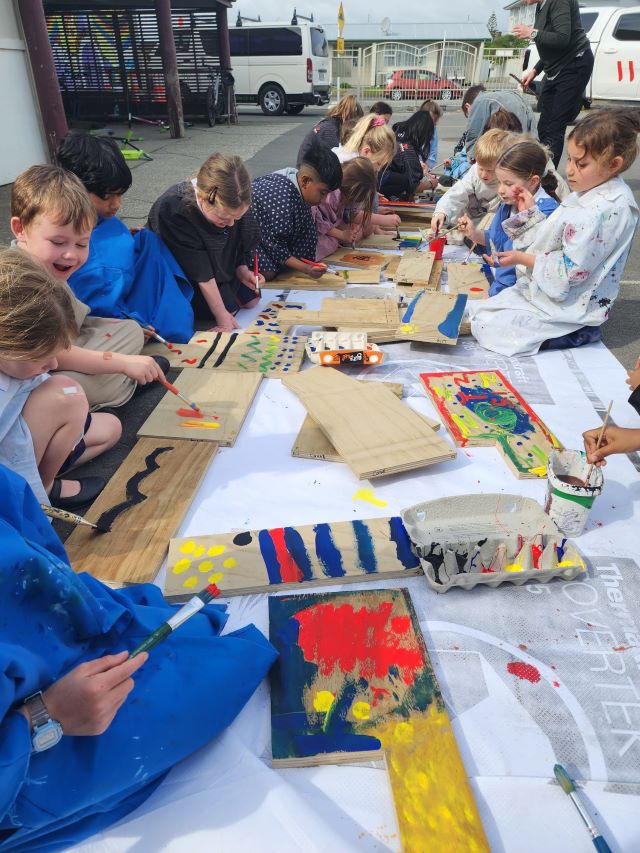
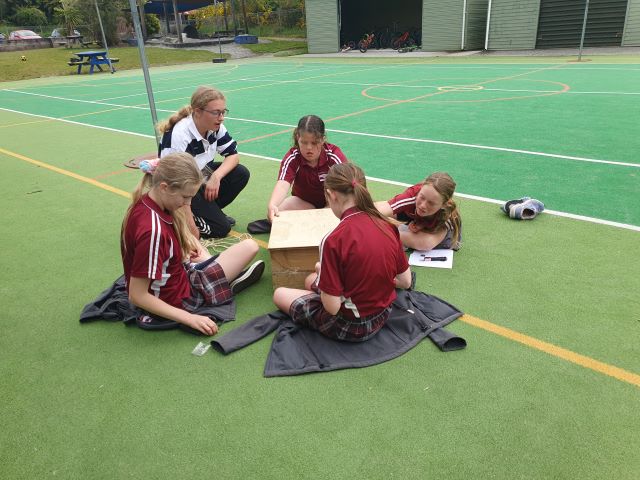
Fundraising, sourcing and building, nest boxes to provide safe shelter for penguins in the breeding season, away from dogs and other predators.
Learning about and spotting plants that create a good habitat for penguins, to make a planting project plan for the future.
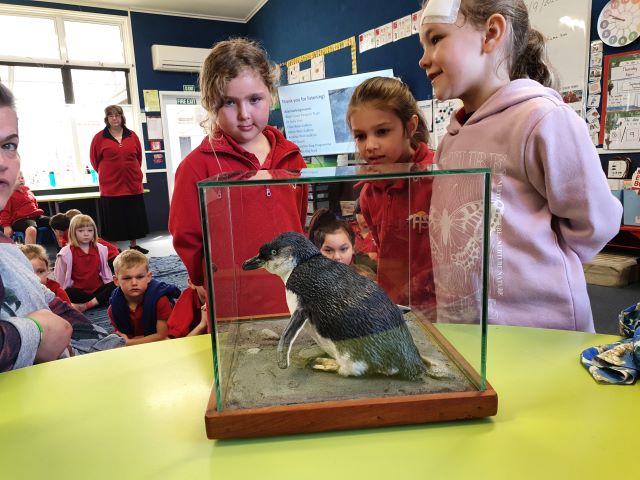
Sheltering from the rain and the outdoor elements in the Winter and learning about our taxidermied ‘Kevin the Kororā’ in the classroom, with fun activities.
Level 3 science student taking penguin education to the next level and leading a penguin project with a primary class for a scholarship programme. Many hours went into sourcing the wood, cutting and preparing each piece for a DIY penguin box package for each group to simply assemble and nail.
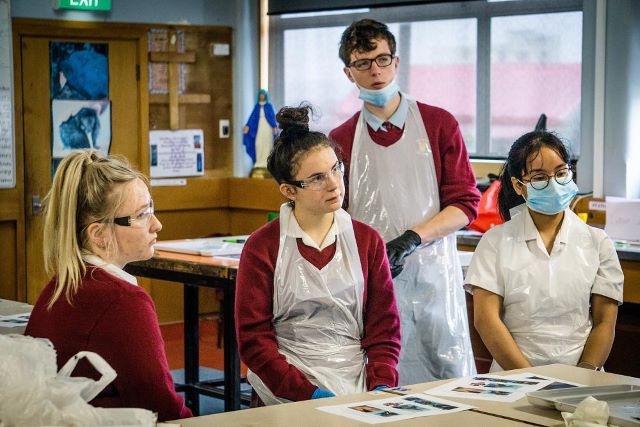
Lunch hours and break times learning about penguin adaptations and anatomy for level 2 and 3 biology units of work.
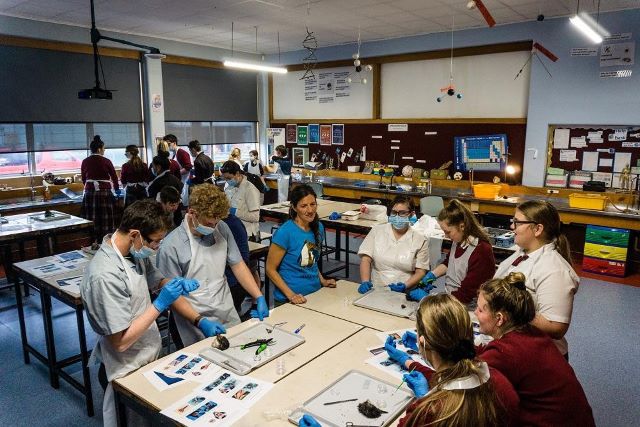
Dissecting penguins to learn about anatomy, determine cause of death, understanding the health of the penguins and taking part in an international nasal mite study where the findings were sent to Brazil.
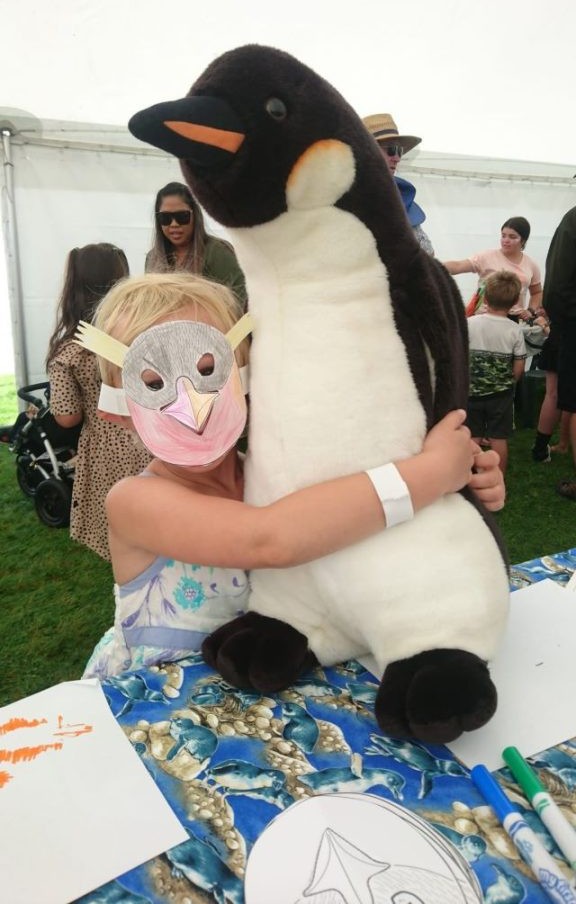
Hundreds of penguin masks made and worn over the years at Children’s Day events at Cass Square, Hokitika, with the challenge being to tell as many people as you can to take care of our penguins this season!
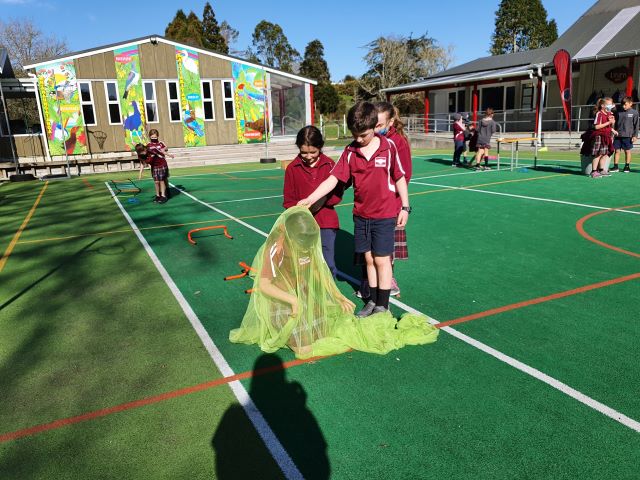
Getting silly and making a fool of ourselves, becoming penguins and seeing the difficult journey they have to make each day to return home and feed their chicks.
Litter, litter, litter…..all this was found at the local Hokitika Beach…..
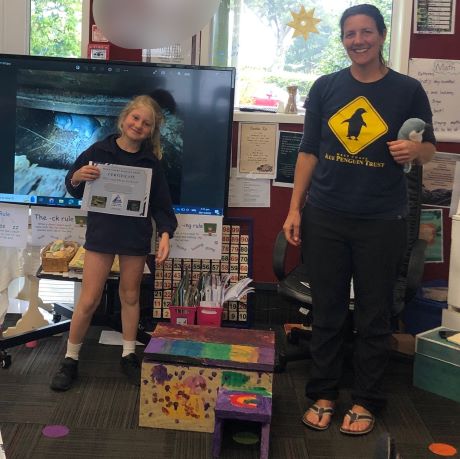
Becoming Penguin Ranger Assistants having built nest boxes and completed many classroom activities to learn all about our penguins and how to protect them.
So many more photos and so many more activities…….. too many for this article, so we will do a Part 2 coming soon …….
New penguin encounter centre opened 17th October 2025
5 November 2025
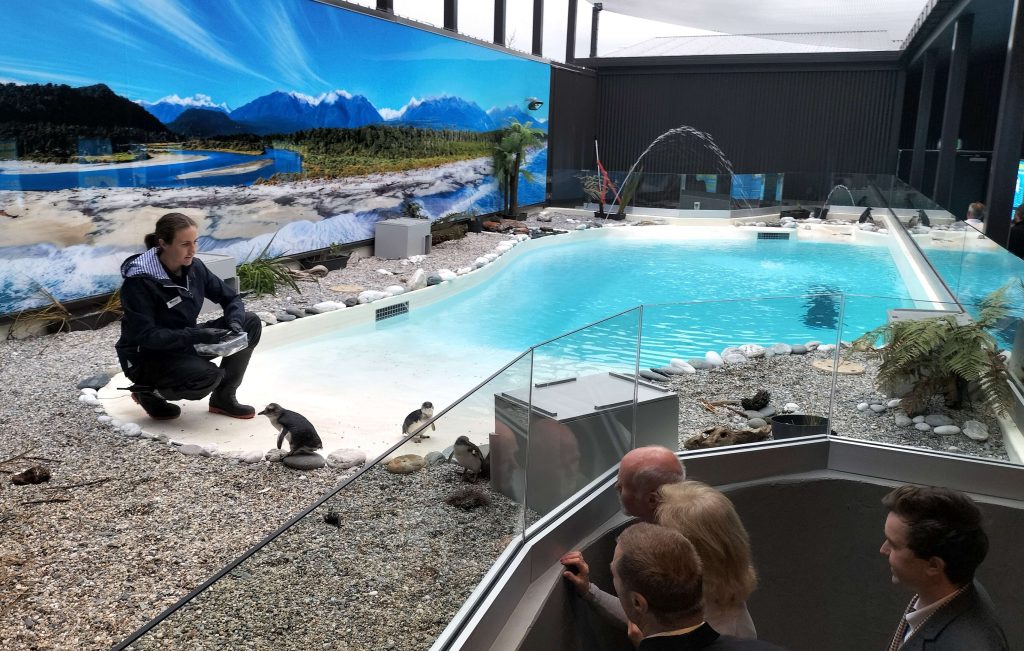
An exciting new opportunity to meet little penguins / kororā - Ambassador Kororā Encounter - opened at the West Coast Wildlife Centre in Franz Josef last month. The West Coast Penguin Trust has been privileged to be connected to the ideas and plans for a penguin encounter opportunity here for a few years and were honoured to be at the official opening.
We're delighted that our work is featured on a couple of panels at the new addition to the Wildlife Centre, a fixed panel and another that scrolls through some photos. Visitors are invited to make a donation for community conservation of penguins, kiwi and tuatara - the three species on display at the centre, promoting conservation of their relatives in the wild. Every year, donations will be shared between our trust and others working with kiwi and tuatara.
The 'ambassador' penguins are birds that would not have survived in the wild, generally due to injury. Here, they can live out their lives in comfort and be ambassadors for their species.
The event was opened by Paul Madgwick and other members of Te Rūnanga o Makaawhio with a Pōwhiri, followed by a speech by centre owner, Richard Benton, who, together with his wife Sherilee, have developed this wonderful new centre, benefitting penguins and the region. DOC Director Owen Kilgour added more conservation focus and noted the value of the work Richard and the West Coast Wildlife Centre have done for rowi and Haast tokoeka kiwi for many years and the strong partnership with DOC, welcoming the additions of penguins. Development West Coast CE, Heath Milne, welcomed the significant investment in tourism on the West Coast while giving conservation a priority, focus and stronger profile.
And West Coast - Tasman MP, Maureen Pugh, had the honour of welcoming the new attraction and then cutting the ribbon with Richard. She also emphasised the importance of conservation - of our native species and their habitat, which was great to hear.
Here's a news story about the ambassador penguins: https://www.facebook.com/reel/654336360889403
And photos below are from the opening event, including speeches, ribbon cutting, our panels, the donation panel, the opening event plaque, the penguins of course, and even ice penguin sculptures to add to the occasion. In place of red carpet, there was blue carpet, and the staff wore blue bow ties. The blue of little blue penguin was celebrated everywhere!
Put a visit to the ambassador penguins and their wonderful new home on the to do list, for you, and your family and friends!
https://wildkiwi.co.nz/the-attraction/penguin
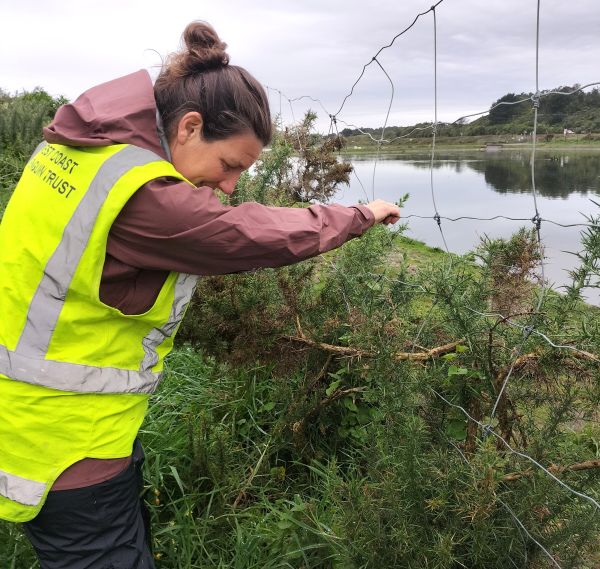
Checks and repairs of the fences have been carried out by volunteers and rangers
September 2025
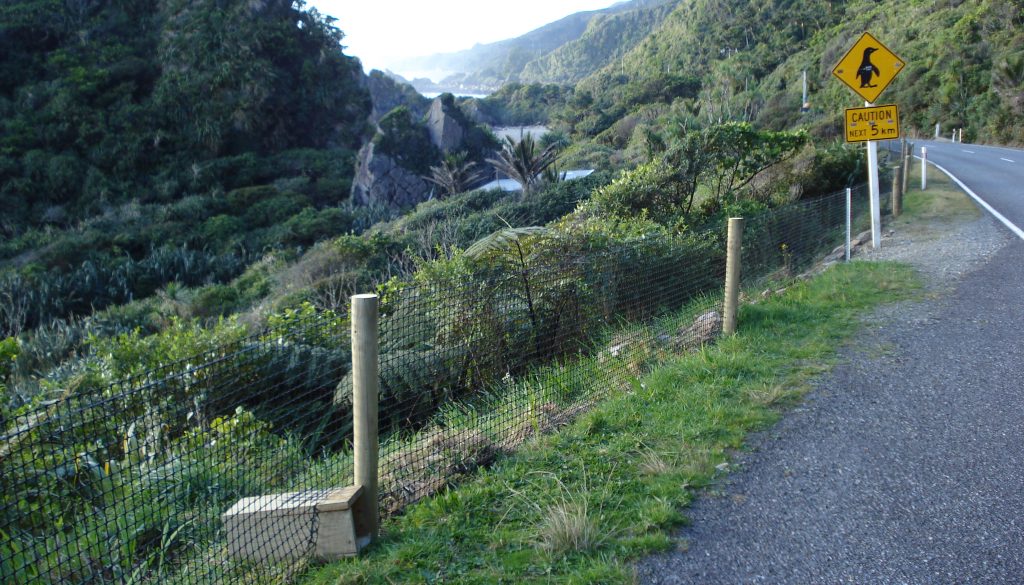
The first trial penguin protection fence was installed just south of Punakaiki in 2013 and the main one for the Coast Road was constructed north of Punakaiki in 2014. A smaller one was added near Seal Island in 2015, the newest penguin protection fence was installed on the northern outskirts of Hokitika in 2021 and two new sections were added north of Punakaiki in 2023 and 2024.
While materials were chosen that would stand up to the harsh coastal conditions, those same coastal conditions are conducive to plant growth! Occasional checks of the fences have been carried out by volunteers and rangers so that any maintenance needs can be identified and remedied. The never-ending need for maintenance is managing the vegetation that can grow through the fence, for example gorse, blackberry and hydrangea, pushing it to breaking point in places, or flop over causing damage from the weight of rank grass, rushes and weeds such as montbretia.
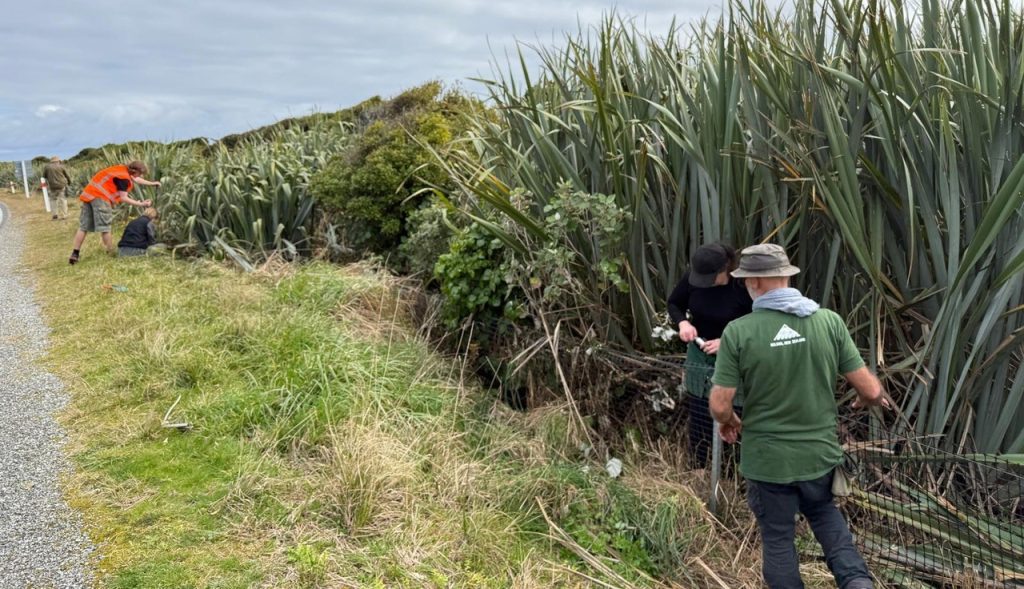
Volunteers recently spent a few hours tidying up the main fence along Woodpecker Bay north of Punakaiki so a big shout out to them - thank you Fiona, Jony, Reef, Katrina, Mandy, Marty, Teresa and Deb! Flax had been pressing down on the fence, but now the fence has been freed up by these wonderful volunteers - and they picked up a fair bit of rubbish too.
Volunteer Natassja Savidge has offered to check and help maintain the Hokitika penguin protection fence and joined Ranger Lucy Waller and Manager Inger Perkins in May to inspect the length of the fence. Some minor issues were found but the main finding was the extent of the vegetation growth that was damaging the fence in places. Big thanks to Natassja!
Recently, volunteer Karen Hitchcock joined trust manager, Inger Perkins, for weeding along a section of the Hokitika fence and continued alone the following weekend. Karen is host at the Fitzherbert Court Motel in Hokitika, just a mile or so away. With Conservation Week in the news, 'naturing' on the agenda and Qualmark Bronze Accreditation, Karen decided to combine the three and offer time to help with penguin conservation. A Bronze business must meet all Qualmark’s expected standards in the Sustainable Tourism Business criteria. It identifies a business with high professionalism, an awareness of its impact on the environment and a customer-centric approach.
Gorse, grass and montbretia were the main culprits, and a good start was made clearing them from the fence. Fast-growing gorse at a strainer post had snapped the top fence wire, which will need fixing but at least the fencer will be able to get to the fence. A big thank you to Karen!!
The Hokitika penguin protection fence was kindly paid for by Westland Milk Products and they generously continue to support penguin conservation efforts. The fence follows the Westland District Council's fence on the coastal side of the sewage ponds and then follows fencing along the railway line. We are fortunate that both WDC and Kiwirail maintain their own fences and weed control helps keep the penguin fence clear.
More volunteer opportunities will be coming soon!
West Coast New Zealand penguin fossil discoveries tell us about penguin evolution
September 2025
Penguin fossils have been popping up in the news in recent years so it was interesting to discover that they are also being found on the West Coast recently.
First, a bit of background. New Zealand boasts the world's richest record of penguin fossils. They reveal that ancient penguins were diverse in size, reaching sizes much larger than today's penguins. Those early giants show that large body size was present at the dawn of penguin evolution, with some fossils dating back 60-62 million years. The fossils have also provided insights into the rapid evolution of early penguins' limb or wing shape. A couple of years ago, we reported on a new penguin fossil where the species had been named after our late Chair and Scientist, Kerry-Jane Wilson MNZM (read it here).
Wilson’s little penguin – Eudyptula wilsonae. Image credit: Simone Giovanardi.
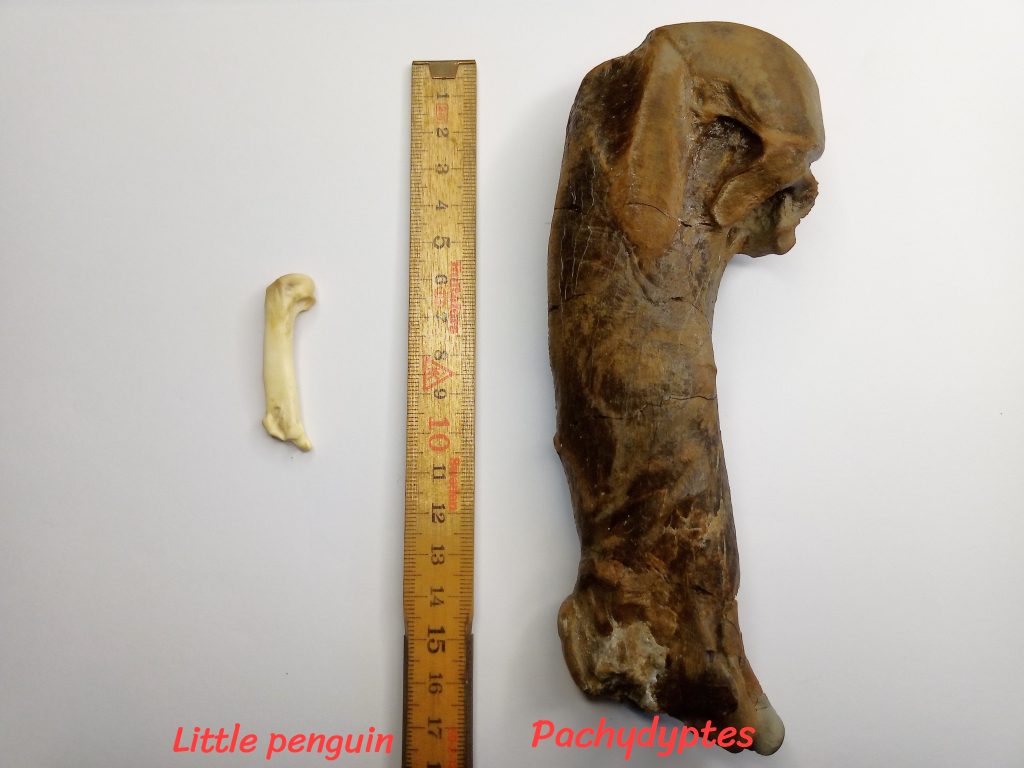
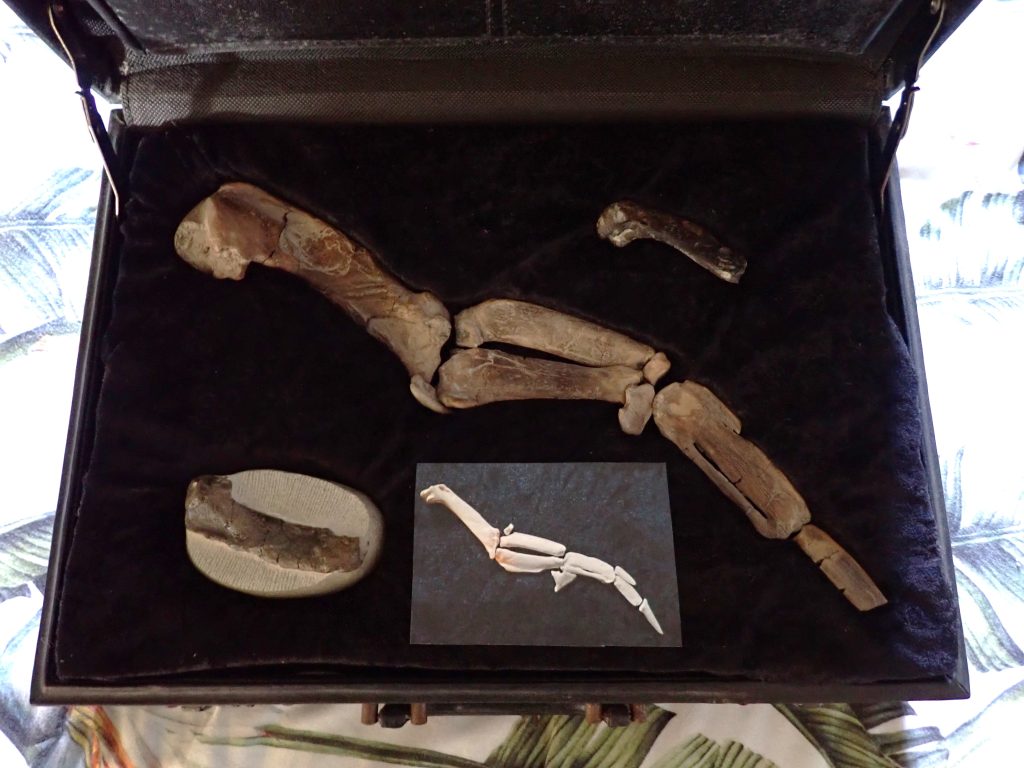
A couple of months ago, trust manager, Inger Perkins, and trust tawaki ranger, Catherine Stewart, were giving talks at the Westland District Library in Hokitika and were approached by a chap with a small suitcase. It turned out that, inside the case, Harry Jensen had the carefully prepared and packed fossil bones of a penguin's wing or flipper. The flipper fossil was much larger than that of a little penguin or kororā. In the case there are also two smaller as yet unidentified wing bones from two species of miocene-aged penguin found near Cape Foulwind, 11-9 million years old (Ma). He kindly accepted our invitation to speak for a few minutes at the end of the scheduled presentations explaining the hundreds of hours that goes into paring back the rock in which the fossils were found, often in large cobbles or small boulders.
Harry Jensen's case with fossil penguin flipper compared to little penguin flipper
This fascinating and time-consuming hobby is contributing to the world's knowledge of earlier penguins and their distribution and evolution.
Harry explained about another fossil he has found near Rapahoe:
"The flipper fossil is from a penguin related to the Pachydyptes ponderosus, and is around 32-34 million years old, from the late Eocene. Pachydyptes is estimated to have been around 1.4 metres tall and weighing in at just under a hundred kilograms, the former heavyweight of the penguin world. Recent examination shows this is likely to be a new to science species, as there are certain differences between this specimen and the original Pachydyptes holotype*."
* Holotype: a single type specimen upon which the description and name of a new species is based.
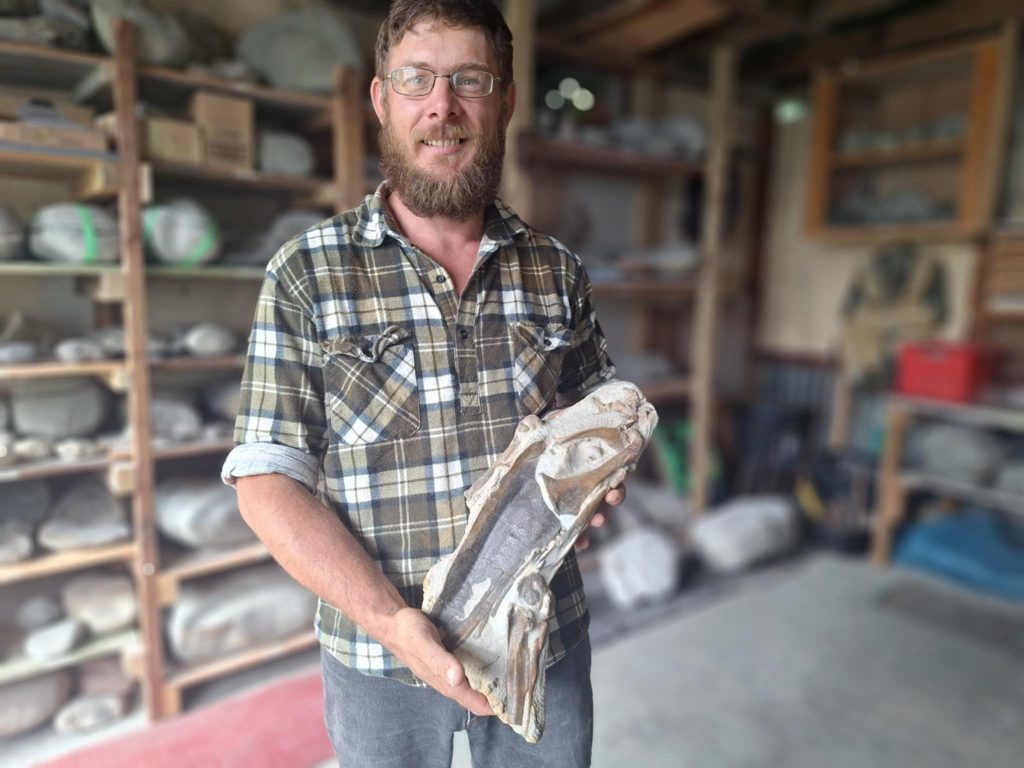
Harry Jensen's penguin fossil - related to Pahydyptes ponderosus, c.32-34 Ma, found near Rapahoe
Authoritiy on penguins at Otago University and now Otago Museum, Marcus Richards, (former Department of Geology Paleontology Curator and now Collections Technician at the museum) has been collaborating with Harry, as has Alan Tennyson, Curator of Vertebrates at the Museum of New Zealand Te Papa Tongarewa. Alan Tennyson is a world expert on New Zealand's fossil penguins.
It seems that penguin fossils are not new on the West Coast. The first were found in 1869 in Woodpecker Bay, north of Punakaiki. There is a short note about this find on Te Ara here, including sketches of the fossilised penguin bones along with an outline of the equivalent bone of a Fiordland crested penguin or tawaki. The comparison shows how much bigger the ancient penguin was, perhaps twice as tall as the tawaki, which are 60cm tall.
Between Harry and his collaborators, at least six different types of fossil penguins have been identified from the West Coast.
Harry Jensen with articulated penguin suspected to be a species of Palaeeudyptes penguin, around 30 million years old, nicknamed the "murdergoose". Photo credit: Meg Fulford
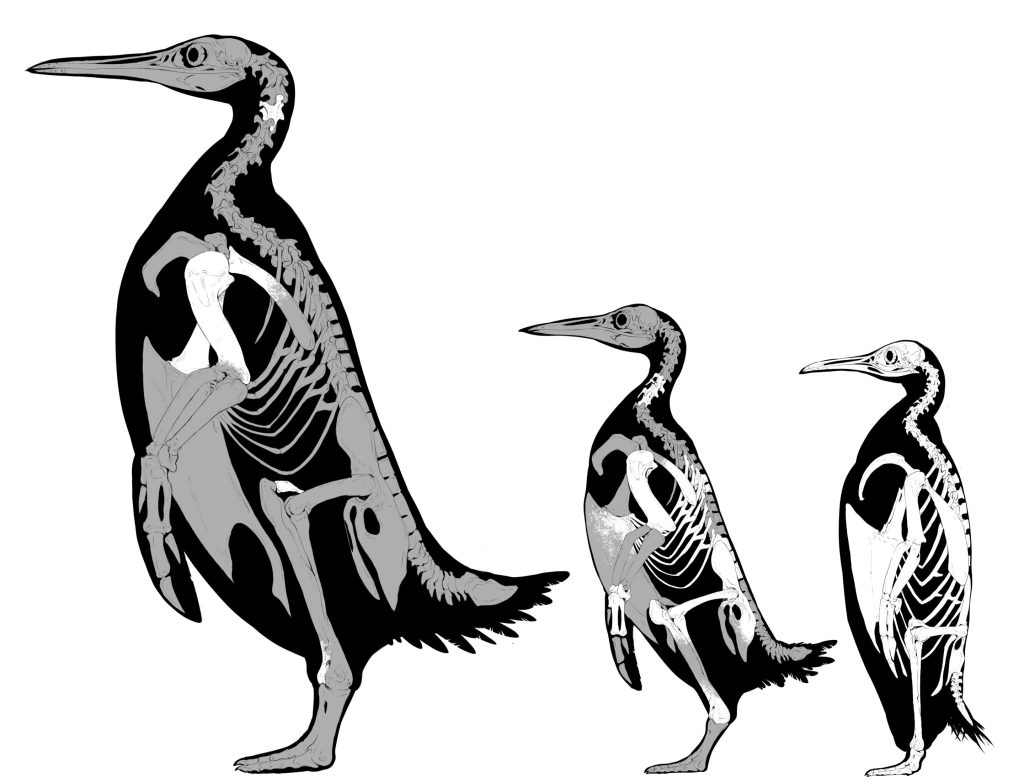
The Kumimanu fossil penguin, found in North Otago, proves that some of the earliest penguins were much larger than even the emperor penguin today. The University of Otago has been leading this work and you can find some information about their work here. It seems that Kumimanu fordycei was the largest fossil penguin every discovered, estimated to weigh in at a huge 154kg! Another newly described species is Petradyptes stonehousei, which would haveweighed 50kg. When compared to our current West Coast penguins, they are colossal. Tawaki are around 4kg and kororā just 1kg.
Skeletal illustrations of, left to right, Kumimanu fordycei, Petradyptes stonehousei, and a modern emperor penguin showing the sizes of the new fossil species. Credit: Dr Simone Giovanardi (from https://phys.org/news/2023-02-fossil-bones-largest-penguin-unearthed.html)
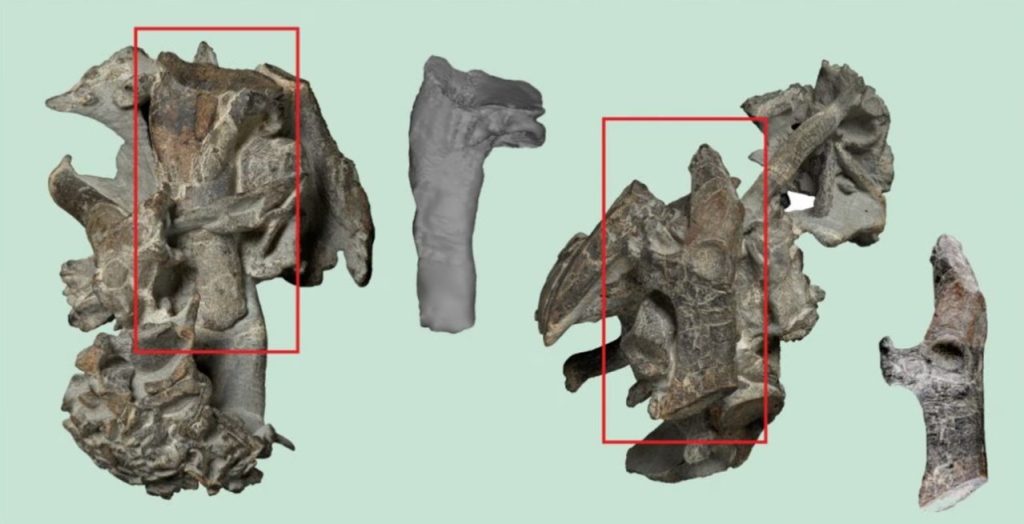
Giant penguin fossil bones were also found south of Christchurch in the early 2000s. It took many years to carefully remove and then study pieces of the skeleton. The penguin species weighed around 100kg and was about 1.77m tall. This one was also described as Kumimanu, after the Maori words “kumi”, meaning a large mythological monster, and “manu” for bird, and this time Kumimanu biceae. More on that story here from the Guardian.
The partly prepared skeleton of the Paleocene giant penguin Kumimanu biceae. The rectangles emphasise the humerus and a bone from the shoulder girdle (coracoid), which are shown separated from the original bone cluster. Photograph: Gerald Mayr/Senckenberg Research Institute (Guardian.com Dec 2017)
Our thanks go to Harry for getting us excited about the history of penguins in the region and to him and his collaborators for the untold hours that go into finding, preparing and analysing these precious fossils.
There is a lot more work to come and results will be published in due course.
Postscript
The study of fossil penguins is continuing apace, and news of the find and study of a giant fossil penguin skull from the Taranaki coast was shared this month. The skull is 35% larger than that of the Emperor penguins, which weigh upwards of 35 kg.
RNZ National reported the study, orginally published in the Journal of Paleontology (18 Sept 2025) - find the news here with a link to the journal article: What caused the extinction of great penguins that roamed New Zealand? | RNZ News
The scientists, including Alan Tennyson mentioned above, found that this giant penguin was alive 3-3.3 million years ago in the mid-Piacenzian Warm Period (mPWP) when global temperatures were around 3°C above those of the preindustrial era. They suggest that the extinction of giant penguins back then may have been linked to the arrival of large raptors including Haast's eagle.
Borrowed from Journal of Paleontology, 18 Sept 2025, Tennyson, Marx, Ksipka, Thomas: Aptenodytes sp. indet., NMNZ S.048857: Skull in (1) dorsal, (2) ventral, (3) right lateral, (4) proximal, (5) distal, and (6) left lateral views.
Woodpecker Bay is the bay encompassing Fox River, just north of Punakaiki, on the wild West Coast of New Zealand’s South Island. Our West Coast accommodation consists of 6 self-contained baches situated along the coast of Woodpecker Bay.
Woodpecker Bay offers remoteness and unmatched natural beauty and all of our baches have stunning ocean views and are right on the water’s edge. All baches have fully equipped kitchens and all linen is provided, all of our baches have free and fast WiFi. They are suitable for couples, friends and families looking to explore the beauty of the West Coast.
We are thrilled to have been supporting the West Coast Penguin Trust since 2016.
Funds are raised from visitor admissions and donations. To date, the fund has raised over $5,000,000 to support a wide variety of conservation projects aligned with the work of Auckland Zoo.
We also provide financial resources for external organisations and individuals to carry out vital field conservation work in New Zealand and overseas.
West Coast Penguin Trust's education programme was fortunate to be supported by the Auckland Zoo Conservation Fund in 2024-25. The theme for grant support changes each year and conservation education was the focus of that funding round, fitting our work with schools perfectly.
Westland Mineral Sands (WMS) is proud to announce its partnership with the West Coast Penguin Trust, strengthening its commitment to conserving the unique biodiversity of the region and supporting vital efforts to protect the kororā (Little Penguin). This partnership with the West Coast Penguin Trust reflects WMS’s commitment to balancing operational excellence with environmental stewardship. By prioritising the protection of the region’s precious wildlife, WMS aims to ensure the kororā can continue to thrive in their natural habitat for generations to come.
Partnership announcement, 10th December 2024:https://www.westcoastpenguintrust.org.nz/news/wms-partners-with-west-coast-penguin-trust-to-support-penguin-conservation/WMS Group website:https://www.wmsnz.com/
Our Vision
“Building an intergenerational business for New Zealand”
We are committed to becoming a world leader in critical minerals that advance the shift toward a sustainable future. As we work towards achieving this, we will build a resilient business that benefits our company, the West Coast, and New Zealand for generations to come.
Caring for our local habitat
We are lucky enough to live and work so close to the magnificent coastline which gives our region its name. But we’re well aware it’s not just our home and we consider it our duty to protect the wildlife around us through thoughtful planning of our sites and monitoring in our day-to-day operations.
The West Coast is home to kororā or little blue penguins. We consulted with experts and brought in a penguin-tracking dog to help us identify where penguins are nesting and to help us understand their movements. As a result, we altered our traffic management plan to ensure our trucks were not travelling either side of dusk or dawn to avoid disrupting kororā and their migration patterns.
The purpose of PIC is to pay the pensions of current and future policyholders. This focus delivers value for stakeholders.
Why the PIC penguins?
Emperor penguins have been central to PIC’s brand from the start. That’s because they’re memorable and intrinsically appealing, as well as striking to look at. Emperor penguins embody qualities that the PIC team works hard to emulate every day. They are:
Loyalty
They form lifelong partnerships, working together to protect and nurture their young and cooperating for the wellbeing of the group. Like them, our team invests time in building long-term relationships, showing ourselves to be dependable and dedicated.
Adaptability
Penguins have evolved to live successfully in water and on land, in many different climates. We too are adaptable, staying agile in a changing environment and evolving our business with innovative solutions to meet client needs.
Resilience
There are few animals on earth as tough as Emperor penguins, who withstand long Antarctic winters and endure months without food. PIC stays strong even in the harshest economic conditions and in the face of the most volatile markets.
The West Coast Penguin Trust is thrilled to share a love of penguins with PIC and to have received generous donations from them.
Since 1985 we have returned over $1 billion back to the community, supporting thousands of good causes all around New Zealand.
Our Values
INTEGRITY – Do the Right ThingCOMMUNITY – Stronger Together INNOVATION – Change for the BetterACHIEVEMENT – Strive for Success
A grant was made by the Lion Foundation in 2023 for the Trust's education ranger to deliver our education programme to West Coast schools.
The Brian Mason Scientific & Technical Trust was established in July 1991 to receive and allocate grants for the advancement of scientific and technical objectives in Canterbury and Westland
We are fortunate to have had a grant from this Trust to research and publish information about threats to Westland petrels - tāiko, the information proving invaluable in our advocacy work.
A second grant was awarded in 2022 for little penguin - kororā - foraging study taking place over 2023 and 2024 breeding seasons.
The Sargood Bequest is a charitable trust founded in 1939 by Sir Percy Sargood of the firm Sargood Son & Ewen. Sargood Bequest actively supports community groups and individuals within New Zealand.
The purpose of the fund is to make grants to projects and activities in the Children & Youth, Cultural, Sports & Outdoors, Educational and Environmental categories with a focus on Access, Participation and Inspiration. The majority of grants made by Sargood Bequest are under $5000. The Trustees favour projects to which funds are specifically targeted. From time to time the trust also makes larger grants or pledges over a number of years at the discretion of the trustees.
The Trust has been fortunate to have been awarded grants principally for our Education work, but also for the Community Conservation Symposium.
Westland Dairy Company - formerly Westland Milk Products, based in Hokitika.
Westland. A place, a people, a brand and a spirit.
It is this naturally determined, adaptive spirit that enables our customers to find their edge, to nourish life through our products we have made beautifully for generations.
Westland Dairy Company have supported the Trust to print wildlife awareness signs for beach access points across the region and have been at pains to ensure penguins are protected at and around the pipeline drilling project site on the north edge of Hokitika. Following that project, they remained committed to protecting penguins and have installed a penguin protection fence in the area to prevent penguins being killed on the state highway. They have also generously assisted with the cutting of access ramps for penguins when erosion results in barriers between nest and sea.
The Trust's relationship with Westland continues to grow and their support is hugely valued and valuable.
https://www.westland.co.nz/en/company/purpose-and-values/
Wellington Zoo is New Zealand’s first Zoo and Wellington’s oldest conservation organisation, caring for animals since 1906. The Zoo is a not for profit charitable trust, and has been that way since 2003. The Trust runs the Zoo on behalf of Wellington City Council.
They are proud to be the world’s first carboNZero certified zoo and they became the first zoo to win the Environmental Sustainability Award at the World Association of Zoos and Aquariums (WAZA).
The zoo follows the WAZA commitments to excellence in animal welfare and conservation.
They are also part of the Zoo and Aquarium Association - a regional organisation for zoos in the Australasian region. ZAA manages the coordination of breeding programmes and sets the level of professional standards and practice for members. They are proud to have been accredited under their Animal Welfare standards.
The West Coast Penguin Trust is hugely proud to be a Conservation Partner, sharing an interest in improving the conservation management of Fiordland crested penguins and sharing information and resources that contribute to penguin conservation generally.
Lottery Environment and Heritage provides grants for plans, reports and one-off projects that will protect, conserve and promote New Zealand’s natural, cultural and physical heritage.
The Trust has received grants for three major projects, namely developing an education resource (2015), presenting the Community Conservation Symposium (2018) and the little penguin - kororā - foraging study 2023-2024.
"A great journey is easy, safe and connected. Waka Kotahi NZ Transport Agency is focused on providing one integrated land transport system that helps people get the most out of life and supports business.
"We look after the national transport system with our partners, today and for the future. We’re innovating to make sure the system is efficient and sustainable, unlocking opportunity and keeping New Zealand moving.
"We’re working to deliver our customer promise – great journeys to keep New Zealand moving."
Waka Kotahi NZTA recognised the risk posed to drivers on the Coast Road (state highway 6) at night, where penguins on the road could cause drivers to swerve off the road. Their focus on safety fitted with the Trust's aim to protect penguins and keep them off the road and the Trust was hugely grateful for the agency's support managing the safety of the fence construction project. Waka kotahi NZTA continue to support the penguin protection fence through an annual amount allocated to fence maintenance and extension, and used for this purpose by Westport based road contractor, WestReef, also very supportive of this project.
The Department of Conservation has been the main sponsor of the Trust since its inception and continues to support our work with advice, collaboration and encouragement.
We're very fortunate to work with such a passionate group of people throughout the West Coast region.
The West Coast Community Trust manages its investments and apply income by way of grants for charitable, cultural, philanthropic, recreational and other purposes in Buller, Grey and Westland.
The Trust has been fortunate to receive grants for its education and its awareness programmes.
We know next to nothing about tawaki’s marine ecology, their foraging ranges, which prey species they consume and at which water depths they forage. Critical information is missing to assess how human activities might impact on tawaki, be it ongoing climate change, fisheries activities or pollution of the marine habitat with mining effluents or oil-leaks.
This project will address the key aspects of tawaki’s marine ecology throughout the range from South Westland to Stewart Island.
We will:
examine their foraging strategies across the different marine environments they inhabit
study the spatial distribution of their diving activities to determine whether there are specific hot spots at sea
investigate which marine and terrestrial aspects affect the species’ population dynamics
We also collaborate with the West Coast Penguin Trust to further knowledge and conservation management for tawaki through our collaboration as The Tawaki Coalition.
Enviroschools is a nationwide programme supported by Toimata Foundation, founding partner Te Mauri Tau, and a large network of regional partners. Early childhood centres and schools commit to a long-term sustainability journey, where tamariki/students connect with and explore the environment, then plan, design and take action in their local places in collaboration with their communities.
We are fortunate to be able to use key structures from the Enviroschools programme in our education programme and we join forces with Enviroschools - coordinators and schools - where we can for even greater environmental education outcomes.
The Trust has also worked with Enviroschools for the West Coast to establish a network of environmental educators in the region.
 While materials were chosen that would stand up to the harsh coastal conditions, those same coastal conditions are conducive to plant growth! Occasional checks of the fences have been carried out by volunteers and rangers so that any maintenance needs can be identified and remedied. The never-ending need for maintenance is managing the vegetation that can grow through the fence, for example gorse, blackberry and hydrangea, pushing it to breaking point in places, or flop over causing damage from the weight of rank grass, rushes and weeds such as montbretia.
Volunteers recently spent a few hours tidying up the main fence along Woodpecker Bay north of Punakaiki so a big shout out to them - thank you Fiona, Jony, Reef, Katrina, Mandy, Marty, Teresa and Deb! Flax had been pressing down on the fence, but now the fence has been freed up by these wonderful volunteers - and they picked up a fair bit of rubbish too.
While materials were chosen that would stand up to the harsh coastal conditions, those same coastal conditions are conducive to plant growth! Occasional checks of the fences have been carried out by volunteers and rangers so that any maintenance needs can be identified and remedied. The never-ending need for maintenance is managing the vegetation that can grow through the fence, for example gorse, blackberry and hydrangea, pushing it to breaking point in places, or flop over causing damage from the weight of rank grass, rushes and weeds such as montbretia.
Volunteers recently spent a few hours tidying up the main fence along Woodpecker Bay north of Punakaiki so a big shout out to them - thank you Fiona, Jony, Reef, Katrina, Mandy, Marty, Teresa and Deb! Flax had been pressing down on the fence, but now the fence has been freed up by these wonderful volunteers - and they picked up a fair bit of rubbish too.
 Volunteer Natassja Savidge has offered to check and help maintain the Hokitika penguin protection fence and joined Ranger Lucy Waller and Manager Inger Perkins in May to inspect the length of the fence. Some minor issues were found but the main finding was the extent of the vegetation growth that was damaging the fence in places. Big thanks to Natassja!