With the help of the NZ Penguin Initiative, the West Coast Penguin Trust has expanded its blue penguin marine foraging study to learn about depth as well as direction and this is a first for blue penguins on the West Coast.
Although only one of the six depth and GPS loggers was recovered, it provided some interesting information covering two foraging trips and we’re looking forward to learning more during the 2020 breeding season.
Penguin Scientist, Dr Thomas Mattern, recently analysed the data and, for the first trip, he reported that the penguin, known as Rahui#38, is “quite a versatile bird with concentrated foraging on trip one [red line on the map], mostly foraging in the upper 10m of the water column.” The record also shows an anomaly with a dive to 36.2m. Dr Mattern suggests that “it looks like the bird was startled by something and tried to gain depth to get away from whatever (it thought) it saw”.
“The second trip is an overnight foray to the South. Very little in terms of actual foraging a lot of travelling (very shallow dives). It drifted almost all the way to Punakaiki overnight!”
In previous years, the Trust has used GPS loggers only and has been gathering data as to the areas that blue penguins are foraging. A measure of depth adds a very interesting and useful third dimension to the study. It’s not yet clear whether the other penguins lost the loggers or whether the penguins have died as they have foraged. Our limited data does suggest that the penguins were struggling to find sufficient food for chicks as some chicks sadly starved in the Charleston colonies.
The illustration below shows the map of the two tracks plus the depth charts for those trips.
Two more maps for comparison from 2016 and 2017 showing that the penguins are travelling similar distances but in variable directions.


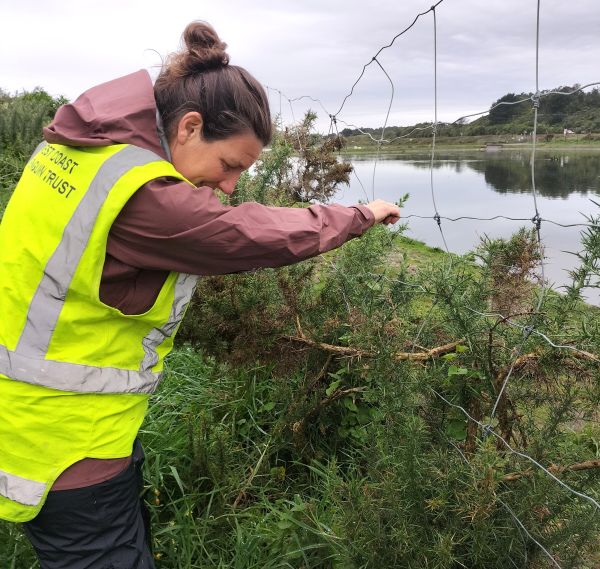
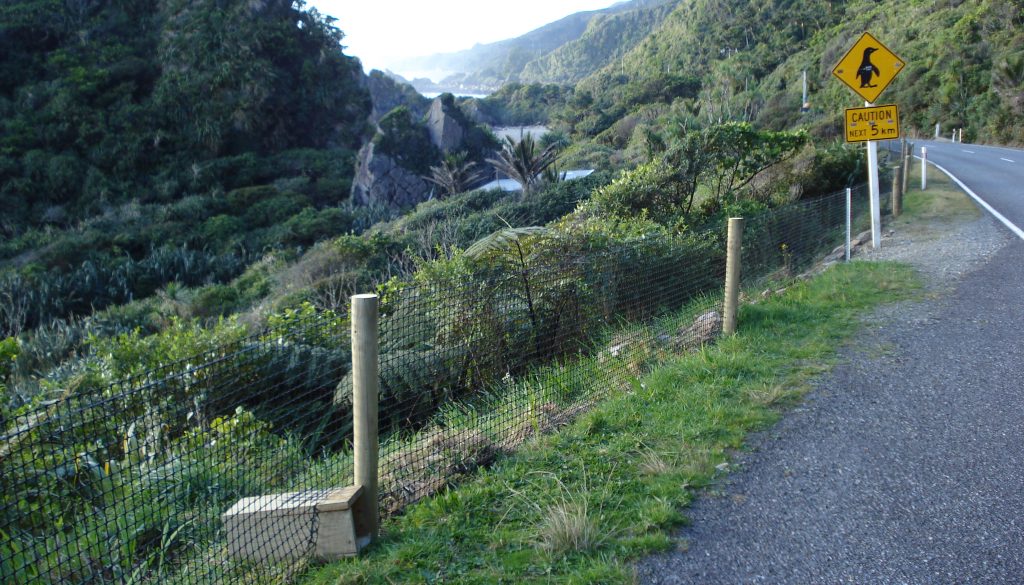 While materials were chosen that would stand up to the harsh coastal conditions, those same coastal conditions are conducive to plant growth! Occasional checks of the fences have been carried out by volunteers and rangers so that any maintenance needs can be identified and remedied. The never-ending need for maintenance is managing the vegetation that can grow through the fence, for example gorse, blackberry and hydrangea, pushing it to breaking point in places, or flop over causing damage from the weight of rank grass, rushes and weeds such as montbretia.
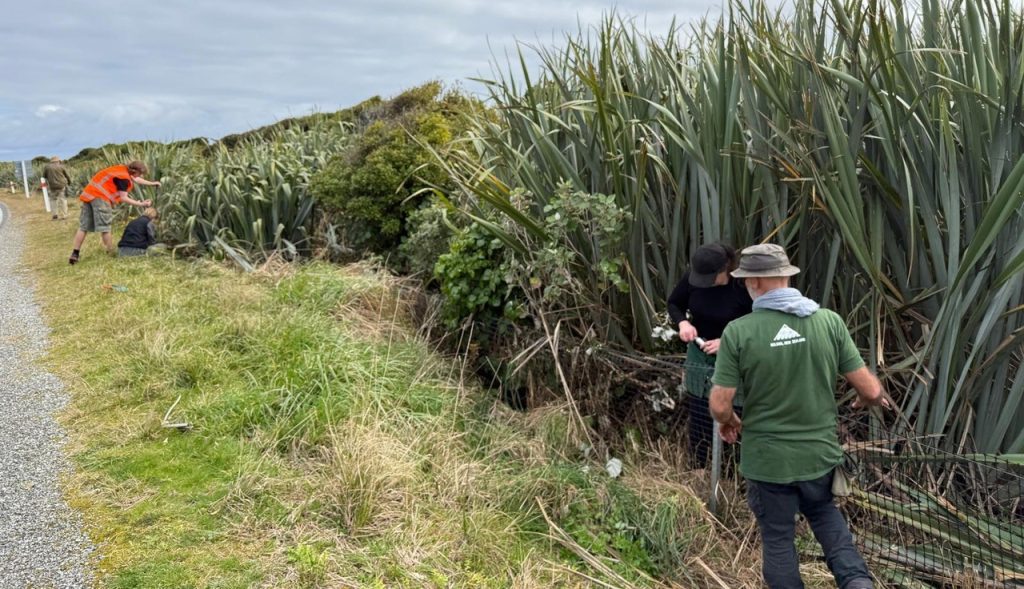
Volunteers recently spent a few hours tidying up the main fence along Woodpecker Bay north of Punakaiki so a big shout out to them - thank you Fiona, Jony, Reef, Katrina, Mandy, Marty, Teresa and Deb! Flax had been pressing down on the fence, but now the fence has been freed up by these wonderful volunteers - and they picked up a fair bit of rubbish too.
While materials were chosen that would stand up to the harsh coastal conditions, those same coastal conditions are conducive to plant growth! Occasional checks of the fences have been carried out by volunteers and rangers so that any maintenance needs can be identified and remedied. The never-ending need for maintenance is managing the vegetation that can grow through the fence, for example gorse, blackberry and hydrangea, pushing it to breaking point in places, or flop over causing damage from the weight of rank grass, rushes and weeds such as montbretia.
Volunteers recently spent a few hours tidying up the main fence along Woodpecker Bay north of Punakaiki so a big shout out to them - thank you Fiona, Jony, Reef, Katrina, Mandy, Marty, Teresa and Deb! Flax had been pressing down on the fence, but now the fence has been freed up by these wonderful volunteers - and they picked up a fair bit of rubbish too.
 Volunteer Natassja Savidge has offered to check and help maintain the Hokitika penguin protection fence and joined Ranger Lucy Waller and Manager Inger Perkins in May to inspect the length of the fence. Some minor issues were found but the main finding was the extent of the vegetation growth that was damaging the fence in places. Big thanks to Natassja!