Our new Field Ranger, Linden, has been monitoring the Sooty Shearwater colony at Cape Foulwind and he reports: “Early reports are promising, with at least 15 breeding pairs on eggs. These eggs (and chicks once they hatch) are highly vulnerable to stoat predation, so the Trust maintains a trapline around the colony to keep stoat numbers to a minimum. Over the next month we will hopefully see some eggs hatching and little balls of fluff appearing!”

Sooty shearwaters are a colony nester, nesting in the far Southern Hemisphere. The breeding season lasts from September to May, and during this time, the birds are most active in the colonies at night. The nest is placed in a burrow dug in the soil by both parents.

Ranger Linden burrowscoping (Photo: Linden Brown)
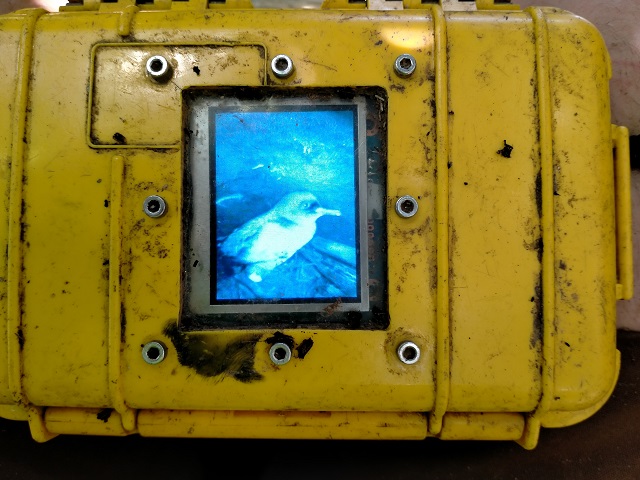
Burrowscoping is a useful way to locate and verify the presence of bird nests. We use this for petrels, shearwaters and penguins. (Photo: Linden Brown)

Sooty shearwaters off the coast of Stewart Island. They are migratory birds that cover both the Pacific and Atlantic basins as they travel around the globe.

In the Atlantic, the birds can cover more than 12,000 miles in a year, traveling from their breeding colonies in the Antarctic up to their Arctic feeding grounds. The sooty shearwater is a near threatened species.
All photos taken by Kerry-Jayne Wilson unless indicated. Featured image of bird in burrow taken by Linden Brown.
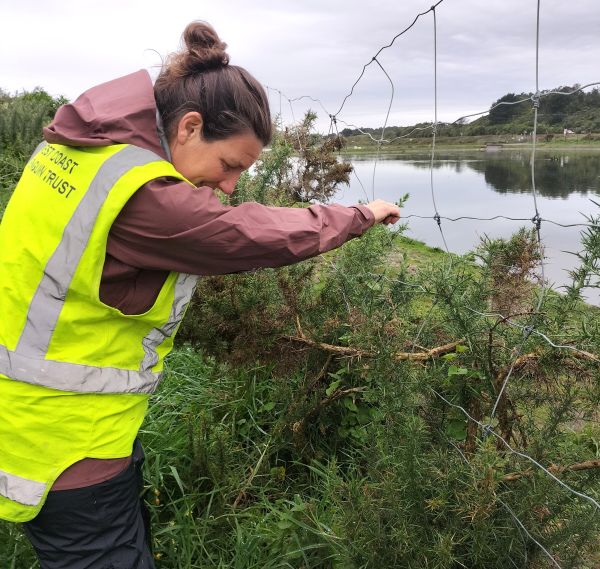
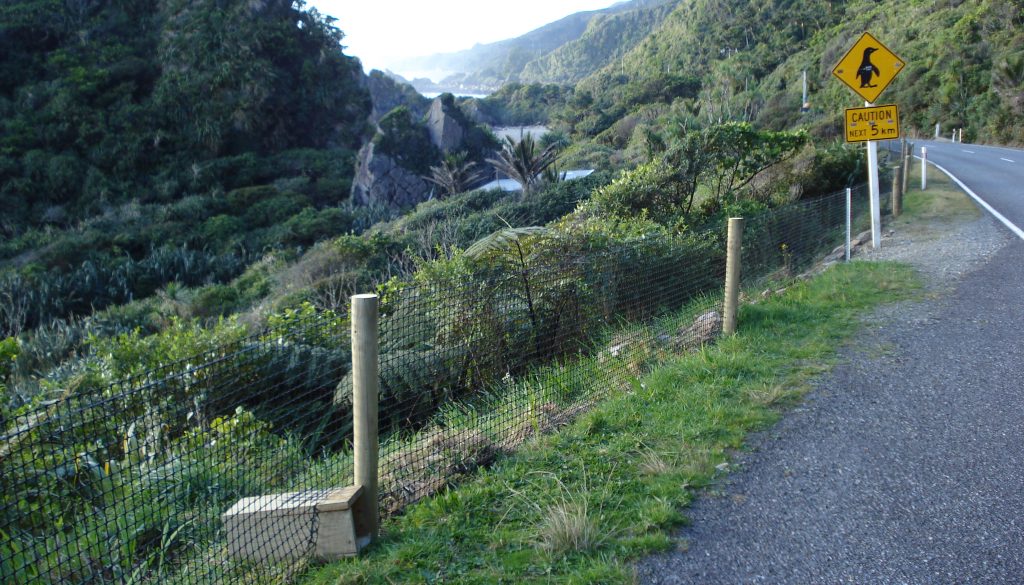 While materials were chosen that would stand up to the harsh coastal conditions, those same coastal conditions are conducive to plant growth! Occasional checks of the fences have been carried out by volunteers and rangers so that any maintenance needs can be identified and remedied. The never-ending need for maintenance is managing the vegetation that can grow through the fence, for example gorse, blackberry and hydrangea, pushing it to breaking point in places, or flop over causing damage from the weight of rank grass, rushes and weeds such as montbretia.
Volunteers recently spent a few hours tidying up the main fence along Woodpecker Bay north of Punakaiki so a big shout out to them - thank you Fiona, Jony, Reef, Katrina, Mandy, Marty, Teresa and Deb! Flax had been pressing down on the fence, but now the fence has been freed up by these wonderful volunteers - and they picked up a fair bit of rubbish too.
While materials were chosen that would stand up to the harsh coastal conditions, those same coastal conditions are conducive to plant growth! Occasional checks of the fences have been carried out by volunteers and rangers so that any maintenance needs can be identified and remedied. The never-ending need for maintenance is managing the vegetation that can grow through the fence, for example gorse, blackberry and hydrangea, pushing it to breaking point in places, or flop over causing damage from the weight of rank grass, rushes and weeds such as montbretia.
Volunteers recently spent a few hours tidying up the main fence along Woodpecker Bay north of Punakaiki so a big shout out to them - thank you Fiona, Jony, Reef, Katrina, Mandy, Marty, Teresa and Deb! Flax had been pressing down on the fence, but now the fence has been freed up by these wonderful volunteers - and they picked up a fair bit of rubbish too.
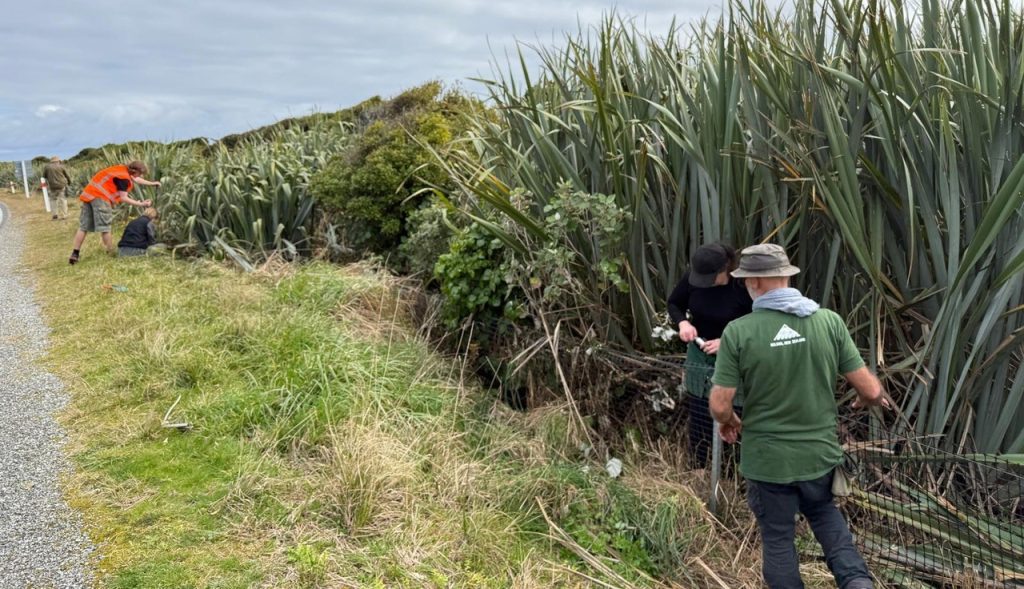 Volunteer Natassja Savidge has offered to check and help maintain the Hokitika penguin protection fence and joined Ranger Lucy Waller and Manager Inger Perkins in May to inspect the length of the fence. Some minor issues were found but the main finding was the extent of the vegetation growth that was damaging the fence in places. Big thanks to Natassja!