Tawaki (Fiordland crested penguin) monitoring for the 2020 season found low stoat and rodent presence but some impact on breeding success due to stoat predation.
Monitoring of breeding at tawaki nests occurred at the three sites with ten nests at each site being monitored by cameras and those and additional nests receiving a fortnightly visit. Monitoring of stoats within and around the colonies was performed as scheduled with lured camera traps, tracking tunnels and the nest cameras. Analysis of data is currently occurring.
Preliminary results have shown low stoat and rodent presence at the three sites. Impact upon breeding from predation did occur, at a low level, but even the failure of one or two from ten monitored nests indicates 10-20% failure. Otherwise, all three sites had generally good breeding success for the 2020 season. One theory is that there may have been enough rodents in the environment to provide easy prey and reduce the stoats’ need to predate tawaki eggs and chicks.
Lead Ranger Matt Charteris and the WCPT have been greatly assisted with the data collection by Sarah Kivi, Andre de Graaf and Catherine Stewart as tawaki rangers for the season. Support has been present from DOC in Haast and with conversations with Graeme Elliot (DOC Biodiversity Threats).
We will be overlaying breeding success monitoring information for each nest with camera footage – if a nest failed then we will first look at video footage to establish if a stoat caused a failure and then determine the extent of further imagery review required to enable analysis of breeding success versus stoat presence. Once completed, our analysis will provide a significant step forward in understanding the risk posed by stoats to the breeding success of tawaki and results will be shared through our website.
We’re enormously grateful to Wellington Zoo Trust, to the Birds NZ Research Fund, and to DOC for supporting this project.
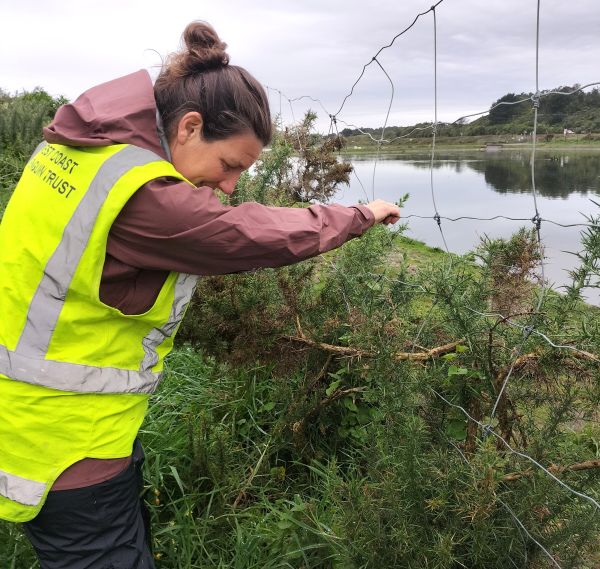
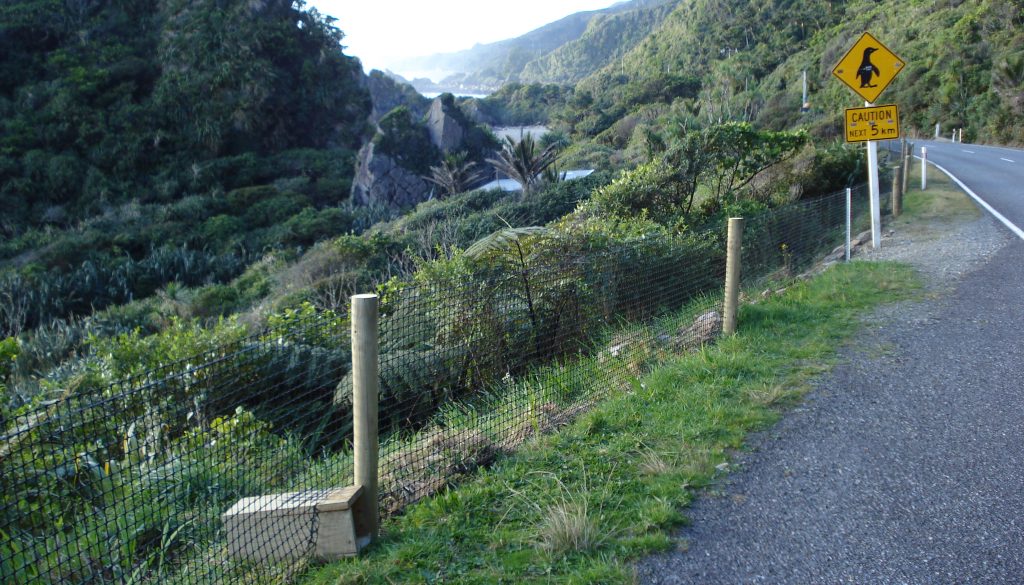 While materials were chosen that would stand up to the harsh coastal conditions, those same coastal conditions are conducive to plant growth! Occasional checks of the fences have been carried out by volunteers and rangers so that any maintenance needs can be identified and remedied. The never-ending need for maintenance is managing the vegetation that can grow through the fence, for example gorse, blackberry and hydrangea, pushing it to breaking point in places, or flop over causing damage from the weight of rank grass, rushes and weeds such as montbretia.
Volunteers recently spent a few hours tidying up the main fence along Woodpecker Bay north of Punakaiki so a big shout out to them - thank you Fiona, Jony, Reef, Katrina, Mandy, Marty, Teresa and Deb! Flax had been pressing down on the fence, but now the fence has been freed up by these wonderful volunteers - and they picked up a fair bit of rubbish too.
While materials were chosen that would stand up to the harsh coastal conditions, those same coastal conditions are conducive to plant growth! Occasional checks of the fences have been carried out by volunteers and rangers so that any maintenance needs can be identified and remedied. The never-ending need for maintenance is managing the vegetation that can grow through the fence, for example gorse, blackberry and hydrangea, pushing it to breaking point in places, or flop over causing damage from the weight of rank grass, rushes and weeds such as montbretia.
Volunteers recently spent a few hours tidying up the main fence along Woodpecker Bay north of Punakaiki so a big shout out to them - thank you Fiona, Jony, Reef, Katrina, Mandy, Marty, Teresa and Deb! Flax had been pressing down on the fence, but now the fence has been freed up by these wonderful volunteers - and they picked up a fair bit of rubbish too.
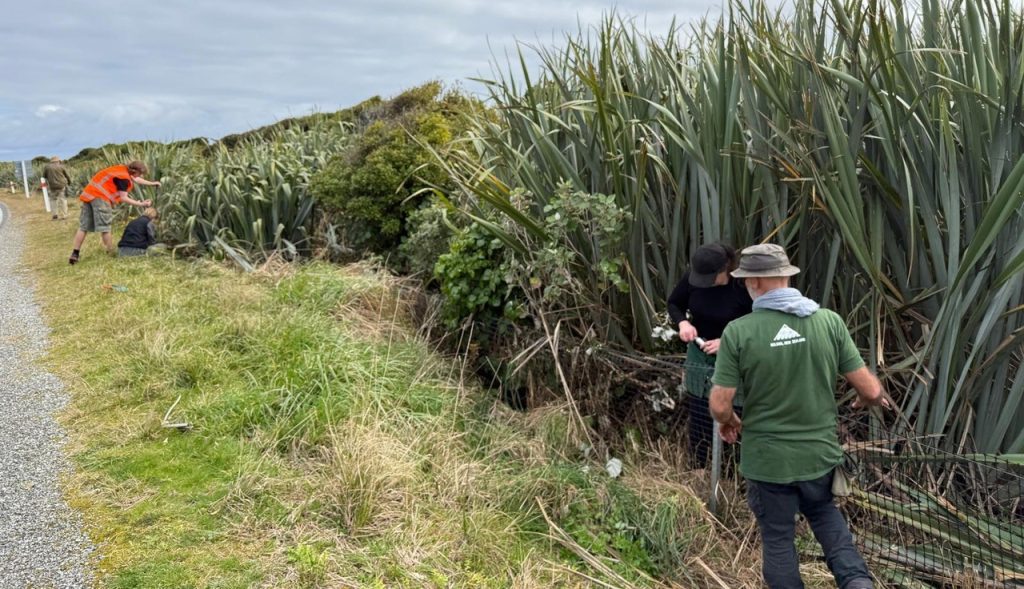 Volunteer Natassja Savidge has offered to check and help maintain the Hokitika penguin protection fence and joined Ranger Lucy Waller and Manager Inger Perkins in May to inspect the length of the fence. Some minor issues were found but the main finding was the extent of the vegetation growth that was damaging the fence in places. Big thanks to Natassja!