After four little penguins or kororā were killed in quick succession in recent weeks between Greymouth and Barrytown, media interest in the reasons why and what was being done on the West Coast was high.
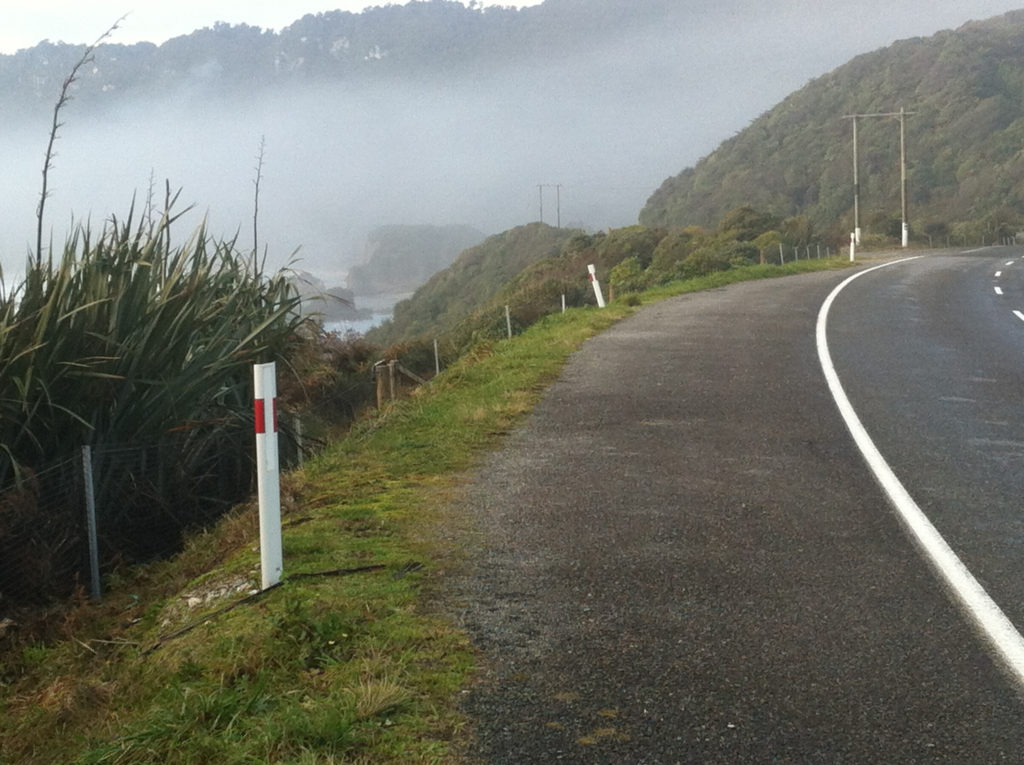
Looking at the kororā mortality records, no penguins had been killed in those areas, Thirteen Mile and Seventeen Mile north of Greymouth, since 2017. It seems likely that two pairs have decided to nest on the ‘wrong’ side of the road and all four birds have been tragically been killed at the start of the breeding season.
Our thoughts immediately turned to the need for penguin protection fencing, but in fact there are few penguins in this area. West Coast little penguin mortality records show that one was killed at Seventeen mile in 2011, and one each at Fourteen Mile in 2011, 2014 and 2017, with three more killed a little further south in 2011, 2017 and 2020.
With an invitation to speak on RNZ National Morning Report, trust manager Inger Perkins went over the mortality data and was able to illustrate the value of penguin fences where they have been constructed.
Penguin fences at and north of Punakaiki as well as on the north side of Hokitika have reduced the little penguin death toll on the roads from 21 a year to 6 a year. Our current concern is for the Fox River area further north, although fencing there will be very challenging.
The stats also showed that, in the first few years of records being collected by the trust, from 2006, the number of little penguin deaths definitely or presumed to have been caused by loose dogs has dropped from an average of seven a year to three in recent years. That’s still three too many, three each year that are entirely avoidable, but it is progress.
These two causes of kororā death remain a major concern across the region but it is clear that the efforts of the West Coast Penguin Trust, whether building and maintaining penguin protection fences, or our education and awareness campaigns about the risk of loose dogs (to themselves and to ground nesting birds like penguins) is working.
The brief interview on RNZ is here: https://www.rnz.co.nz/national/programmes/morningreport/audio/2019002802/fears-for-korora-population-after-two-killed-on-road
Stuff news story here: https://www.stuff.co.nz/nz-news/360812134/two-pairs-korora-killed-west-coast-road-one-month
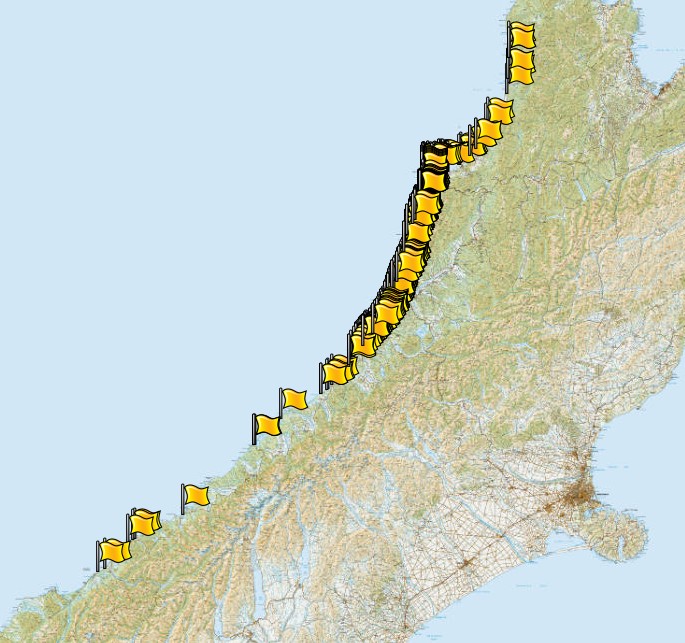
The trust has compiled the spatial data of little penguin mortality and shared it with DOC and councils. The sad statistics illustrate where penguins are and where they are dying with the total number of dead little penguins reported since records began in 2006 now at around a horribly large 500.
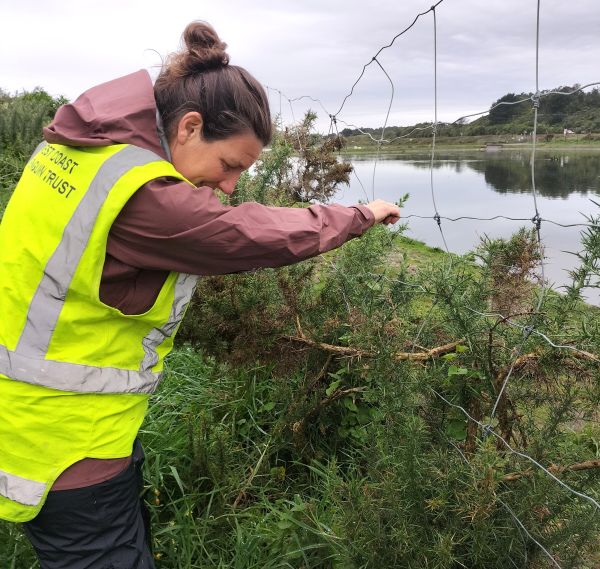
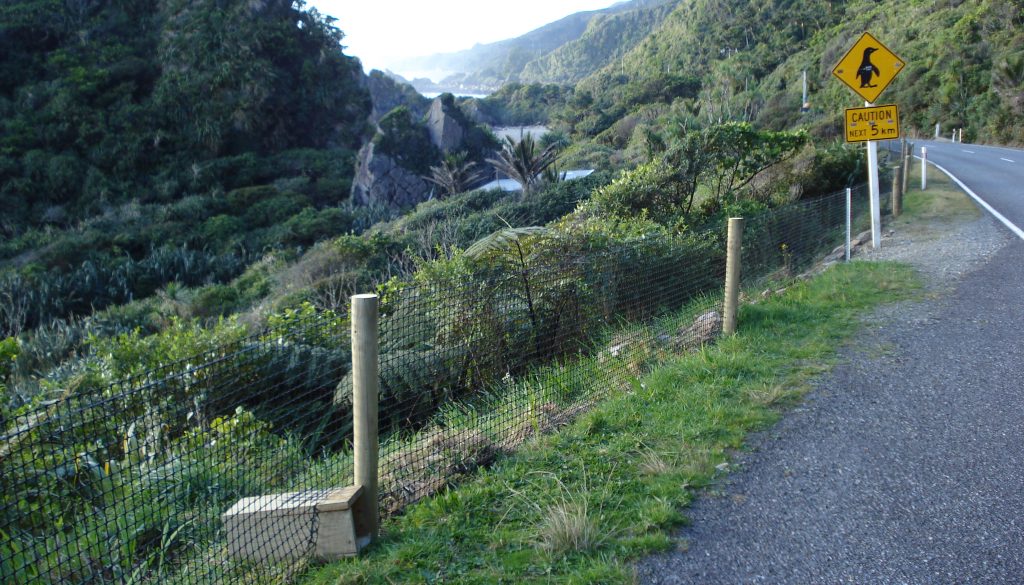 While materials were chosen that would stand up to the harsh coastal conditions, those same coastal conditions are conducive to plant growth! Occasional checks of the fences have been carried out by volunteers and rangers so that any maintenance needs can be identified and remedied. The never-ending need for maintenance is managing the vegetation that can grow through the fence, for example gorse, blackberry and hydrangea, pushing it to breaking point in places, or flop over causing damage from the weight of rank grass, rushes and weeds such as montbretia.
Volunteers recently spent a few hours tidying up the main fence along Woodpecker Bay north of Punakaiki so a big shout out to them - thank you Fiona, Jony, Reef, Katrina, Mandy, Marty, Teresa and Deb! Flax had been pressing down on the fence, but now the fence has been freed up by these wonderful volunteers - and they picked up a fair bit of rubbish too.
While materials were chosen that would stand up to the harsh coastal conditions, those same coastal conditions are conducive to plant growth! Occasional checks of the fences have been carried out by volunteers and rangers so that any maintenance needs can be identified and remedied. The never-ending need for maintenance is managing the vegetation that can grow through the fence, for example gorse, blackberry and hydrangea, pushing it to breaking point in places, or flop over causing damage from the weight of rank grass, rushes and weeds such as montbretia.
Volunteers recently spent a few hours tidying up the main fence along Woodpecker Bay north of Punakaiki so a big shout out to them - thank you Fiona, Jony, Reef, Katrina, Mandy, Marty, Teresa and Deb! Flax had been pressing down on the fence, but now the fence has been freed up by these wonderful volunteers - and they picked up a fair bit of rubbish too.
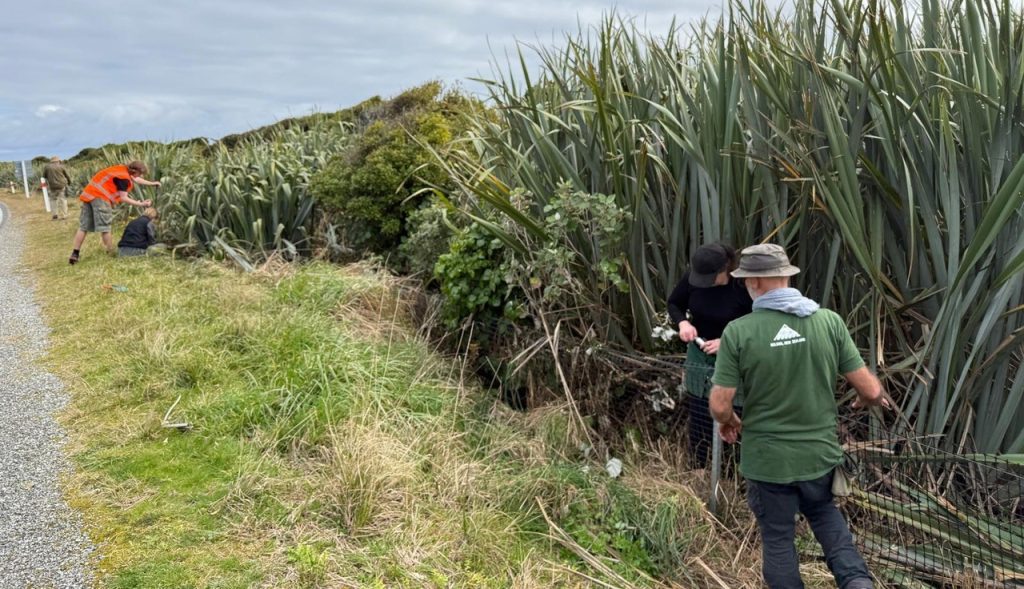 Volunteer Natassja Savidge has offered to check and help maintain the Hokitika penguin protection fence and joined Ranger Lucy Waller and Manager Inger Perkins in May to inspect the length of the fence. Some minor issues were found but the main finding was the extent of the vegetation growth that was damaging the fence in places. Big thanks to Natassja!