Tawaki monitoring has revealed steady breeding during seasons 2019-2021.
This is despite a major mast event with massive seedfall in autumn 2019. Mast events with abundant seeds available support mouse plagues, followed by rat plagues feeding on mice, followed by stoat plagues feeding on rats. As seeds gradually rot or germinate, rodent numbers fall and stoats seek prey elsewhere, commonly native birds.
The Trust feared that stoats would overrun colonies of tawaki, or Fiordland crested penguins, in either the 2019 or 2020 season, a lag between rat and then stoat plague numbers being common. Stoats will prey on tawaki eggs or chicks and, in 2016, stoats were abundant in the Jackson Head area, virtually wiping out all chicks that year. Fortunately for the penguins, over the past three years, presence of and predation by stoats has remained low.
When the Trust first started monitoring tawaki nests in 2014, the aim was to establish which predator, if any, was responsible for an apparent decline in the number of penguins. The link of a mast event to a stoat plague in 2016 appeared to be the main risk to breeding success, but with evidence in only one year of four for the study, further evidence would be useful.
In 2019, the Trust switched focus to monitoring breeding success with fortnightly checks as well as monitoring stoat numbers. The aim was to determine if there were any trends year to year, or between the colonies; and to better understand the link between mast events and stoat populations and predation as well as to methods of predator control.
Key conclusions for three year study to date are as follows:
- Breeding success was high at all three colonies for all three years, with no obvious differences or trends between years or between colonies.
- Stoats were present at all three colonies at different times, however at low numbers, and are likely responsible for a few tawaki nest failures.
- The mast event of 2018-19 did not result in any observable increase in stoat numbers in the colonies in either the 2019 or 2020 seasons.
- Lack of food did not appear to be an issue for breeding tawaki during the study period.
The latter point relating to food supply relates to the 2015 year when most chicks failed to survive due to starvation. Adults were foraging over long distances and unable to provide sufficient or timely nutrition. The lack of prey food was linked to El Niño conditions off the West Coast and cold water feeding grounds being out of reach.
The review of the three season study is available as a pdf ( 7 pages): WCPT Tawaki monitoring programme report – 2019-2021 seasons
Videos from some of the monitoring cameras will be added to our Vimeo page, including this one showing chicks gathering or crèching.

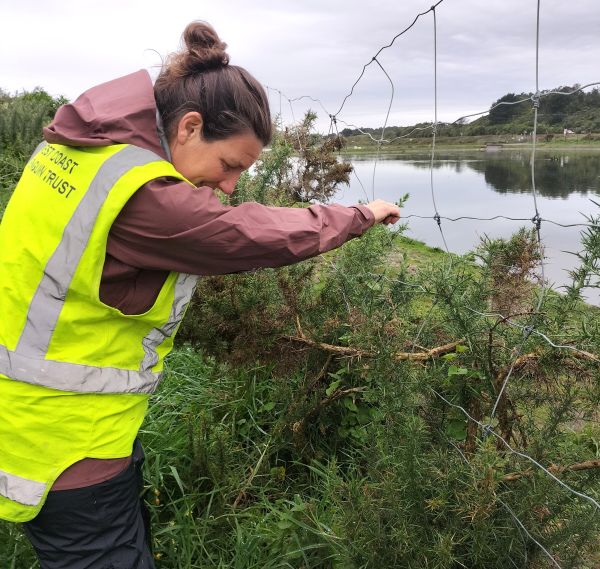
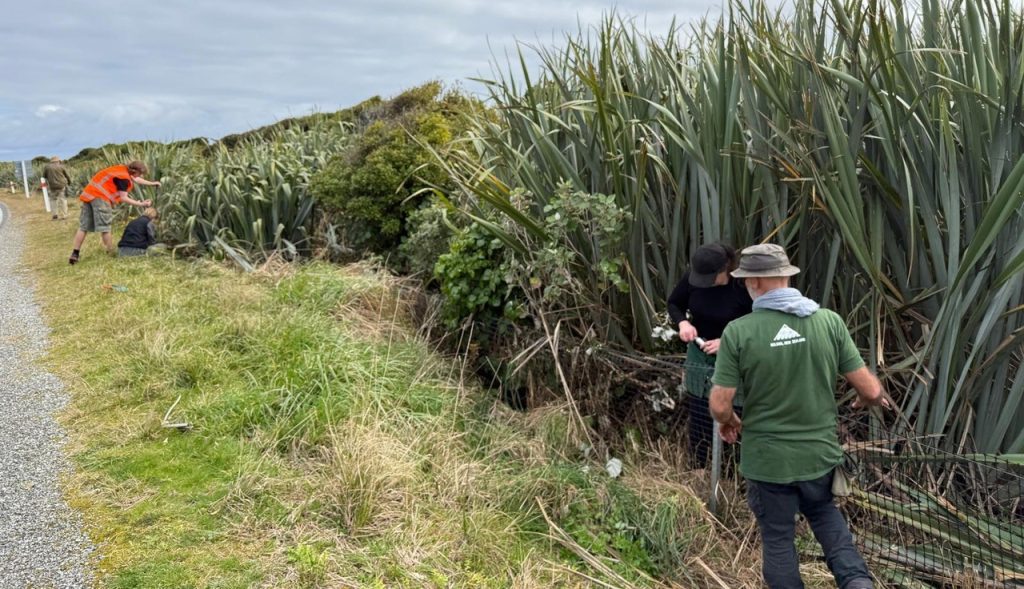
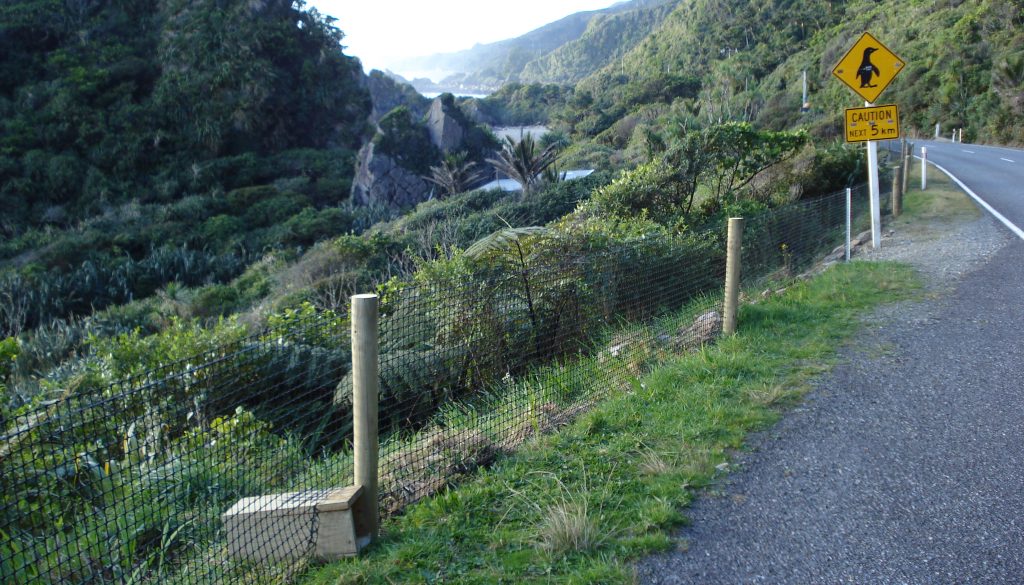 While materials were chosen that would stand up to the harsh coastal conditions, those same coastal conditions are conducive to plant growth! Occasional checks of the fences have been carried out by volunteers and rangers so that any maintenance needs can be identified and remedied. The never-ending need for maintenance is managing the vegetation that can grow through the fence, for example gorse, blackberry and hydrangea, pushing it to breaking point in places, or flop over causing damage from the weight of rank grass, rushes and weeds such as montbretia.
Volunteers recently spent a few hours tidying up the main fence along Woodpecker Bay north of Punakaiki so a big shout out to them - thank you Fiona, Jony, Reef, Katrina, Mandy, Marty, Teresa and Deb! Flax had been pressing down on the fence, but now the fence has been freed up by these wonderful volunteers - and they picked up a fair bit of rubbish too.
While materials were chosen that would stand up to the harsh coastal conditions, those same coastal conditions are conducive to plant growth! Occasional checks of the fences have been carried out by volunteers and rangers so that any maintenance needs can be identified and remedied. The never-ending need for maintenance is managing the vegetation that can grow through the fence, for example gorse, blackberry and hydrangea, pushing it to breaking point in places, or flop over causing damage from the weight of rank grass, rushes and weeds such as montbretia.
Volunteers recently spent a few hours tidying up the main fence along Woodpecker Bay north of Punakaiki so a big shout out to them - thank you Fiona, Jony, Reef, Katrina, Mandy, Marty, Teresa and Deb! Flax had been pressing down on the fence, but now the fence has been freed up by these wonderful volunteers - and they picked up a fair bit of rubbish too.
 Volunteer Natassja Savidge has offered to check and help maintain the Hokitika penguin protection fence and joined Ranger Lucy Waller and Manager Inger Perkins in May to inspect the length of the fence. Some minor issues were found but the main finding was the extent of the vegetation growth that was damaging the fence in places. Big thanks to Natassja!