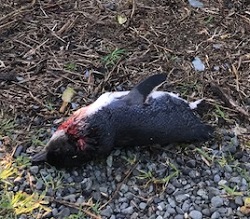
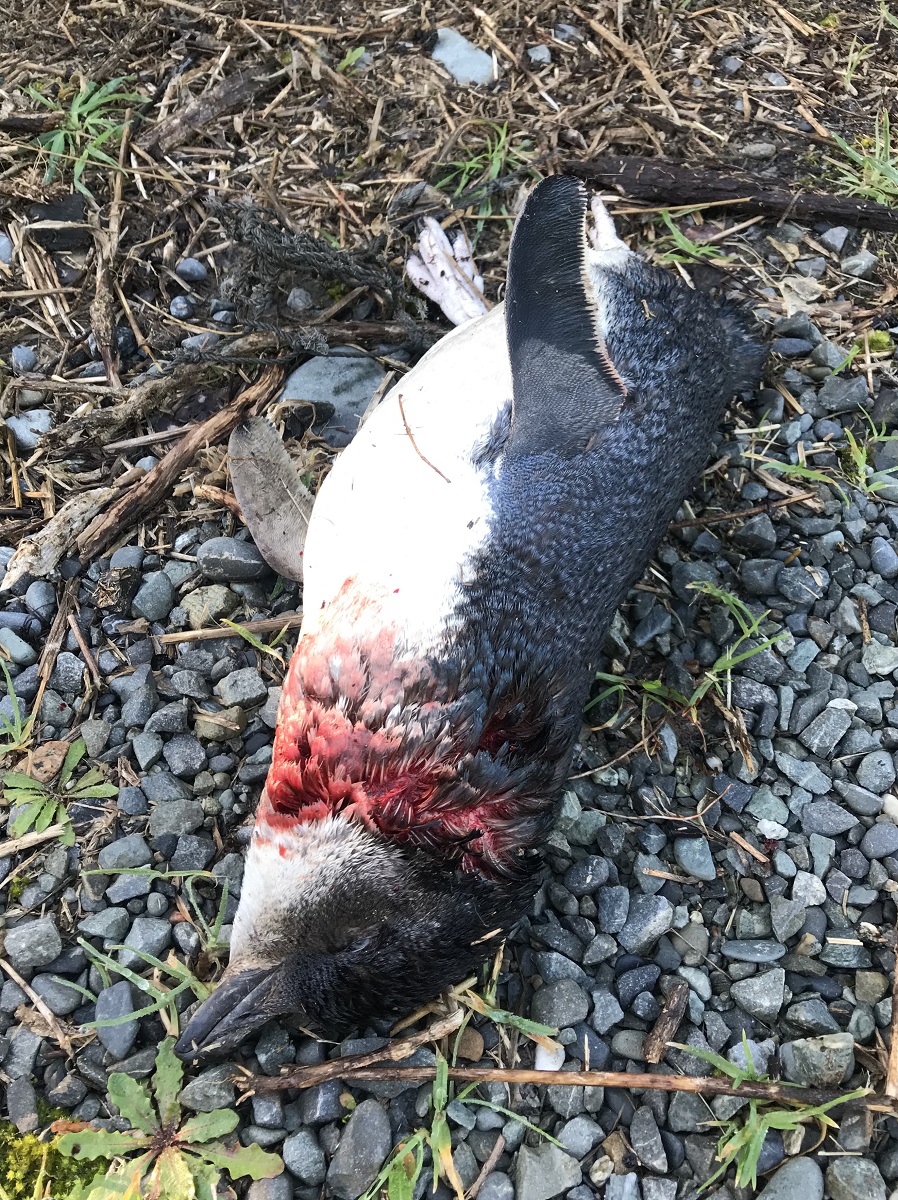
Another penguin has been killed by a dog at Karoro.
In January last year, a blue penguin was killed by a dog in the same area and the call went out – through the Grey Star and Stuff news and on social media – for greater awareness about the risk posed by loose dogs to penguins at or close to our beaches.
West Coast Penguin Trust Manager, Inger Perkins, said
“Dogs can’t help themselves. If they are loose and they come across a penguin, their instinct will be to pick it up. Whether to play or to attack, the outcome will the same – a dead penguin.
“It’s likely that the penguin was paired up and sitting on two eggs or even chicks. Eggs need two penguins to ensure their survival, so this death not only means the loss of a breeding adult, but also two fewer blue penguin chicks.”
Department of Conservation Senior Biodiversity Ranger in Greymouth, Darrell Haworth added:
“The wounds are most definitely that of a dog attack. Attacks like this are most likely at night when penguins will be crossing between the sea and their burrows but could happen at any time.”
During the breeding season, roughly June to December, blue penguins spend their days at sea and return to nests after dark, leaving again before dawn. The penguin killed in this area last year was seen during daylight the day before and was probably sick or injured. This time it appears that the dog had gone into the scrub next to the cycle trail and killed a healthy penguin.
Ms Perkins explained what dog owners can do to help:
“The most important thing you can do as a dog owner is to keep your dogs safe and secure at home. If your dog can roam, not only is it at risk itself – from traffic for example – but it could kill penguins or other wildlife. Keeping dogs on a lead through vegetated coastal areas where penguins may be nesting is also important and that includes the cycle trail.
“If you see a penguin during daylight hours, they may be sick or injured, or going through their moult. You can help by phoning the DOC hotline and ensuring dogs can’t get to the penguin in the meantime.
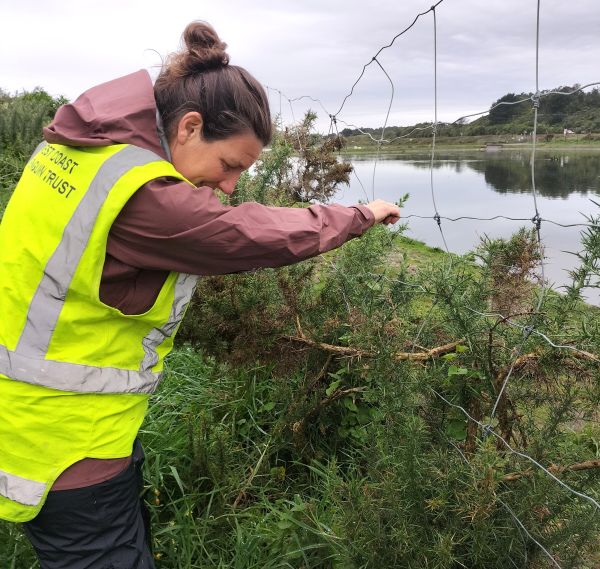
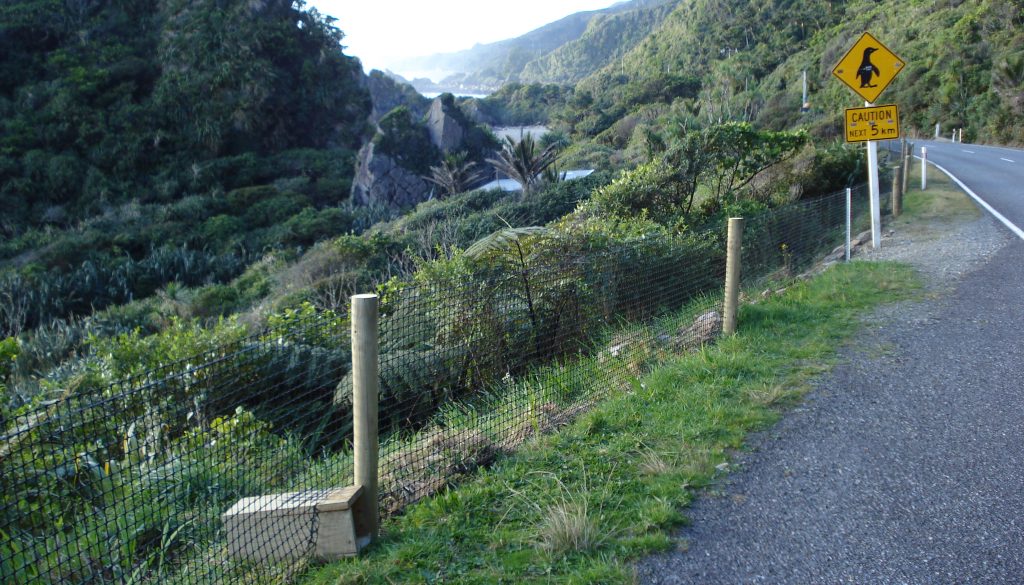 While materials were chosen that would stand up to the harsh coastal conditions, those same coastal conditions are conducive to plant growth! Occasional checks of the fences have been carried out by volunteers and rangers so that any maintenance needs can be identified and remedied. The never-ending need for maintenance is managing the vegetation that can grow through the fence, for example gorse, blackberry and hydrangea, pushing it to breaking point in places, or flop over causing damage from the weight of rank grass, rushes and weeds such as montbretia.
Volunteers recently spent a few hours tidying up the main fence along Woodpecker Bay north of Punakaiki so a big shout out to them - thank you Fiona, Jony, Reef, Katrina, Mandy, Marty, Teresa and Deb! Flax had been pressing down on the fence, but now the fence has been freed up by these wonderful volunteers - and they picked up a fair bit of rubbish too.
While materials were chosen that would stand up to the harsh coastal conditions, those same coastal conditions are conducive to plant growth! Occasional checks of the fences have been carried out by volunteers and rangers so that any maintenance needs can be identified and remedied. The never-ending need for maintenance is managing the vegetation that can grow through the fence, for example gorse, blackberry and hydrangea, pushing it to breaking point in places, or flop over causing damage from the weight of rank grass, rushes and weeds such as montbretia.
Volunteers recently spent a few hours tidying up the main fence along Woodpecker Bay north of Punakaiki so a big shout out to them - thank you Fiona, Jony, Reef, Katrina, Mandy, Marty, Teresa and Deb! Flax had been pressing down on the fence, but now the fence has been freed up by these wonderful volunteers - and they picked up a fair bit of rubbish too.
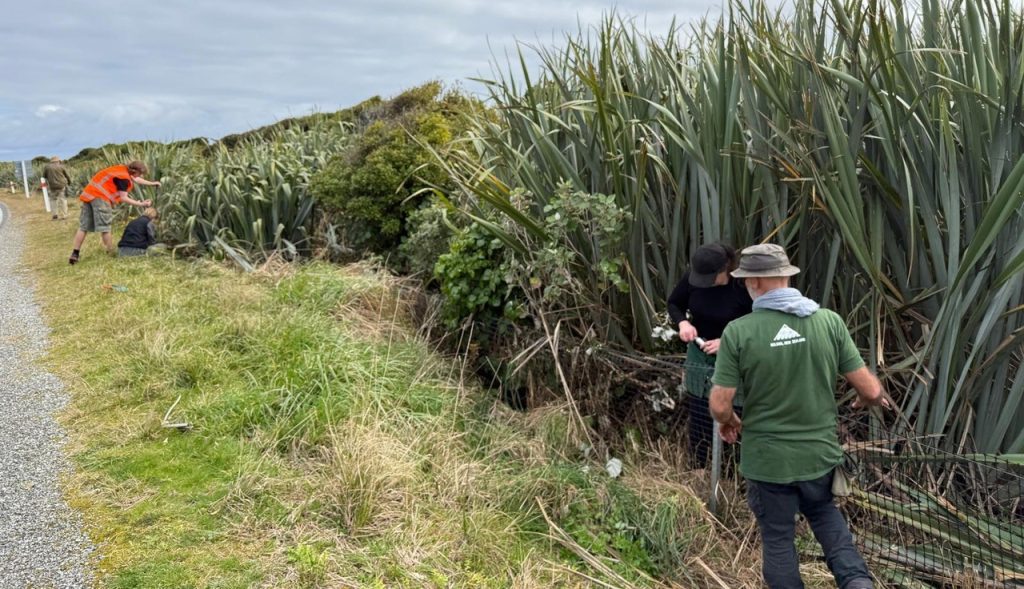 Volunteer Natassja Savidge has offered to check and help maintain the Hokitika penguin protection fence and joined Ranger Lucy Waller and Manager Inger Perkins in May to inspect the length of the fence. Some minor issues were found but the main finding was the extent of the vegetation growth that was damaging the fence in places. Big thanks to Natassja!