Coastal erosion north of Hokitika has left blue penguins or kororā struggling to get down to the beach and then back up to their nests after a hard day’s fishing.
Last year, volunteers used spades to try to help but the ramps they cut were almost immediately lost when the next high waves hit the coast.
This year, as the penguins are starting their breeding season and sitting on nests, Westland Milk Products came to the rescue. After Westland made sure penguins were safe in the area during the ocean outfall pipeline construction project and then afterwards with a penguin protection fence, it was a small step to ensure kororā could continue to reach their nests safely earlier this month.
“Westland is committed to a sustainable future and protecting our precious place; protecting wildlife in a situation like this fits that policy”, says Environmental Manager, Chris Pullen.
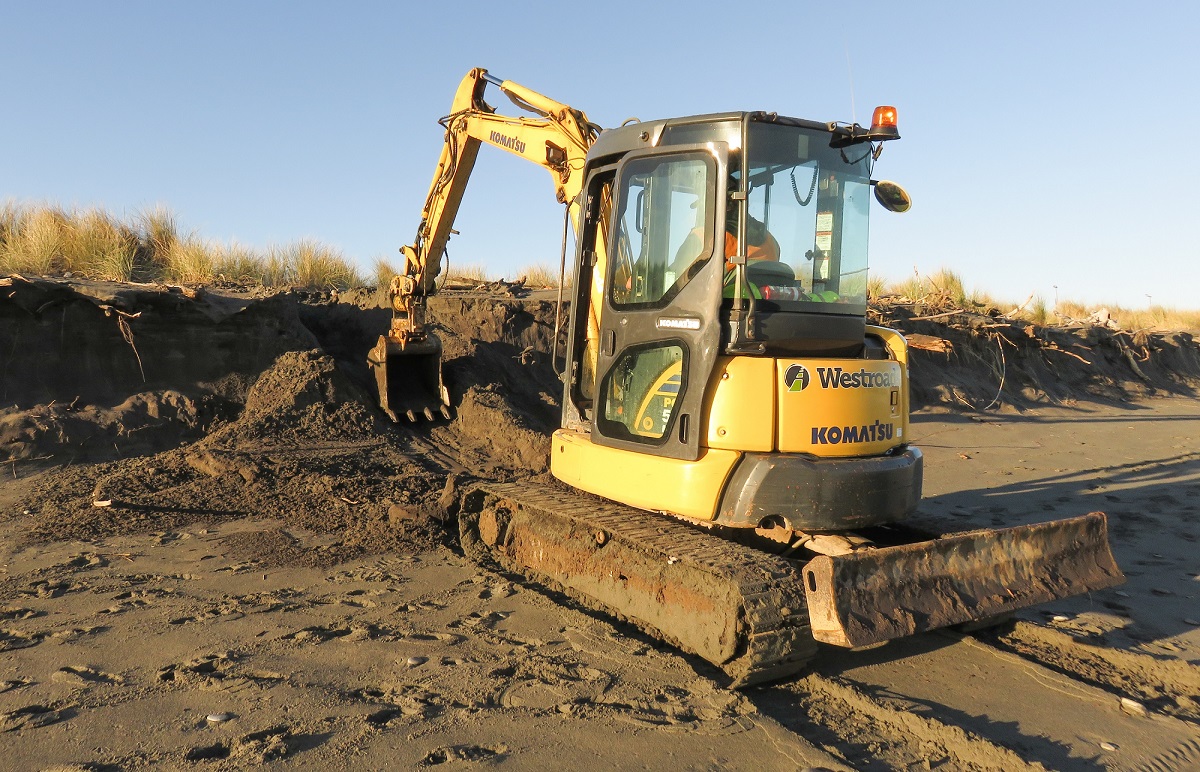
Mr Pullen asked Westroads to take a small digger to the beach and then, under the direction of the West Coast Penguin Trust and with prior approval from the regional council, small ramps were cut where there was already a dip in the dune face.
Penguin trust manager, Inger Perkins, explained:
“We were concerned about penguins losing access to their nesting sites, being more vulnerable to dogs by spending longer on the beach trying to find a way up or down the dune cliff and wasting valuable energy in doing so. We checked with the Philip Island penguin colony near Melbourne and they connected us to Dr Teresa Konlechner, a Research Fellow at Melbourne University. Dr Konlechner told us about the ramps they had cut into the dunes in similar circumstances over there and we put a proposal to the regional council to trial small ramps here.”
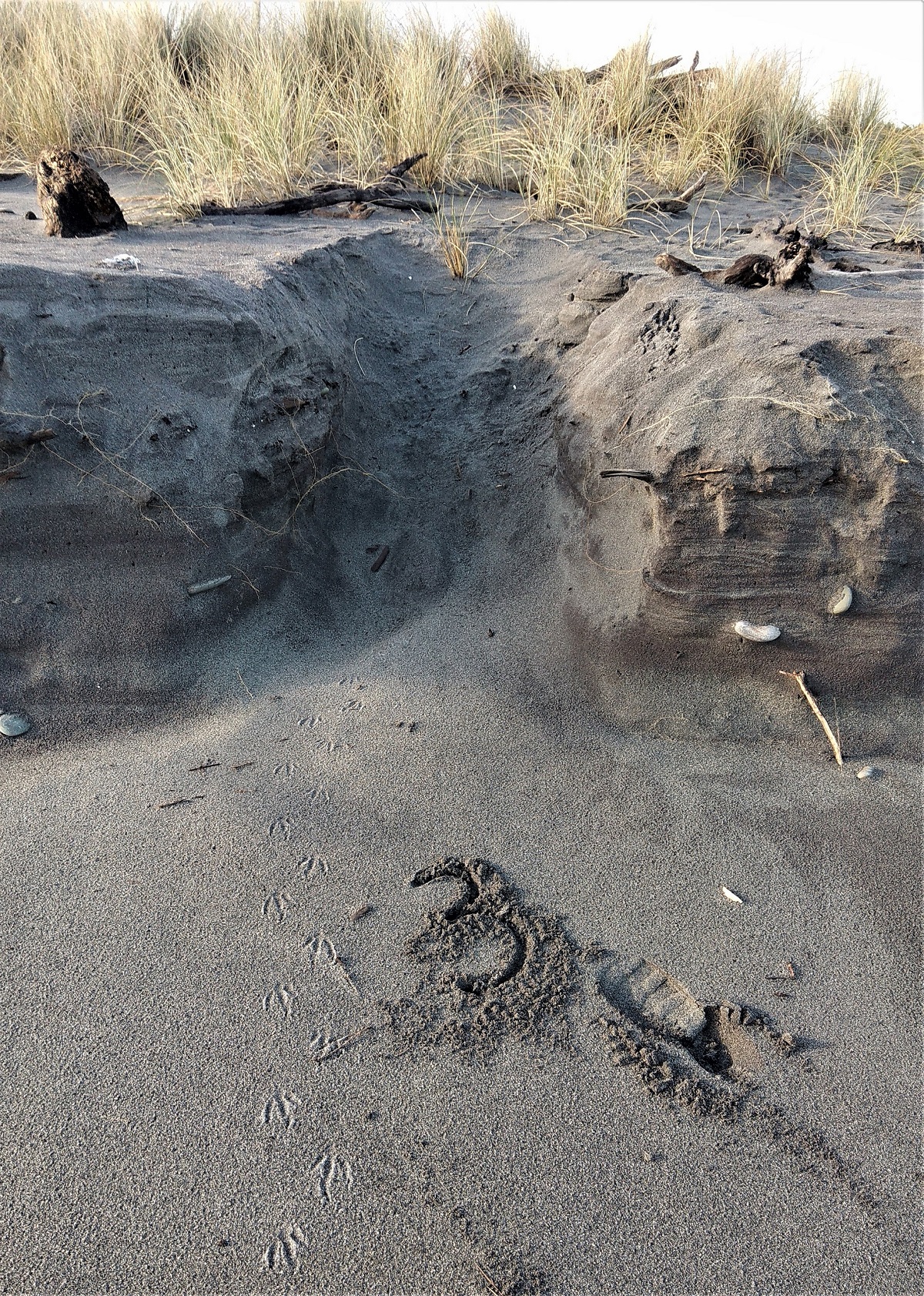
On the day the ramps were cut, it was clear from the penguin tracks that they were needed.
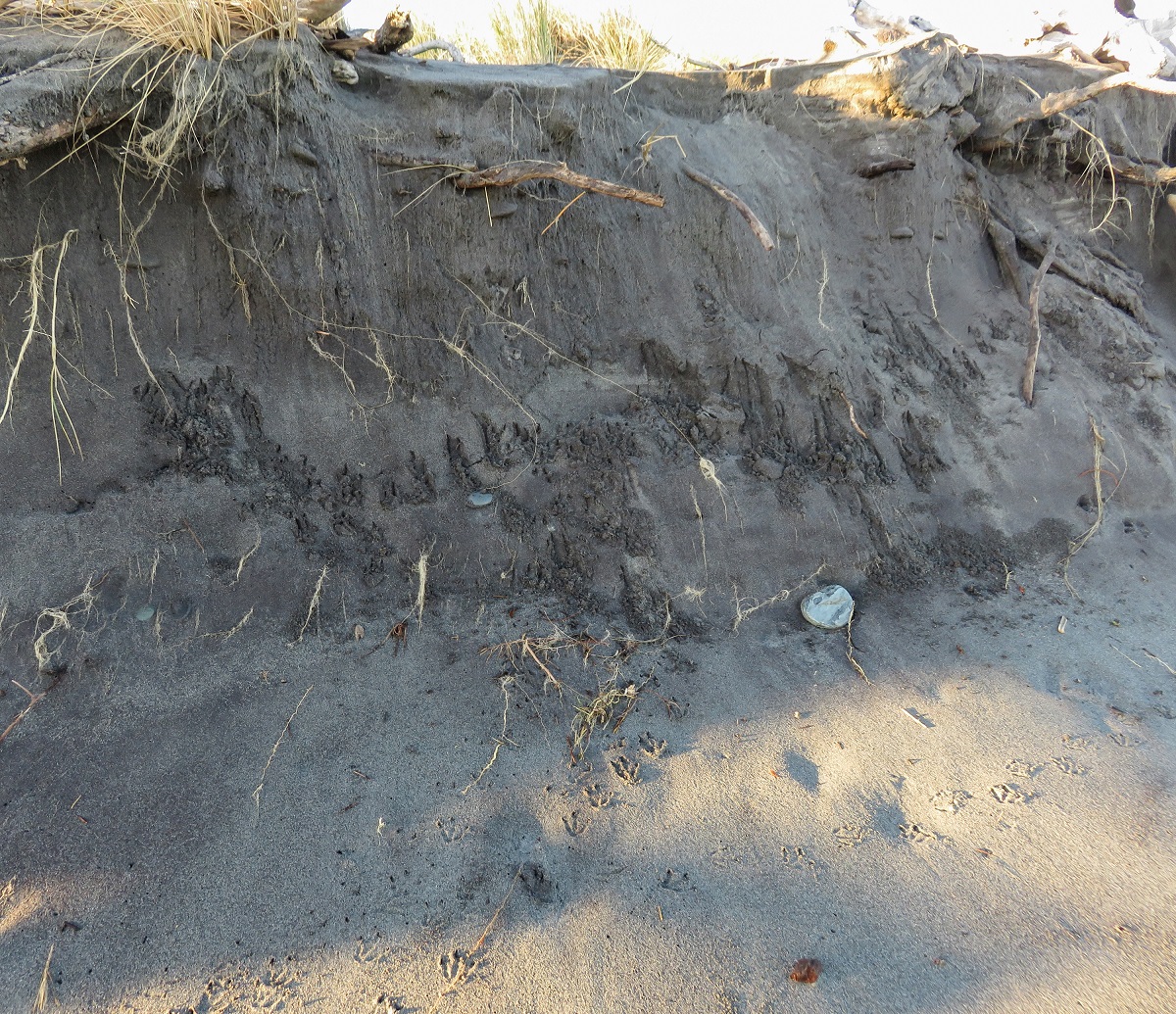
“The number of penguin tracks trying and failing to find a way up the sand cliff was heart-breaking”, Ms Perkins said.
The trust does not expect the ramps to contribute to erosion. They are small and follow the style of other natural ramps. However, the ramps will be monitored to ensure this is the case.
“Monitoring just a week later shows that the ramps are holding firm and they are all being used by penguins. We’re hugely grateful to Westland for giving these penguins a great start to their breeding season.”
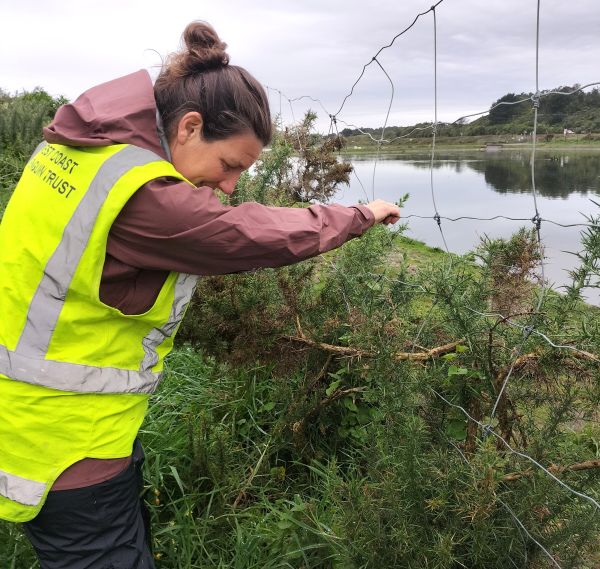
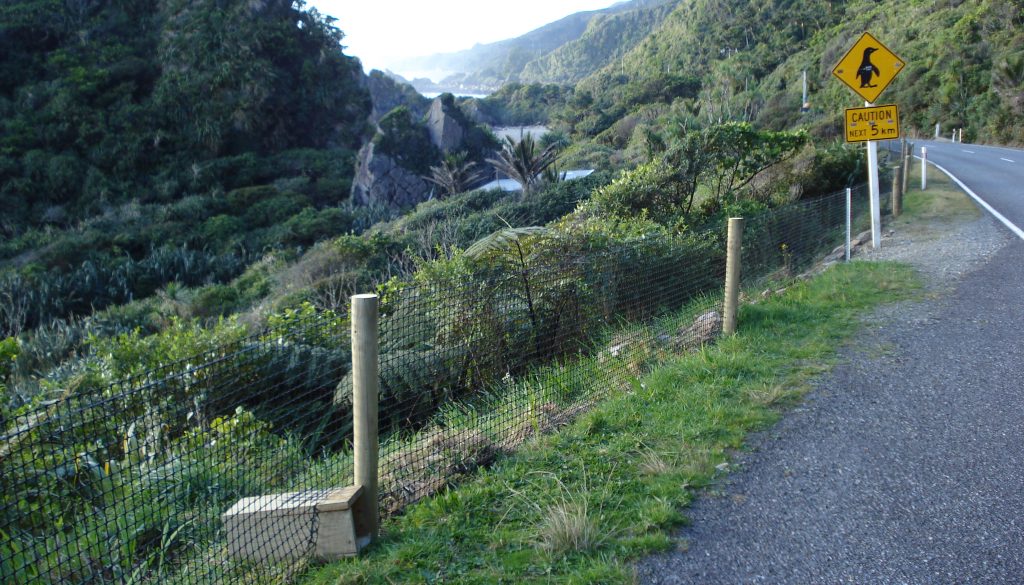 While materials were chosen that would stand up to the harsh coastal conditions, those same coastal conditions are conducive to plant growth! Occasional checks of the fences have been carried out by volunteers and rangers so that any maintenance needs can be identified and remedied. The never-ending need for maintenance is managing the vegetation that can grow through the fence, for example gorse, blackberry and hydrangea, pushing it to breaking point in places, or flop over causing damage from the weight of rank grass, rushes and weeds such as montbretia.
Volunteers recently spent a few hours tidying up the main fence along Woodpecker Bay north of Punakaiki so a big shout out to them - thank you Fiona, Jony, Reef, Katrina, Mandy, Marty, Teresa and Deb! Flax had been pressing down on the fence, but now the fence has been freed up by these wonderful volunteers - and they picked up a fair bit of rubbish too.
While materials were chosen that would stand up to the harsh coastal conditions, those same coastal conditions are conducive to plant growth! Occasional checks of the fences have been carried out by volunteers and rangers so that any maintenance needs can be identified and remedied. The never-ending need for maintenance is managing the vegetation that can grow through the fence, for example gorse, blackberry and hydrangea, pushing it to breaking point in places, or flop over causing damage from the weight of rank grass, rushes and weeds such as montbretia.
Volunteers recently spent a few hours tidying up the main fence along Woodpecker Bay north of Punakaiki so a big shout out to them - thank you Fiona, Jony, Reef, Katrina, Mandy, Marty, Teresa and Deb! Flax had been pressing down on the fence, but now the fence has been freed up by these wonderful volunteers - and they picked up a fair bit of rubbish too.
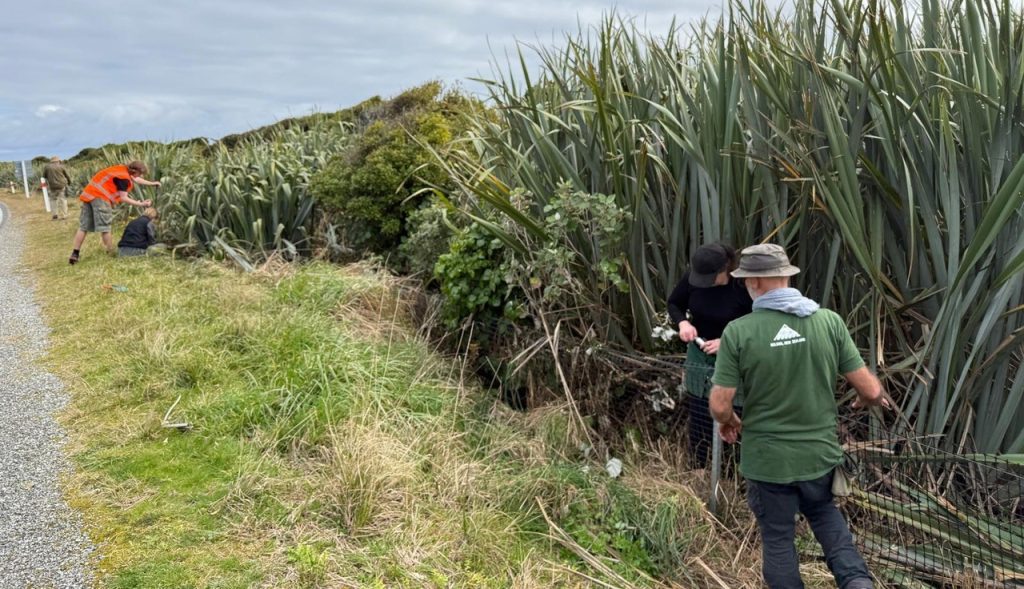 Volunteer Natassja Savidge has offered to check and help maintain the Hokitika penguin protection fence and joined Ranger Lucy Waller and Manager Inger Perkins in May to inspect the length of the fence. Some minor issues were found but the main finding was the extent of the vegetation growth that was damaging the fence in places. Big thanks to Natassja!