The West Coast Penguin Trust is hailing the benefits of exhaustive environmental and penguin management planning after a nocturnal visitor to an ocean outfall drilling site recently was successfully returned to the ocean.
Westland Dairy Company took the initiative several years ago when the idea of a pipeline to take treated waste out to sea rather than into the Hokitika River started taking shape. The pipeline was proposed to go through a small area of coastal scrub on the northern edge of Hokitika, but that small area was home to dozens of blue penguins.
As pipeline plans progressed, so did the preparation to work in a coastal area where penguins would be present. The West Coast Penguin Trust provided details for a comprehensive blue penguin management plan that was incorporated into contract documents for the tender process.
McConnell Dowell won the tender to install the pipeline and have embraced the idea of working in a penguin zone, welcoming the inductions for contract teams by Trust Manager, Inger Perkins, and implementing the many requirements of the penguin management plan. They have borrowed a taxidermied blue penguin – kindly loaned by DOC – so that they are all aware of what they are protecting and looking out for.
So when the night crew saw a penguin on the site, they alerted the site manager, who got hold of the Trust. Footprints were seen but it wasn’t clear where the penguin had hidden itself until later in the day.
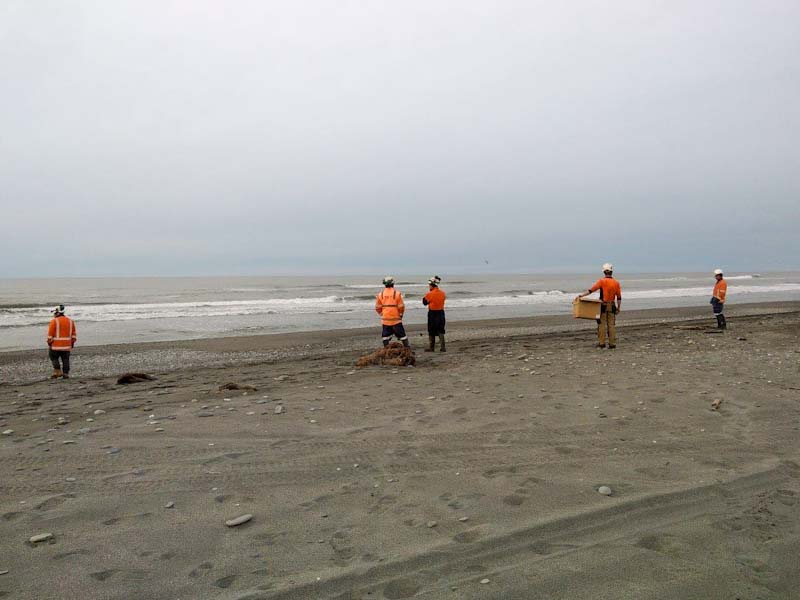
McConnell Dowell staff were ingenious, helpful and ultimately delighted to help the penguin gently out of its hiding place under a container housing pumping machinery. With guidance from Ms Perkins, they released the penguin to the beach and watched as the penguin looked around, got its bearings, and then headed out to sea – a happy ending for everyone.
The key lesson was that the preparation paid off. The Trust appeals to all those who may be working in coastal areas to think penguins. They could be nesting anywhere – under trees, shrubs, houses, sheds, debris. Check with the Trust before disturbing any coastal area, whether digging into or moving material so that no penguins are harmed.
The story has been shared through local newspapers and on Stuff here:


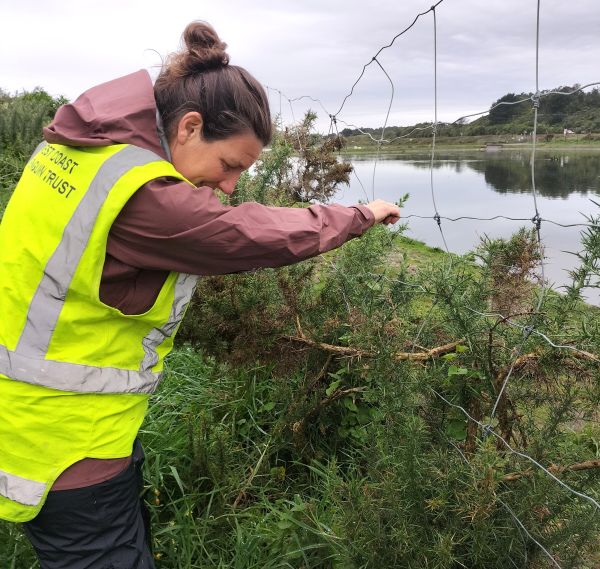
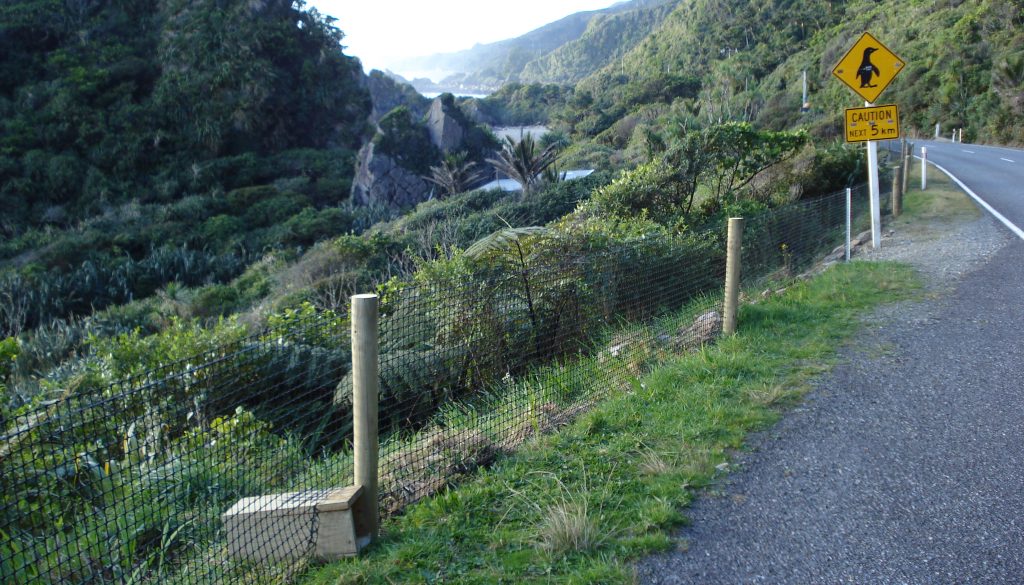 While materials were chosen that would stand up to the harsh coastal conditions, those same coastal conditions are conducive to plant growth! Occasional checks of the fences have been carried out by volunteers and rangers so that any maintenance needs can be identified and remedied. The never-ending need for maintenance is managing the vegetation that can grow through the fence, for example gorse, blackberry and hydrangea, pushing it to breaking point in places, or flop over causing damage from the weight of rank grass, rushes and weeds such as montbretia.
Volunteers recently spent a few hours tidying up the main fence along Woodpecker Bay north of Punakaiki so a big shout out to them - thank you Fiona, Jony, Reef, Katrina, Mandy, Marty, Teresa and Deb! Flax had been pressing down on the fence, but now the fence has been freed up by these wonderful volunteers - and they picked up a fair bit of rubbish too.
While materials were chosen that would stand up to the harsh coastal conditions, those same coastal conditions are conducive to plant growth! Occasional checks of the fences have been carried out by volunteers and rangers so that any maintenance needs can be identified and remedied. The never-ending need for maintenance is managing the vegetation that can grow through the fence, for example gorse, blackberry and hydrangea, pushing it to breaking point in places, or flop over causing damage from the weight of rank grass, rushes and weeds such as montbretia.
Volunteers recently spent a few hours tidying up the main fence along Woodpecker Bay north of Punakaiki so a big shout out to them - thank you Fiona, Jony, Reef, Katrina, Mandy, Marty, Teresa and Deb! Flax had been pressing down on the fence, but now the fence has been freed up by these wonderful volunteers - and they picked up a fair bit of rubbish too.
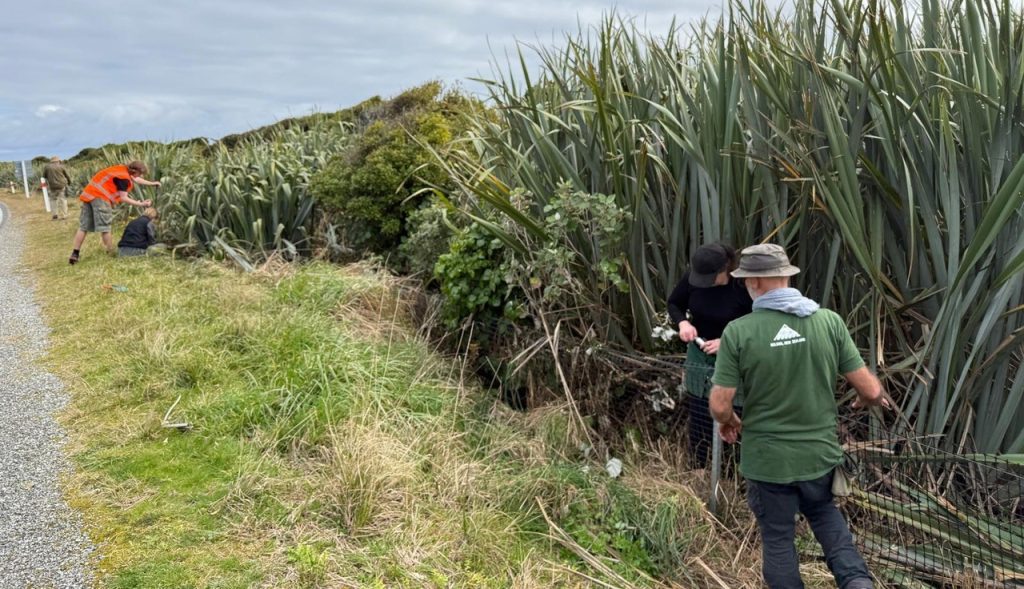 Volunteer Natassja Savidge has offered to check and help maintain the Hokitika penguin protection fence and joined Ranger Lucy Waller and Manager Inger Perkins in May to inspect the length of the fence. Some minor issues were found but the main finding was the extent of the vegetation growth that was damaging the fence in places. Big thanks to Natassja!