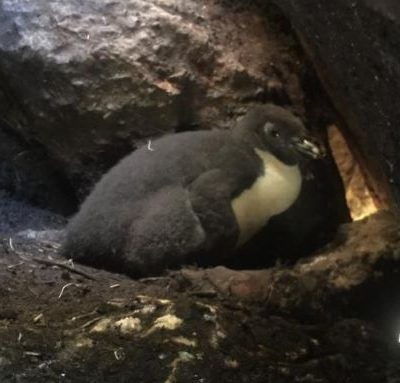
We have been lucky enough to have Sarah Kivi carry out our Haast area tawaki monitoring for the past few years and these are her findings from the 2024 tawaki season…
Aim of programme: To monitor 10-15 nests from both Haast colonies twice during the breeding season in order to gain a general idea of breeding success each year and ideally relate that to conditions such as those at sea or beech seed mast events and increased stoat presence. The first visit on 6th September was timed to find active nests and record eggs laid and the second visit on 25th September to record survival of chicks prior to them leaving the nest to form a creche. A bonus third visit was made by Ranger Lucy on 10th October.
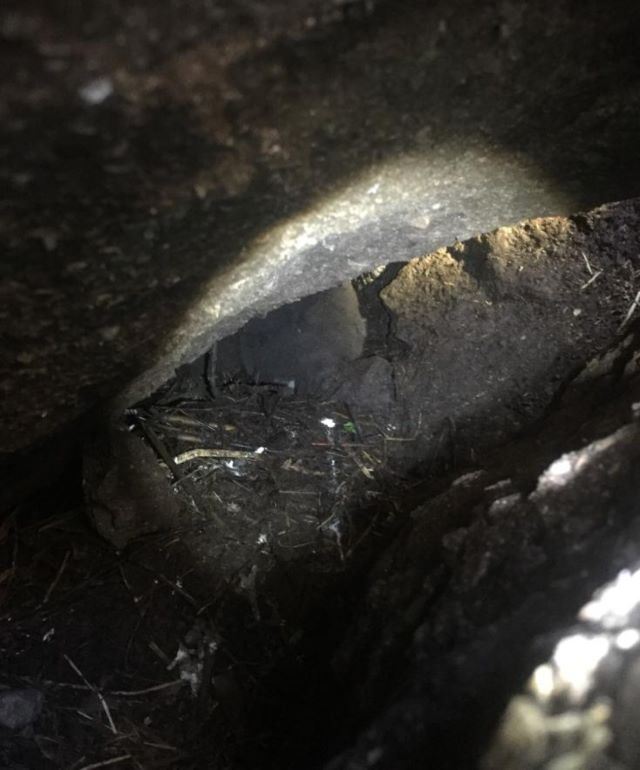
Report from Colony 1:
A total of 10 active nests were found at the first visit including one new nest site not monitored in the previous three years. Out of the 10 nests and 19 eggs laid, 2 nests failed at the egg stage and 8 nests successfully hatched chicks resulting in a total of 10 live chicks at the time of the second visit.
When there are two chicks with one much larger than the other hatching first, it is very unlikely that more than one chick would survive per nest so we have to assume that 8 chicks are likely to have survived to fledging. The extra visit to this colony confirmed one chick still alive at each of eight nests.
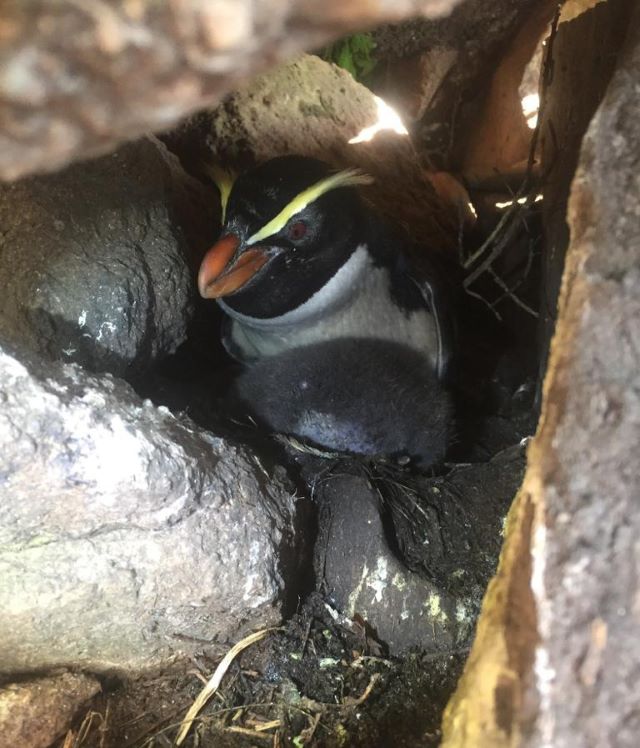
Report from Colony 2:
Eleven active nests were monitored here. There appears to have been a decent rockslide along the coastline of the most westerly part of the colony and this has eliminated several nesting sites which had been monitored in previous years.
Of the 11 active nests monitored and 20 eggs laid, 1 nest failed at the egg stage and 1 at the chick stage while 9 nests successfully hatched chicks resulting in 11 live chicks at the time of the 2nd visit.
2023 season was an unusual season where we had many two chick nests succeed to fledging, which coincided with an El Niño year. This happened at Gorge River that year too. For 2024, things have settled back to more of the ‘norm’ this season, the occasional 2 chicks surviving but the majority fledge one chick per nest.
Sarah Kivi, Ranger, West Coast Penguin Trust
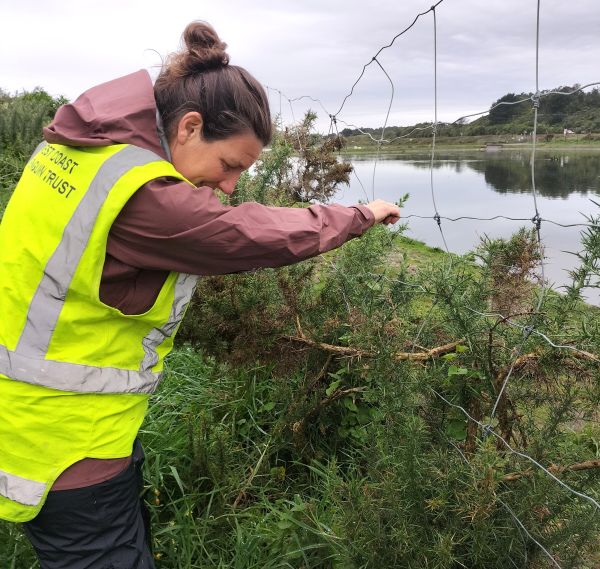
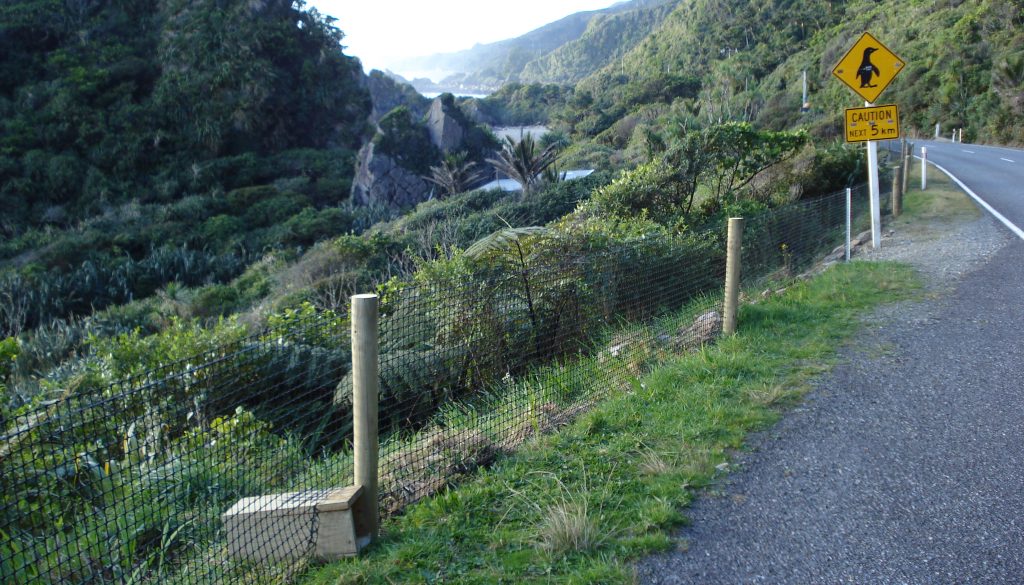 While materials were chosen that would stand up to the harsh coastal conditions, those same coastal conditions are conducive to plant growth! Occasional checks of the fences have been carried out by volunteers and rangers so that any maintenance needs can be identified and remedied. The never-ending need for maintenance is managing the vegetation that can grow through the fence, for example gorse, blackberry and hydrangea, pushing it to breaking point in places, or flop over causing damage from the weight of rank grass, rushes and weeds such as montbretia.
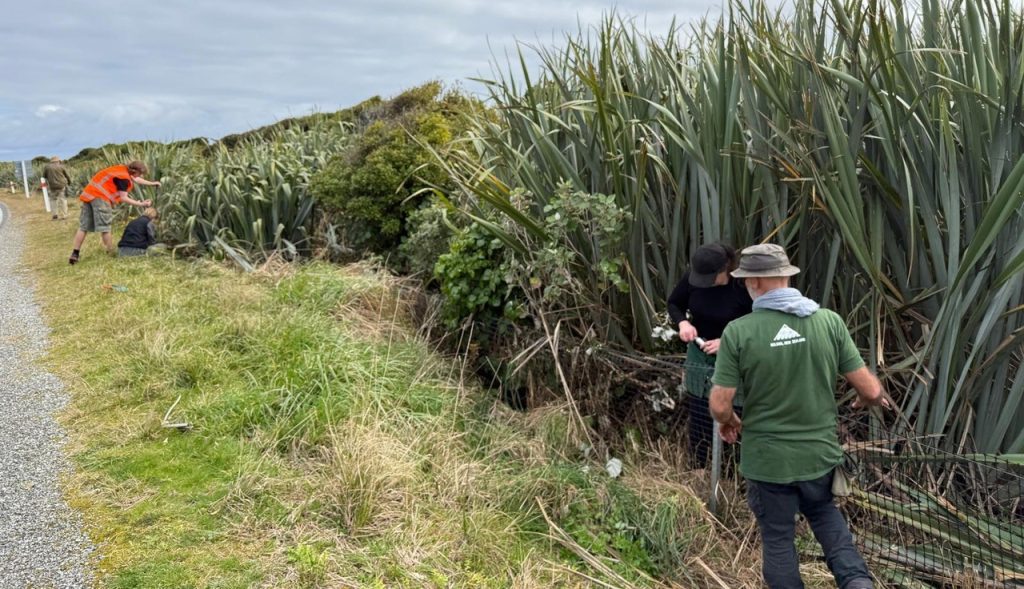
Volunteers recently spent a few hours tidying up the main fence along Woodpecker Bay north of Punakaiki so a big shout out to them - thank you Fiona, Jony, Reef, Katrina, Mandy, Marty, Teresa and Deb! Flax had been pressing down on the fence, but now the fence has been freed up by these wonderful volunteers - and they picked up a fair bit of rubbish too.
While materials were chosen that would stand up to the harsh coastal conditions, those same coastal conditions are conducive to plant growth! Occasional checks of the fences have been carried out by volunteers and rangers so that any maintenance needs can be identified and remedied. The never-ending need for maintenance is managing the vegetation that can grow through the fence, for example gorse, blackberry and hydrangea, pushing it to breaking point in places, or flop over causing damage from the weight of rank grass, rushes and weeds such as montbretia.
Volunteers recently spent a few hours tidying up the main fence along Woodpecker Bay north of Punakaiki so a big shout out to them - thank you Fiona, Jony, Reef, Katrina, Mandy, Marty, Teresa and Deb! Flax had been pressing down on the fence, but now the fence has been freed up by these wonderful volunteers - and they picked up a fair bit of rubbish too.
 Volunteer Natassja Savidge has offered to check and help maintain the Hokitika penguin protection fence and joined Ranger Lucy Waller and Manager Inger Perkins in May to inspect the length of the fence. Some minor issues were found but the main finding was the extent of the vegetation growth that was damaging the fence in places. Big thanks to Natassja!