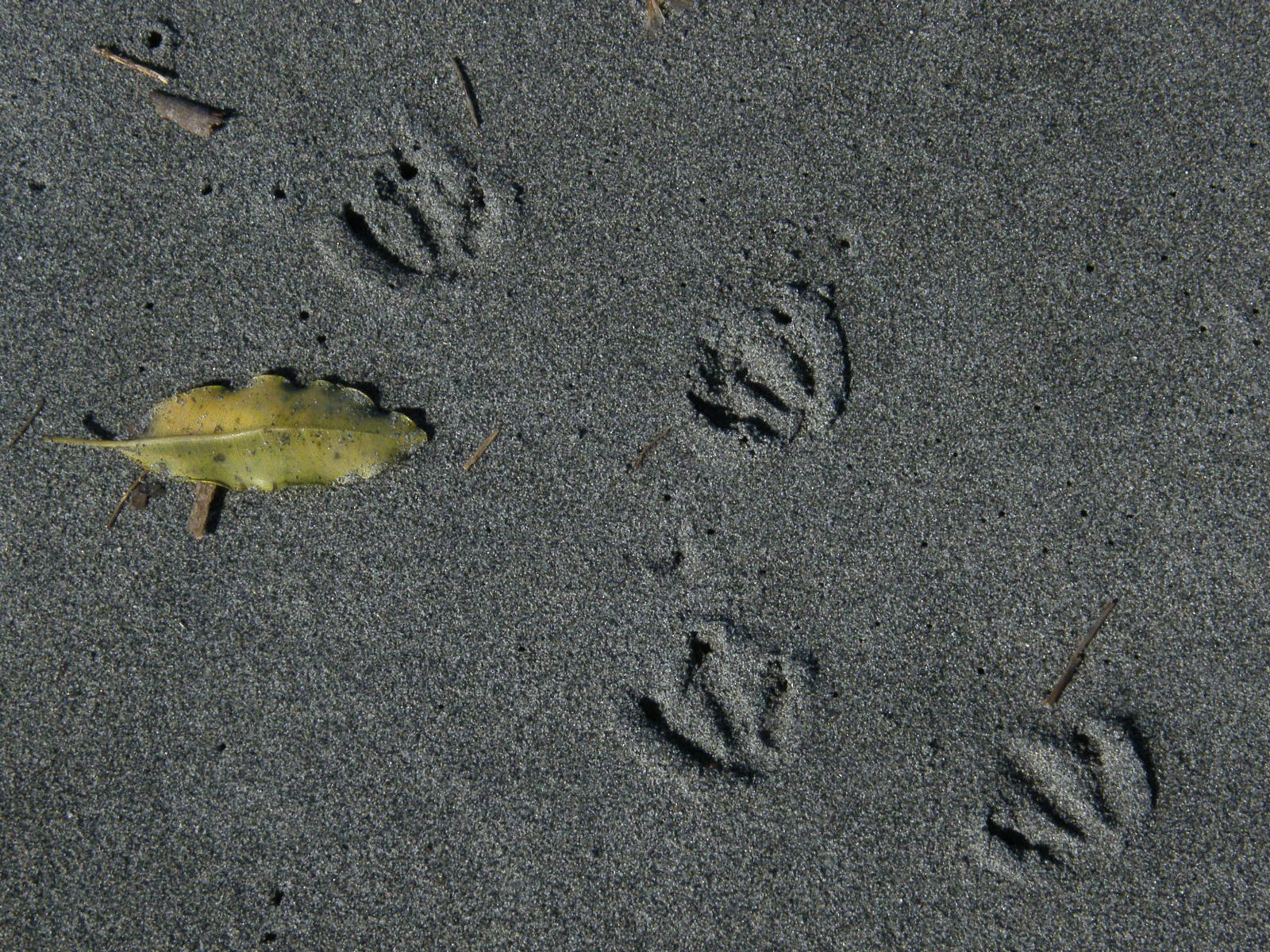
Get involved, discover your beach and share your observations! We want to know where blue penguins are up and down the coast so as to best advocate for their protection and you can help.
An early morning beach walk between 14th and 20th October looking for penguin tracks will remind you how wonderful our coastline is and help us gain a clearer picture of where blue penguins are and, over time, possibly an indication of trends in populations. Penguins are a little like canaries in coal mines – they are indicators of the health of their environment, both on land and at sea, so any more knowledge we have can help.
You can do as many counts as you like during the count over seven days, in the same area or in different areas, as short or long a stretch of beach as you wish.
Please think about your safety when you do your count. We have picked a time when tides are low in the early morning, when it will be easiest to spot the straight lines of penguin tracks, but consider the tides, the waves, the weather and even marine mammals (give seals plenty of space) as you go for your walk, and let someone know where you are going and when you’ll be back.
It’s tough to get up early and get out onto the beach but it is so worthwhile. The penguin count is a great incentive to help you and you’ll feel so glad you did! We recommend that you get familiar with the iNaturalist app a day or so before you head out and then it’s a breeze to collect reports of any penguin tracks on your smart phone.
Have fun and stay safe – we look forward to your observations.
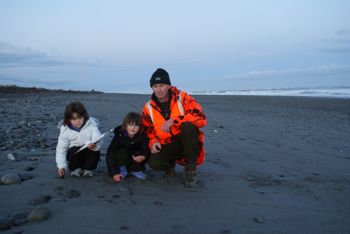
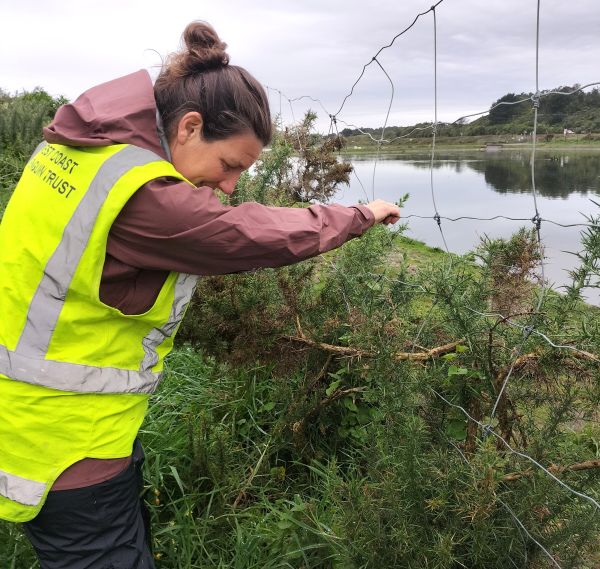
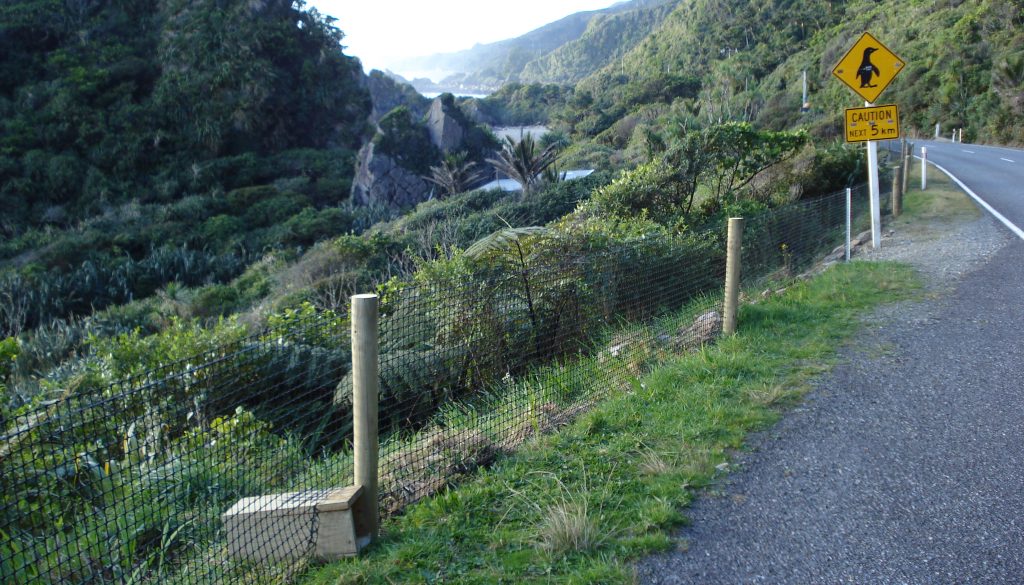 While materials were chosen that would stand up to the harsh coastal conditions, those same coastal conditions are conducive to plant growth! Occasional checks of the fences have been carried out by volunteers and rangers so that any maintenance needs can be identified and remedied. The never-ending need for maintenance is managing the vegetation that can grow through the fence, for example gorse, blackberry and hydrangea, pushing it to breaking point in places, or flop over causing damage from the weight of rank grass, rushes and weeds such as montbretia.
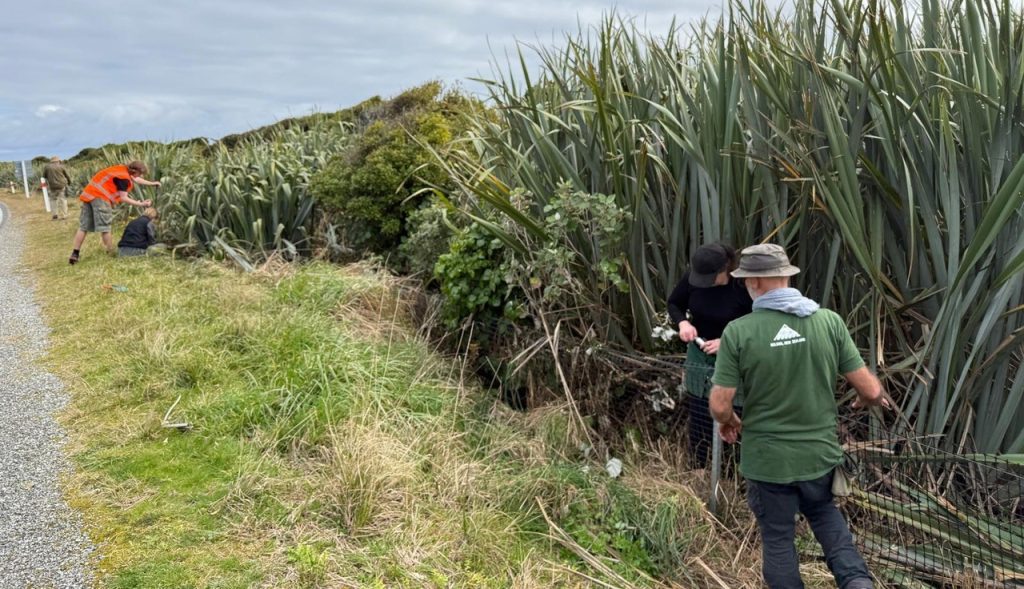
Volunteers recently spent a few hours tidying up the main fence along Woodpecker Bay north of Punakaiki so a big shout out to them - thank you Fiona, Jony, Reef, Katrina, Mandy, Marty, Teresa and Deb! Flax had been pressing down on the fence, but now the fence has been freed up by these wonderful volunteers - and they picked up a fair bit of rubbish too.
While materials were chosen that would stand up to the harsh coastal conditions, those same coastal conditions are conducive to plant growth! Occasional checks of the fences have been carried out by volunteers and rangers so that any maintenance needs can be identified and remedied. The never-ending need for maintenance is managing the vegetation that can grow through the fence, for example gorse, blackberry and hydrangea, pushing it to breaking point in places, or flop over causing damage from the weight of rank grass, rushes and weeds such as montbretia.
Volunteers recently spent a few hours tidying up the main fence along Woodpecker Bay north of Punakaiki so a big shout out to them - thank you Fiona, Jony, Reef, Katrina, Mandy, Marty, Teresa and Deb! Flax had been pressing down on the fence, but now the fence has been freed up by these wonderful volunteers - and they picked up a fair bit of rubbish too.
 Volunteer Natassja Savidge has offered to check and help maintain the Hokitika penguin protection fence and joined Ranger Lucy Waller and Manager Inger Perkins in May to inspect the length of the fence. Some minor issues were found but the main finding was the extent of the vegetation growth that was damaging the fence in places. Big thanks to Natassja!