Westland petrel chicks are leaving the nest for the first time between November and January and can be disorientated by lights and poor weather at the very start of their long journey to South America.
90% of petrels found downed due to disorientation by lights are fledglings. Tragically, many are disorientated by vehicle or street lights and come down on roads. Black birds on a black road at night are highly likely to be involved in a collision and are often killed. They also need height to launch themselves, so if they come down and are not killed on the road or rescued, they are likely to be stranded and die.
But you can help.
If you are on coast roads, particularly around Punakaiki, during November, December and/or January, but also again in March/April, and especially at night, please keep your eyes out for these large black seabirds.
The Department of Conservation has produced some guidance so that you can help.
First of all, if you live in the Punakaiki/Barrytown area, avoid leaving outdoor lights on and close curtains and blinds at night. For the benefit of these and other birds such as penguins, keep dogs secure at home.
Secondly, if you find a stranded petrel:
- If possible, move them away from danger – off the road in particular if safe to do so. Take care as they have a nasty bite, so gently put a towel over them or use gloves – or phone the 0800 DOC Hot line, 0800 362 468 for assistance.
- Place the bird in large cardboard box or similar with air holes and…
- If you’re in the Punakaiki area, take to the petrel drop off boxes at DOC’s Punakaiki Visitor Centre, and call 03 7311 895 if after hours and leave a message noting where and when found etc.
- If further away, phone 0800 DOCHot so that DOC can arrange collection.
- Do not attempt to release the bird yourself. Birds need to be checked by a DOC ranger to ensure they are in good health prior to release.
Thank you for helping these wonderful birds – birds that only breed in this area on the West Coast.
For the DOC information flyer, click here: 2024 11 Westland petrel flyer PDF.
For more detailed information, find reports and papers via our research page.
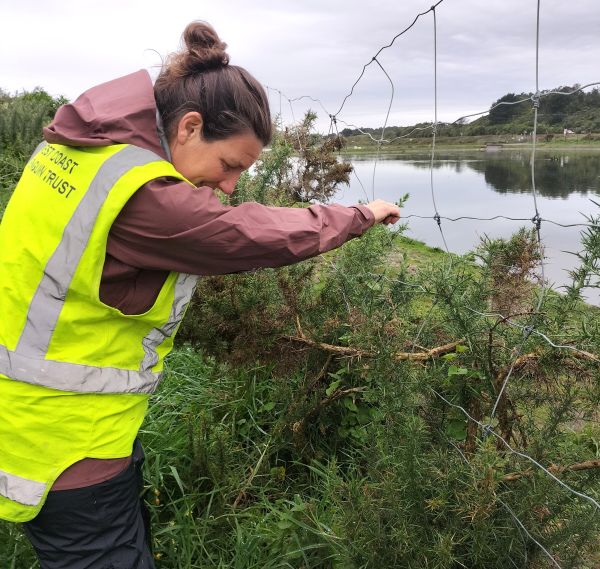
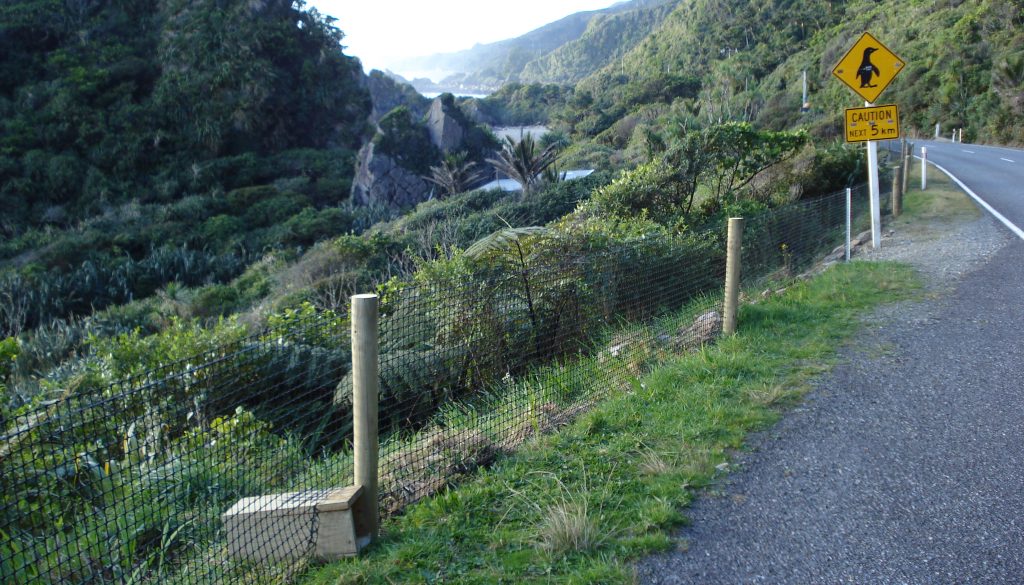 While materials were chosen that would stand up to the harsh coastal conditions, those same coastal conditions are conducive to plant growth! Occasional checks of the fences have been carried out by volunteers and rangers so that any maintenance needs can be identified and remedied. The never-ending need for maintenance is managing the vegetation that can grow through the fence, for example gorse, blackberry and hydrangea, pushing it to breaking point in places, or flop over causing damage from the weight of rank grass, rushes and weeds such as montbretia.
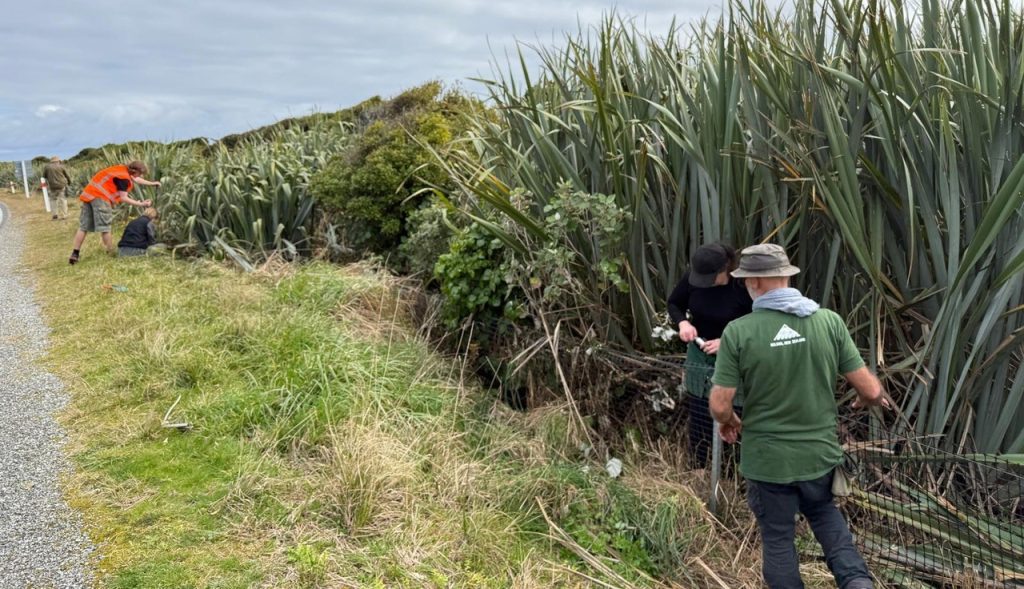
Volunteers recently spent a few hours tidying up the main fence along Woodpecker Bay north of Punakaiki so a big shout out to them - thank you Fiona, Jony, Reef, Katrina, Mandy, Marty, Teresa and Deb! Flax had been pressing down on the fence, but now the fence has been freed up by these wonderful volunteers - and they picked up a fair bit of rubbish too.
While materials were chosen that would stand up to the harsh coastal conditions, those same coastal conditions are conducive to plant growth! Occasional checks of the fences have been carried out by volunteers and rangers so that any maintenance needs can be identified and remedied. The never-ending need for maintenance is managing the vegetation that can grow through the fence, for example gorse, blackberry and hydrangea, pushing it to breaking point in places, or flop over causing damage from the weight of rank grass, rushes and weeds such as montbretia.
Volunteers recently spent a few hours tidying up the main fence along Woodpecker Bay north of Punakaiki so a big shout out to them - thank you Fiona, Jony, Reef, Katrina, Mandy, Marty, Teresa and Deb! Flax had been pressing down on the fence, but now the fence has been freed up by these wonderful volunteers - and they picked up a fair bit of rubbish too.
 Volunteer Natassja Savidge has offered to check and help maintain the Hokitika penguin protection fence and joined Ranger Lucy Waller and Manager Inger Perkins in May to inspect the length of the fence. Some minor issues were found but the main finding was the extent of the vegetation growth that was damaging the fence in places. Big thanks to Natassja!