Westland Mineral Sands (WMS) is proud to announce its partnership with the West Coast Penguin Trust, strengthening its commitment to conserving the unique biodiversity of the region and supporting vital efforts to protect the kororā (Little Penguin).
Managing Director Ray Mudgway says WMS is honoured to support such a highly respected conservation organisation. “As stewards of nature and advocates for sustainable operations, we are deeply committed to safeguarding the habitats of iconic local species such as the kororā and to contribute to the trust’s ongoing work in preserving these remarkable birds.
Inger Perkins, Manager of the West Coast Penguin Trust, welcomed the partnership, acknowledging the collaborative approach taken by WMS. “We appreciated the early conversations with the WMS team, well before mining operations began, ensuring that penguins and other threatened seabirds were considered as mining was planned. Moving the relationship up a level to support our work with kororā is a natural step, one that we really appreciate, and one that will help us continue our penguin conservation projects,” says Perkins.
The kororā, the world’s smallest penguin, stands just 30 cm tall and weighs around one kilogram. While kororā nest along various parts of New Zealand’s coastline, a small but significant population inhabits the rocky headland between Nine Mile Beach and Tauranga Bay in Cape Foulwind, Westport.
“Given our proximity to this critical habitat, and through liaison with the trust, WMS has worked closely with the trust and conservation experts to identify nesting sites and better understand the movements of these extraordinary birds. This included the use of trained penguin-tracking conservation dogs, ensuring our operations respect and protect the environment for kororā,” says Mudgway.
In response to these findings, WMS has adapted its operations and implemented measures to safeguard the penguins, including modifications to its traffic management plan. Truck movements near nesting areas are slowed and restricted during dawn and dusk, when kororā are most active, to minimise disruption to their natural behaviours and migration patterns.
This partnership with the West Coast Penguin Trust reflects WMS’s commitment to balancing operational excellence with environmental stewardship. By prioritising the protection of the region’s precious wildlife, WMS aims to ensure the kororā can continue to thrive in their natural habitat for generations to come.



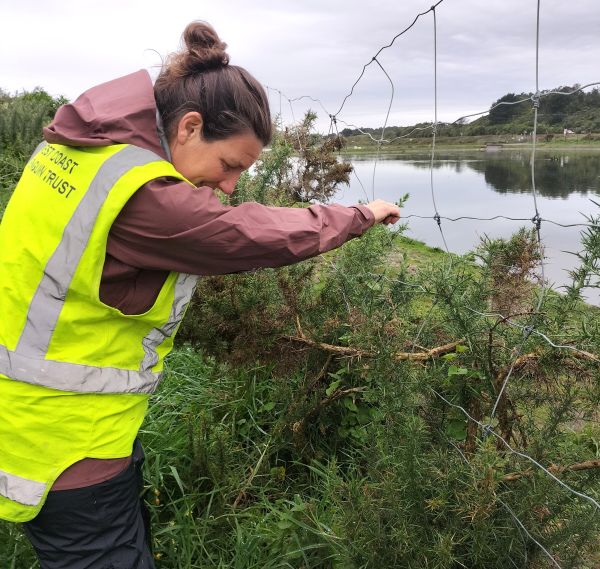
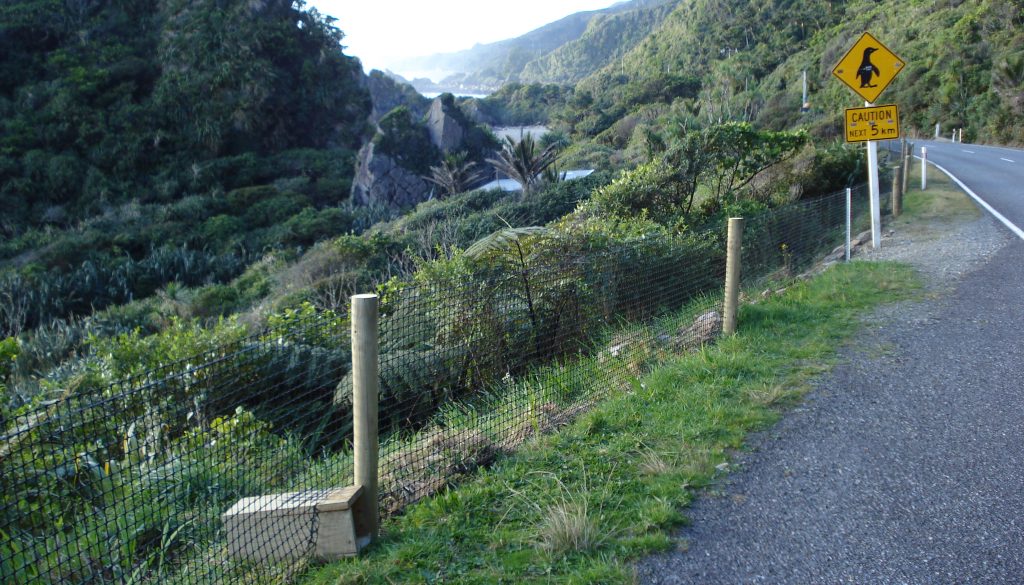 While materials were chosen that would stand up to the harsh coastal conditions, those same coastal conditions are conducive to plant growth! Occasional checks of the fences have been carried out by volunteers and rangers so that any maintenance needs can be identified and remedied. The never-ending need for maintenance is managing the vegetation that can grow through the fence, for example gorse, blackberry and hydrangea, pushing it to breaking point in places, or flop over causing damage from the weight of rank grass, rushes and weeds such as montbretia.
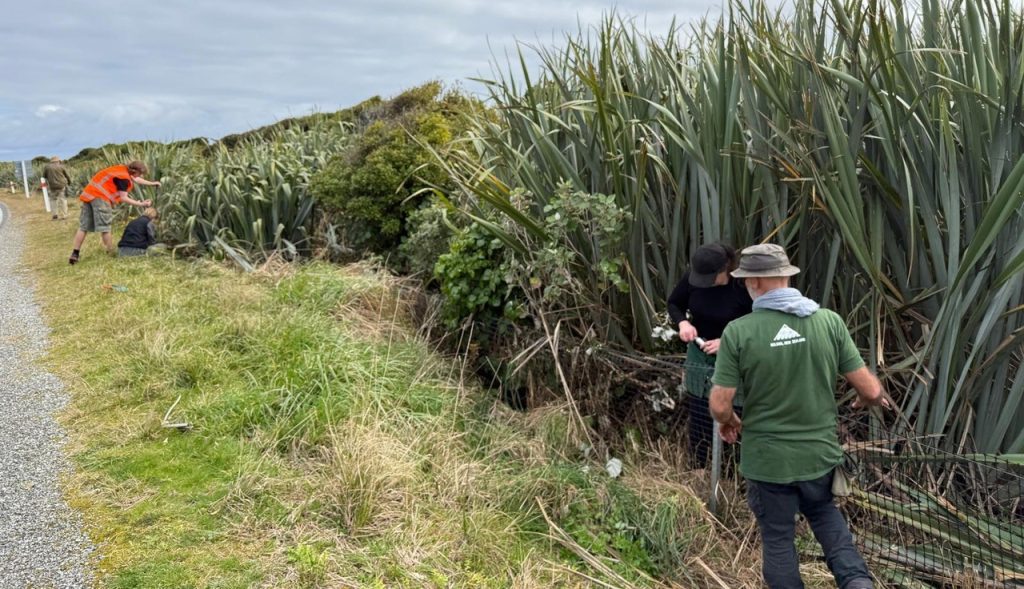
Volunteers recently spent a few hours tidying up the main fence along Woodpecker Bay north of Punakaiki so a big shout out to them - thank you Fiona, Jony, Reef, Katrina, Mandy, Marty, Teresa and Deb! Flax had been pressing down on the fence, but now the fence has been freed up by these wonderful volunteers - and they picked up a fair bit of rubbish too.
While materials were chosen that would stand up to the harsh coastal conditions, those same coastal conditions are conducive to plant growth! Occasional checks of the fences have been carried out by volunteers and rangers so that any maintenance needs can be identified and remedied. The never-ending need for maintenance is managing the vegetation that can grow through the fence, for example gorse, blackberry and hydrangea, pushing it to breaking point in places, or flop over causing damage from the weight of rank grass, rushes and weeds such as montbretia.
Volunteers recently spent a few hours tidying up the main fence along Woodpecker Bay north of Punakaiki so a big shout out to them - thank you Fiona, Jony, Reef, Katrina, Mandy, Marty, Teresa and Deb! Flax had been pressing down on the fence, but now the fence has been freed up by these wonderful volunteers - and they picked up a fair bit of rubbish too.
 Volunteer Natassja Savidge has offered to check and help maintain the Hokitika penguin protection fence and joined Ranger Lucy Waller and Manager Inger Perkins in May to inspect the length of the fence. Some minor issues were found but the main finding was the extent of the vegetation growth that was damaging the fence in places. Big thanks to Natassja!