A Department of Conservation team, with field work led by Westport based biodiversity ranger, Kate Simister, has been funded to conduct three years of research into Westland petrels / tāiko. The funding comes from the Conservation Services Programme, which monitors the impact of commercial fishing on protected species, studies species populations and looks at ways to mitigate bycatch.
The new funding has allowed the work programme to expand to cover a range of new projects not previously attempted with this species. These include:
- Understanding burrow occupancy rates in this species to determine how burrow mapping and nest counts can be related to numbers of breeding pairs. In particular how the status of apparent non-breeding birds occupying nest sites changes over time (e.g. are these pairs skipping breeding attempts, failed breeders or do these birds lack a partner?)
- Investigating the diving behaviour of Westland petrels using time-depth records to determine their risk profile from fisheries methods such as surface and bottom long-lines.
- Carry out multi-year tracking of adult birds using Global Location Sensing tags to determine extent of time spent within the New Zealand EEZ and elsewhere in the Southern Hemisphere.
- Track juvenile birds to determine if they migrate to seas beyond New Zealand.
- Testing of different tag attachment methods for GPS or Argos passive integrated transponder tags.
The study, currently in the third year of field work and the winter breeding season of tāiko, has recently shared a progress report. The report includes some fascinating early findings and when, complete, will provide extensive data for further analysis through an MSc student programme and new scientific papers.
Findings include dive depth and foraging locations as well as their migration to South America.
For the detail, methodology and early findings, the interim report is available here.

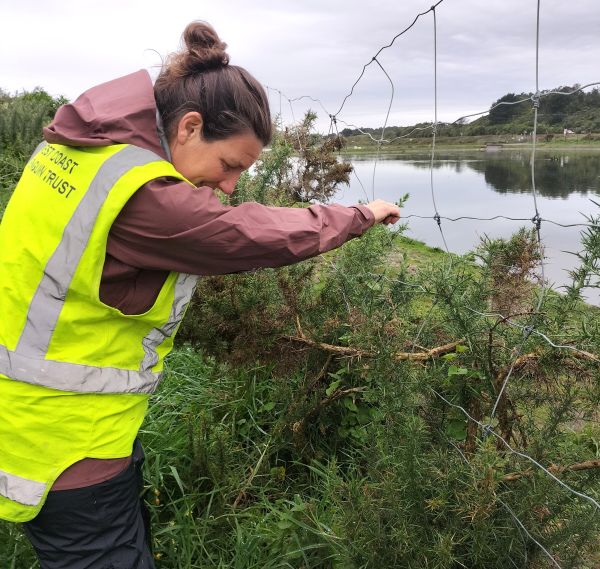
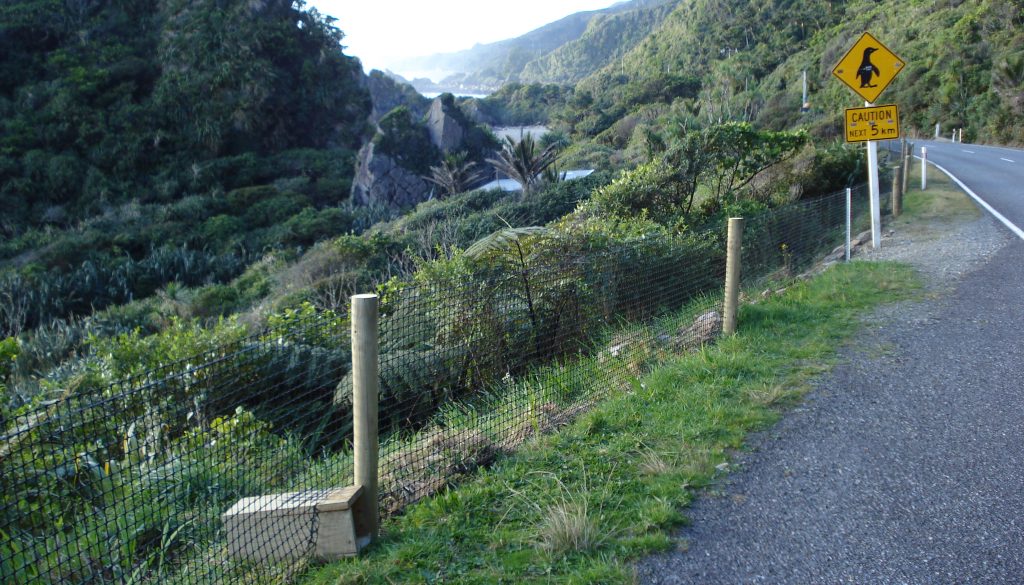 While materials were chosen that would stand up to the harsh coastal conditions, those same coastal conditions are conducive to plant growth! Occasional checks of the fences have been carried out by volunteers and rangers so that any maintenance needs can be identified and remedied. The never-ending need for maintenance is managing the vegetation that can grow through the fence, for example gorse, blackberry and hydrangea, pushing it to breaking point in places, or flop over causing damage from the weight of rank grass, rushes and weeds such as montbretia.
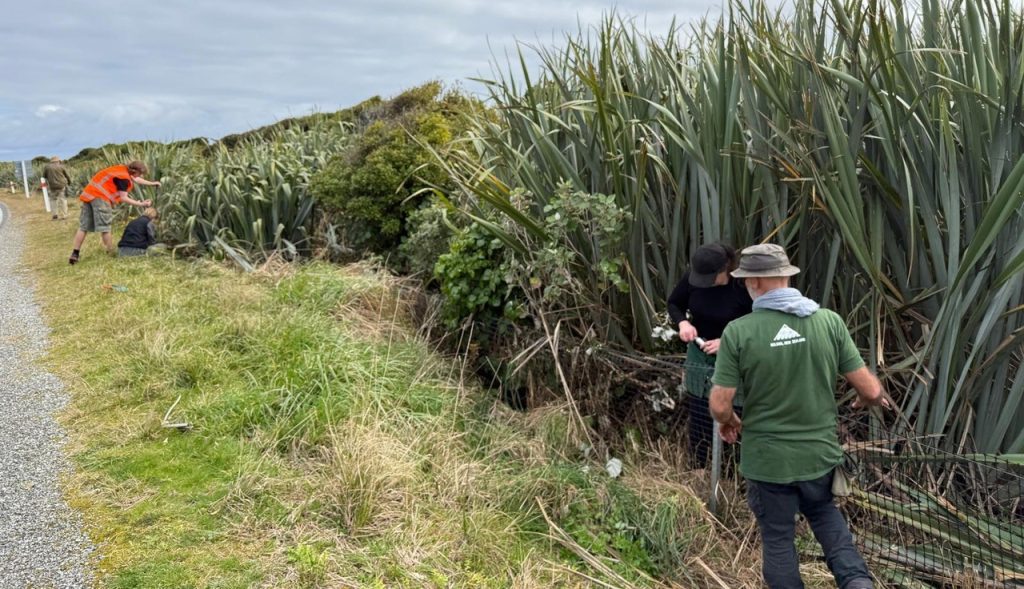
Volunteers recently spent a few hours tidying up the main fence along Woodpecker Bay north of Punakaiki so a big shout out to them - thank you Fiona, Jony, Reef, Katrina, Mandy, Marty, Teresa and Deb! Flax had been pressing down on the fence, but now the fence has been freed up by these wonderful volunteers - and they picked up a fair bit of rubbish too.
While materials were chosen that would stand up to the harsh coastal conditions, those same coastal conditions are conducive to plant growth! Occasional checks of the fences have been carried out by volunteers and rangers so that any maintenance needs can be identified and remedied. The never-ending need for maintenance is managing the vegetation that can grow through the fence, for example gorse, blackberry and hydrangea, pushing it to breaking point in places, or flop over causing damage from the weight of rank grass, rushes and weeds such as montbretia.
Volunteers recently spent a few hours tidying up the main fence along Woodpecker Bay north of Punakaiki so a big shout out to them - thank you Fiona, Jony, Reef, Katrina, Mandy, Marty, Teresa and Deb! Flax had been pressing down on the fence, but now the fence has been freed up by these wonderful volunteers - and they picked up a fair bit of rubbish too.
 Volunteer Natassja Savidge has offered to check and help maintain the Hokitika penguin protection fence and joined Ranger Lucy Waller and Manager Inger Perkins in May to inspect the length of the fence. Some minor issues were found but the main finding was the extent of the vegetation growth that was damaging the fence in places. Big thanks to Natassja!