Penguin tour supporting conservation – reserve your space now
April 14, 2021
The Yellow Eyed Penguin Trust and the West Coast Penguin Trust have teamed up to bring you a stunning behind the scenes fundraising tour for our supporters this spring.
Penguin tour supporting conservation – reserve your space now
The Yellow Eyed Penguin Trust and the West Coast Penguin Trust have teamed up to bring you a stunning behind the scenes fundraising tour for our supporters this spring.
The Yellow Eyed Penguin Trust and the West Coast Penguin Trust have teamed up to bring you a stunning behind the scenes fundraising tour, led by the hugely experienced Nature Quest, for our supporters. There's just one opportunity to join a trip, departing from Nelson on 3rd September and running to 10th with an optional extension through the Catlins and to Stewart Island. If you're fortunate enough to join this tour, you’ll gain unforgettable insights in the lives and challenges of our beloved penguin species, state of the art Tawaki, Kororā, and Hoiho research, and unrivalled access to the dedicated staff that make everything happen. And, of course you’ll see each species in its natural habitat, and all the while travelling through the spectacular South and Stewart Islands. Read the brochure here. (Please note, the brochure indicates a second tour, but there is just the one opportunity so get in quick.) This is a fabulous opportunity for penguin lovers and a fabulous opportunity for the West Coast Penguin Trust to be involved. You can contact Nature Quest via nature@naturequest.co.nz or on 021 680 524.

Weka book launch, Saturday 27th March, Hokitika
March 4, 2021
Hokitika's Regent Theatre 3.30 - 5.30pm Saturday 27 March
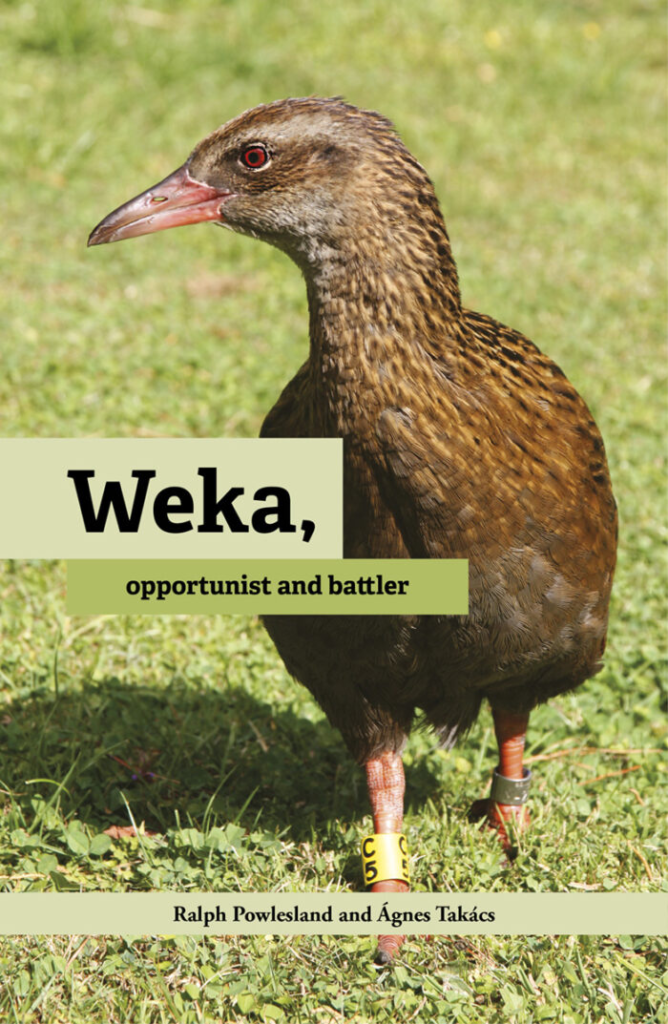
The book launch will be more than a simple traditional celebration of a new book. It will be an opportunity for folk to learn more about the birds' ecology and how to protect them while having them live nearby.
Weka book launch, Saturday 27th March, Hokitika
Hokitika's Regent Theatre 3.30 - 5.30pm Saturday 27 March
The book launch will be more than a simple traditional celebration of a new book. It will be an opportunity for folk to learn more about the birds' ecology and how to protect them while having them live nearby.
- MC: The Trust's own Kerry-Jayne Wilson - renowned bird ecologist and long time friend of Ralph.
- Ralph Powesland with an illustrated talk on his book and weka ecology, accompanied by Agnes Takacs, photographer in attendance.
- 1949 recording of A P Harper talking about Charlie Douglas and weka on the Coast in the 1890s. (And Canterbury in the 1870s!)
- Video of children's author Joy Cowley reciting her poem Weka, weka, nosey pecker.
- A reading of some of Charlie Douglas's views on weka - should be our national bird etc.
- Weka photography competition results. (Judged by Greymouth Photography Club). Winners on the main screen, all entries looping on smaller screen in foyer.
- Display of how to trap predators but not catch wekas - with DOC staffer in attendance at display to explain.
- Display and promo on dog aversion training, register of interest for next training.
- DOC Operations Manager, Nic Kunzmann on stage to refer folk to display trapping and aversion displays.
- Raffle (book prize) to be sold and drawn during the event.
- Q&A session.
- Formal launch ribbon cutting.
- Post formalities: Ralph and Agnes on hand to sign books (Take Note selling at the event).
- Also social time with refreshments for about an hour after the formalities. Includes time to look at trapping display.

World of Penguins talk – 11th May, Greymouth
March 2, 2021
Come and join us for an update on our projects and a talk entitled 'World of Penguins' from Kerry-Jayne Wilson MNZM.
World of Penguins talk – 11th May, Greymouth

Come and join us for an update on our projects and a talk entitled 'World of Penguins' from Kerry-Jayne Wilson MNZM.
Come and join us for an update on our projects and a talk entitled 'World of Penguins' from Kerry-Jayne Wilson MNZM. Postponed by a year due to lockdown, we hope that this evening of illustrated talks will not be affected by high alert levels. The talks will be at the Tai Poutini Polytechnic lecture theatre in Greymouth at 5.30pm, Tuesday 11th May and will be followed by a cuppa. We hope you can join us to find out what we've been doing and to hear fascinating, enlightening and amusing penguins tales with wonderful photographs from Kerry-Jayne Wilson, our former Chair and still our esteemed Scientist.
Low stoat numbers but still some predation in tawaki colony
March 2, 2021
Tawaki monitoring for the 2020 season found low stoat and rodent presence but some impact on breeding success due to stoat predation.
Low stoat numbers but still some predation in tawaki colony

Tawaki monitoring for the 2020 season found low stoat and rodent presence but some impact on breeding success due to stoat predation.
Tawaki (Fiordland crested penguin) monitoring for the 2020 season found low stoat and rodent presence but some impact on breeding success due to stoat predation. Monitoring of breeding at tawaki nests occurred at the three sites with ten nests at each site being monitored by cameras and those and additional nests receiving a fortnightly visit. Monitoring of stoats within and around the colonies was performed as scheduled with lured camera traps, tracking tunnels and the nest cameras. Analysis of data is currently occurring. Preliminary results have shown low stoat and rodent presence at the three sites. Impact upon breeding from predation did occur, at a low level, but even the failure of one or two from ten monitored nests indicates 10-20% failure. Otherwise, all three sites had generally good breeding success for the 2020 season. One theory is that there may have been enough rodents in the environment to provide easy prey and reduce the stoats’ need to predate tawaki eggs and chicks. Lead Ranger Matt Charteris and the WCPT have been greatly assisted with the data collection by Sarah Kivi, Andre de Graaf and Catherine Stewart as tawaki rangers for the season. Support has been present from DOC in Haast and with conversations with Graeme Elliot (DOC Biodiversity Threats). We will be overlaying breeding success monitoring information for each nest with camera footage – if a nest failed then we will first look at video footage to establish if a stoat caused a failure and then determine the extent of further imagery review required to enable analysis of breeding success versus stoat presence. Once completed, our analysis will provide a significant step forward in understanding the risk posed by stoats to the breeding success of tawaki and results will be shared through our website. We're enormously grateful to Wellington Zoo Trust, to the Birds NZ Research Fund, and to DOC for supporting this project.South Island penguin tours – fabulous new opportunity!
February 25, 2021
The Yellow-eyed Penguin Trust and the West Coast Penguin Trust, in association with Nature Quest, are presenting two trips for nature enthusiasts in September focused on penguins and penguin conservation.
South Island penguin tours – fabulous new opportunity!

The Yellow-eyed Penguin Trust and the West Coast Penguin Trust, in association with Nature Quest, are presenting two trips for nature enthusiasts in September focused on penguins and penguin conservation.
South Island Penguins - Nature and Conservation Tours The Yellow-eyed Penguin Trust and the West Coast Penguin Trust, in association with Nature Quest, are presenting two trips for nature enthusiasts in September focused on penguins and penguin conservation. Nature Quest is a small nature tourism business, established in 1988. Group sizes will be small, a maximum of 14, and will be led by an ornithologist with over 20 years leading nature tours.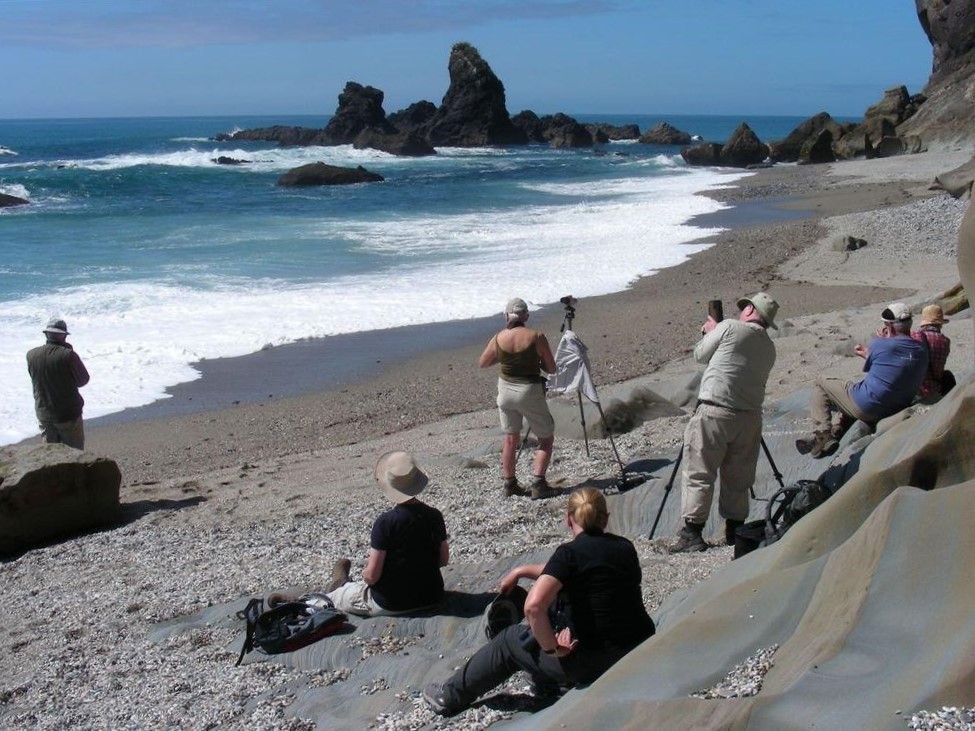
Gift matching opportunity – double your donation!
February 24, 2021
A wonderful donor has promised to match donations up to a very generous $3000. Now we need you to help us reach a potential donation total of $6000 towards maintaining and growing our penguin conservation programmes!
Gift matching opportunity – double your donation!

A wonderful donor has promised to match donations up to a very generous $3000. Now we need you to help us reach a potential donation total of $6000 towards maintaining and growing our penguin conservation programmes!
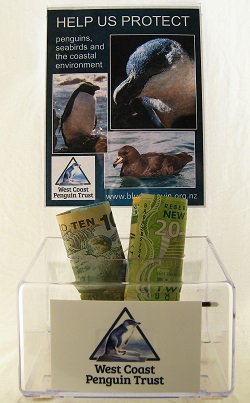
A wonderful supporter has promised to match donations up to a very generous $3,000. Now we need you to help us reach a potential donation total of $6,000 towards maintaining and growing our penguin conservation programmes! And we really do need your help. Their donation relies on your donations. They are encouraging us to seek your support, urging us on to make the most of their superb offer. All donations between February and May will count towards the $3000 target, whether the donation is already planned as part of your Supporter regular donations, whether you become a new Supporter with an annual donation or make a one off or regular donation, or put a couple of coins or a note in a donation box (e.g. New World and J's Cafe in Westport, Left Bank Gallery in Greymouth, Wilderness Gallery and Photo Corner in Hokitika and Treetop Walkway beyond), or a couple of other ways! And all are so much appreciated!


Appreciation to Gerald Freeman for work at Cape Foulwind
February 24, 2021
Trust Cape Foulwind Ranger, Gerald Freeman, is retiring from his role with the Trust, having kept predators at bay there for the past four years.
Appreciation to Gerald Freeman for work at Cape Foulwind
Trust Cape Foulwind Ranger, Gerald Freeman, is retiring from his role with the Trust, having kept predators at bay there for the past four years.
Trust Cape Foulwind Ranger, Gerald Freeman, is retiring from his role with the Trust, having kept predators at bay there for the past four years. Several years ago, the Trust had a goal of bringing more blue penguins and more sooty shearwaters to the southern tip of Cape Foulwind in an effort to enable more people to see more wildlife and to spend longer in the Buller area. To encourage or entice both species to nest in the area, the Trust built a solar powered sound system that plays blue penguin calls as they prepare to nest and, later in the year, sooty shearwater calls as they prepare to nest.


Facilitating blue penguin/ kororā tracking projects
February 24, 2021
West Coast blue penguin, kororā, tracking project - report from the New Zealand Penguin Initiative
Facilitating blue penguin/ kororā tracking projects

West Coast blue penguin, kororā, tracking project - report from the New Zealand Penguin Initiative
West Coast Blue Penguin Kororā Tracking Project - report from the New Zealand Penguin Initiative (NZPI) October saw the resumption of the blue penguin - kororā tracking project on the West Coast that began in November 2019 and follows earlier efforts by the West Coast Penguin Trust (WCPT) to track blue penguins. The current project, a collaboration between NZPI and WCPT, will provide long-term foraging data of blue penguins -kororā from two colonies in Charleston, Buller District. This at-sea monitoring runs in parallel with the nest monitoring programme to give a more complete picture of the drivers of breeding success while building a general understanding of how the birds use the local marine environment. Two rounds of deployments were completed with GPS dive data being attained for a total of eleven breeding birds – seven individuals in the earlier chick-guard stage and four in the later post-guard stage. Birds were fitted with GPS dive loggers (55 x 25 x 12mm; 20g) at the nest and devices were retrieved in the subsequent nights following considerable surveillance, either at the nest or between the landing site and the nest.

Blue penguin nest box design
February 11, 2021
Trust Chair and former Ranger, Reuben Lane, has prepared a nest box plan that we hope will keep penguins more secure and will be easier to transport to potential nest sites.
Blue penguin nest box design

Trust Chair and former Ranger, Reuben Lane, has prepared a nest box plan that we hope will keep penguins more secure and will be easier to transport to potential nest sites.
Trust Chair and former Ranger, Reuben Lane, has prepared a nest box plan that we hope will keep penguins more secure and will be easier to transport to potential nest sites. Traditional nest box designs have a tunnel attached to the main nesting box and we have encouraged those building new boxes to extend the length of the tunnel to provide additional protection from wekas. Wekas are known to enter penguin nest boxes and would predate chicks if they could. The new design includes an internal wall to form a tunnel and to provide more of a barrier to any intruders. The plan is illustrated below and can be saved from here (right click and save image).
- Use treated timber and galvanised flat head nails
- Place in secluded and shady location, dug partially into sloping ground ensuring water will not drain into nest site and will drain away from it. At a flat site, pile earth up around box.
- Camouflage with loose vegetation
Key messages for dog owners
February 9, 2021
Recently, we were invited to comment when DOC shared the sad story about the deaths of two tawaki, attributed to loose dogs at Jackson Bay/Jackson Head in South Westland. It was an opportunity to focus on the key messages for dogs in relation to penguins on the West Coast.
Key messages for dog owners
Recently, we were invited to comment when DOC shared the sad story about the deaths of two tawaki, attributed to loose dogs at Jackson Bay/Jackson Head in South Westland. It was an opportunity to focus on the key messages for dogs in relation to penguins on the West Coast.
Recently, we were invited to comment when DOC shared the sad story about the deaths of two tawaki, attributed to loose dogs at Jackson Bay/Jackson Head in South Westland. It was an opportunity to focus on the key messages for dogs in relation to penguins on the West Coast, particularly when speaking to National Radio. First and foremost is to ensure that dogs are safe and secure at home. Loose dogs are not only at risk of being hit on the roads and causing traffic accidents, they can also scare, threaten or even attack adults, children and other animals. But in coastal areas, they may be roaming through dunes and on beaches where penguins may be nesting, resting, moulting or simply hanging out, perhaps ill. In forest areas, it may be kiwis that are vulnerable. In some places, wildlife is so precious and vulnerable that dogs are absolutely prohibited. 1. Ensure dogs cannot roam from home. The beach is a wonderful place for dogs to run and have fun, but penguins could be found at any time at any beach and in any coastal vegetation. The same applies for forests and kiwis. 2. Ideally dogs will be on leads throughout coastal areas and always on a lead (a) going through coastal vegetation to reach the beach and (b) after dark. Blue penguins or kororā will generally come ashore after dark and leave before dawn - if they are seen at the beach during daylight hours, there is likely to be something wrong and they will be at great risk from dogs. Fiordland crested penguins or tawaki often come ashore in the afternoon and are more likely to be seen at the beach in their nesting areas, mainly in South Westland (and Fiordland and Stewart Island). Again, these handsome penguins could be found anywhere along the West Coast and if they are largely still, they too may need some help. These and in fact all coastal wildlife, including seals, sealions, dotterels and other shorebirds are at risk from dogs. 3. If not on a lead, and only during daylight hours and in the tidal part of the beach, dogs must be under effective control - i.e. respond as required. Effective control means that the dog will respond as required, whether stopping immediately or coming when called, so not too far away, within voice or whistle control and well trained. There was a tragic story of a dog attacking a young seal - despite the owner calling and calling and then trying to pull the dog off, the dog would not let go and the seal had to be put down. Again, the same applies in forests. Dog owner or not, everyone can play a role in informing dog owners about wildlife at the beach. Wildlife, whether seals or dotterels, are well camouflaged at the beach and it is easy to approach too closely or even step on nests. If you see any wildlife as you walk on the beach and then meet a dog and owner, just let them know, both to protect the wildlife and potentially to protect the dog. 4. Warn dog owners if you see vulnerable wildlife at the beach. If you see sick or injured wildlife, and that includes penguins just hanging out, which they are only likely to do if they are unable to get to safety, please call the 0800 DOC HOTline (0800 362 468). DOC will be able to pass on the details to the nearest ranger and sometimes the penguin trust. Some penguins can be rescued and assessed for possible rehabilitation and release. 5. Call the 0800 DOCHOT line if you see sick or injured wildlife. Finally, there are some sites that are just too precious for dogs to be in at all, on or off a lead. Wildlife Refuges are specially protected for very rare wildlife and/or breeding colonies, for example that at Jackson Head where tawaki breed. 6. Never allow your dog to enter a Wildlife Refuge or other dog excluded area. If you see a loose dog in an area where dogs are prohibited, call the 0800 DOCHOT emergency line as soon as possible.