Dogs on holiday causing penguin nightmare
February 3, 2021
A rare tawaki or Fiordland crested penguin is thought to have been killed by a dog at a Haast wildlife refuge and DOC is asking pet owners to ensure their animals are under control and kept out of prohibited areas.
Dogs on holiday causing penguin nightmare

A rare tawaki or Fiordland crested penguin is thought to have been killed by a dog at a Haast wildlife refuge and DOC is asking pet owners to ensure their animals are under control and kept out of prohibited areas.
A rare tawaki or Fiordland crested penguin is thought to have been killed by a dog at a Haast wildlife refuge and DOC is asking pet owners to ensure their animals are under control and kept out of prohibited areas. A dog was seen running loose in the Okahu/Jackson Bay Wildlife Refuge and a short time later, clumps of tawaki feathers were found in the coastal forest beside the Wharekai Te Kou walking track. A tawaki penguin on another Haast beach has also been handed in by a member of the public who found it injured on the beach, with evidence of being attacked by a dog. The penguin sadly had to be put down. A wildlife refuge is strictly off limits to all but approved conservation dogs. Wildlife refuges contain either breeding colonies of animals or particularly rare animals, which suffer when dogs enter the area. Biodiversity Ranger Inge Bolt says people are ignoring the signage at the Wharekai Te Kou track which is a wildlife refuge where dogs are strictly prohibited. Penguins and other ground dwelling native birds don’t naturally co-exist with dogs, and they can’t escape easily – it takes just a second for a dog to cause a fatal injury to a penguin. “Responsible dog owners need to read the signs and know where their dog is allowed - particularly in sensitive wildlife areas. In some areas dogs are allowed, but only on a lead. “People are also ignoring the council signage in the settlement of Jackson Bay requiring dogs to be on a lead. Both of these restrictions are in place to protect the penguins and seabirds that live in this area. West Coast Penguin Trust Manager, Inger Perkins agrees. “The Trust has worked hard to ensure consistent messages are presented across the West Coast at beach access points. It is a simple message – keep dogs on leads in coastal vegetation and after dark at the beach. At other times, keep the dog under very close control. Never take them into areas where they are prohibited. We have been working for several years to understand and better manage threats to tawaki. Dogs should not be one of the threats. These penguin deaths were entirely avoidable.” Haast receives a lot of visitors from the South Island and further afield. Many stay in Air Bnb’s, campgrounds, motels or baches and are here for holidays and weekends. Some people bring their dogs, but a few people are ignoring the rules, and their dogs can have a devastating impact. Maps detailing areas of dog access and prohibition are available from DOC – either on the website or at visitor centres. If people are unsure, they should seek advice. Dog permits can be obtained from DOC for some areas, depending on the wildlife of that area. Inger Perkins was interviewed by RNZ's The Panel - listen here.Rescued tawaki returned to the sea
December 1, 2020
An injured tawaki was reported to DOC, who picked it up and took it to the local West Coast vets in Hokitika.
Rescued tawaki returned to the sea

An injured tawaki was reported to DOC, who picked it up and took it to the local West Coast vets in Hokitika.
An injured tawaki was reported to DOC, who picked it up and took it to the local West Coast vets in Hokitika. The penguin needed stitches for a wound to the abdomen and then he or she, was taken to rehabilitator, Tracy Johnston-Coates for care until well enough for release.

Ranger Matt reports on the season so far for West Coast Kororā and Tawaki
November 30, 2020
Penguin ranger, Matt Charteris, reports on the success so far for our blue penguins and Fiordland crested penguins.
Ranger Matt reports on the season so far for West Coast Kororā and Tawaki
Penguin ranger, Matt Charteris, reports on the success so far for our blue penguins and Fiordland crested penguins.
End of spring update from the coastline Blue Penguin Breeding: Monitoring from Punaikaiki to Cape Foulwind is showing a good breeding season. Numbers of breeding pairs is similar to last year, with the exception of 2 pairs re-establishing at our Punakaiki monitored site, where the colony appeared to have been lost. Two chick nests are dominant with one chick nests representing 20% of breeding attempts. We are entering the final period of the breeding season so hoping Santa keeps delivering the moana kai to complete fledging, for new fishers and feed up the adults before they moult. Foraging: In early September, with the help of NZ Penguin Initiative's Richard, Thomas and Hanna, 7 GPS loggers were deployed on blue penguins at Nile, Knoll and Rahui colonies. Each datalogger recorded a single foraging trip of a chick-feeding adult. A further 4 deployments were made at Rahui on post-guard chick-feeding adults in mid-October. Further analysis of 2020 dive data and travel data and comparison with previous seasons data will follow. Our data set of breeding season foraging behaviour is growing and we hope to work with others in order to analyse in relation to marine conditions.

Mission: Find tawaki in Port Pegasus
November 30, 2020
Tawaki Ranger, Robin Long, went searching for Fiordland crested penguins a couple of months ago and reports on her adventure.
Mission: Find tawaki in Port Pegasus

Tawaki Ranger, Robin Long, went searching for Fiordland crested penguins a couple of months ago and reports on her adventure.
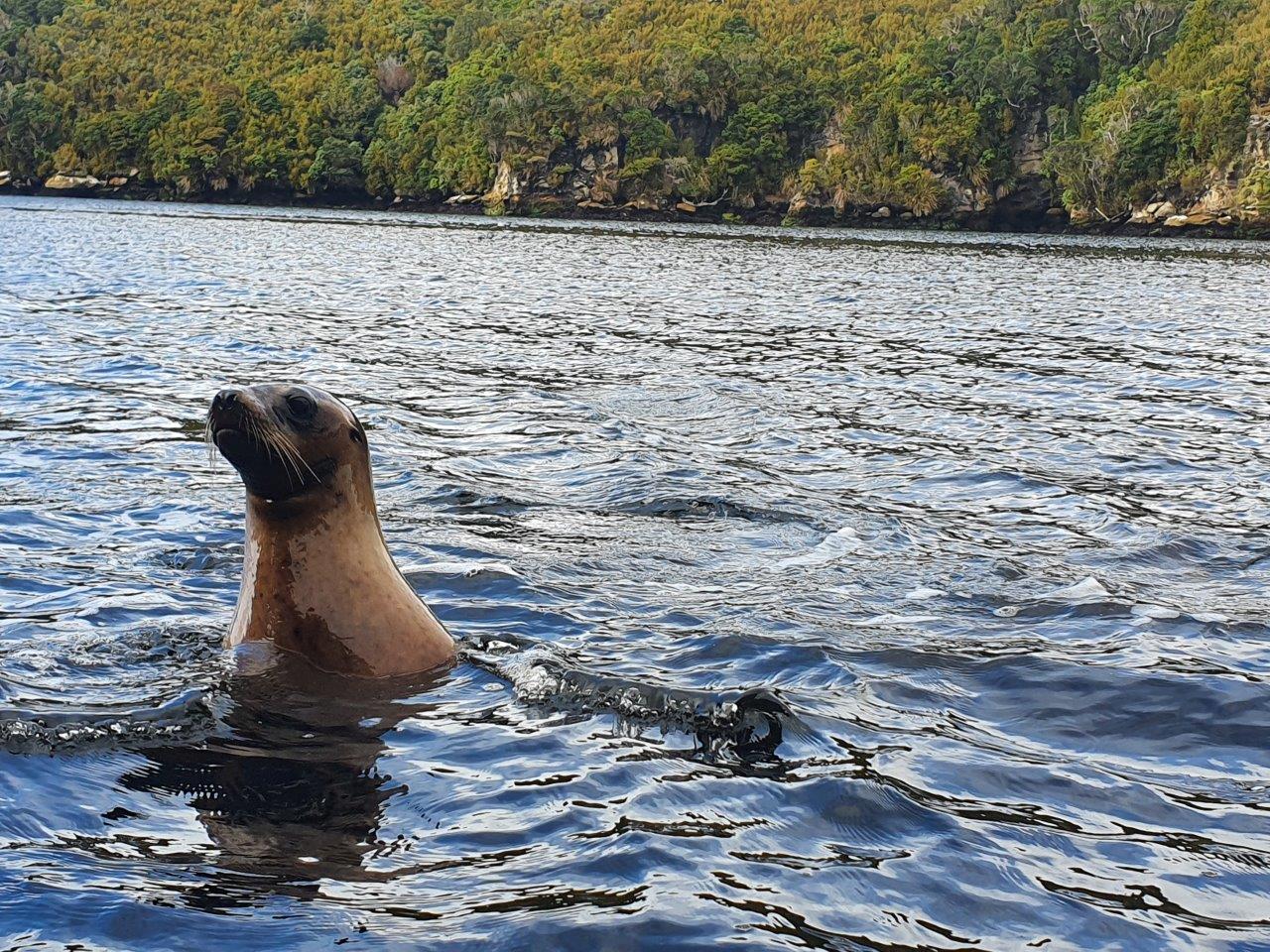
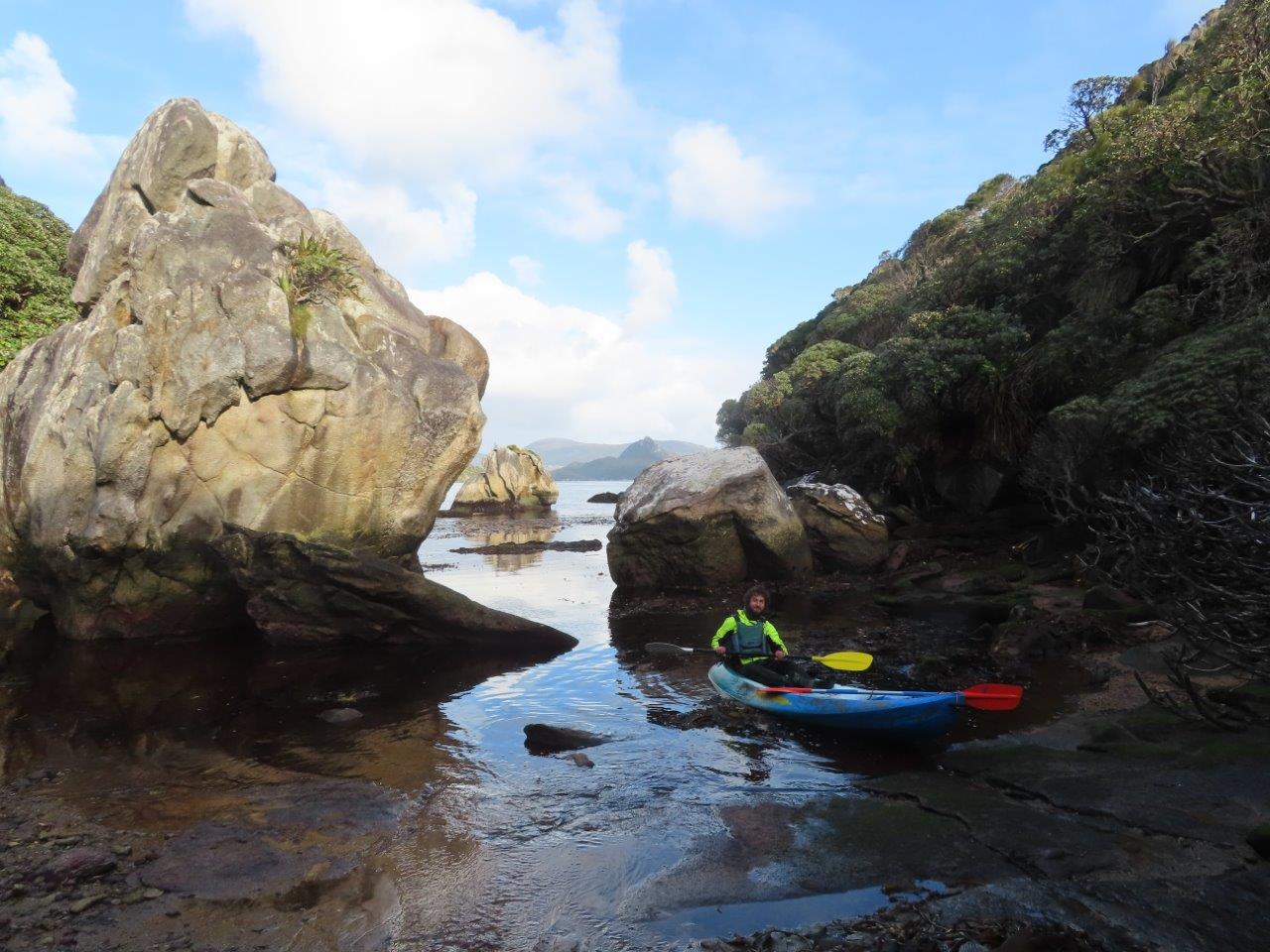
Tawaki Ranger, Robin Long, went searching for Fiordland crested penguins a couple of months ago and reports on her adventure. Our plan was to survey for Fiordland crested penguins or tawaki along a remote stretch of the Stewart Island coast by kayak. As for last year, I was assisted by Simon Litchwark and we were very fortunate to hitch a ride down to Port Pegasus on August 28th with Aurora Charters, and back again on September 8th. While we were down there we got around in a double sit on top kayak kindly lent to us by a friend of Simon, Phil Bradfield. Two of the days were too windy to go out paddling but aside from that we managed to make things work in spite of it being quite wet and windy and not always very pleasant. In total we paddled 165km over the eight days and managed to cover most of the Port, which I didn't think we'd manage given how windy it was when first got there.


Penguin rescue shows penguin plan is working
November 19, 2020
The West Coast Penguin Trust is hailing the benefits of exhaustive environmental and penguin management planning after a nocturnal visitor to an ocean outfall drilling site recently was successfully returned to the ocean.
Penguin rescue shows penguin plan is working

The West Coast Penguin Trust is hailing the benefits of exhaustive environmental and penguin management planning after a nocturnal visitor to an ocean outfall drilling site recently was successfully returned to the ocean.
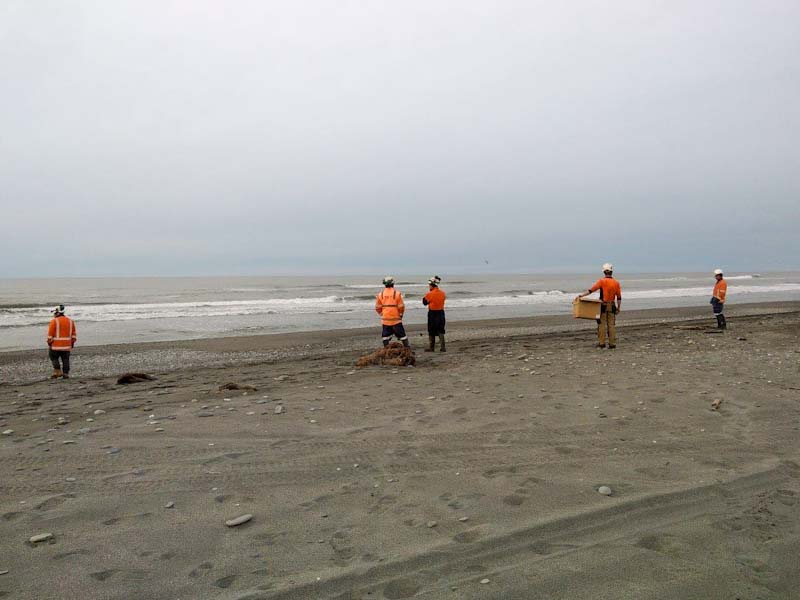
The West Coast Penguin Trust is hailing the benefits of exhaustive environmental and penguin management planning after a nocturnal visitor to an ocean outfall drilling site recently was successfully returned to the ocean. Westland Dairy Company took the initiative several years ago when the idea of a pipeline to take treated waste out to sea rather than into the Hokitika River started taking shape. The pipeline was proposed to go through a small area of coastal scrub on the northern edge of Hokitika, but that small area was home to dozens of blue penguins. As pipeline plans progressed, so did the preparation to work in a coastal area where penguins would be present. The West Coast Penguin Trust provided details for a comprehensive blue penguin management plan that was incorporated into contract documents for the tender process. McConnell Dowell won the tender to install the pipeline and have embraced the idea of working in a penguin zone, welcoming the inductions for contract teams by Trust Manager, Inger Perkins, and implementing the many requirements of the penguin management plan. They have borrowed a taxidermied blue penguin - kindly loaned by DOC - so that they are all aware of what they are protecting and looking out for. So when the night crew saw a penguin on the site, they alerted the site manager, who got hold of the Trust. Footprints were seen but it wasn't clear where the penguin had hidden itself until later in the day. McConnell Dowell staff were ingenious, helpful and ultimately delighted to help the penguin gently out of its hiding place under a container housing pumping machinery. With guidance from Ms Perkins, they released the penguin to the beach and watched as the penguin looked around, got its bearings, and then headed out to sea - a happy ending for everyone. The key lesson was that the preparation paid off. The Trust appeals to all those who may be working in coastal areas to think penguins. They could be nesting anywhere - under trees, shrubs, houses, sheds, debris. Check with the Trust before disturbing any coastal area, whether digging into or moving material so that no penguins are harmed. The story has been shared through local newspapers and on Stuff here: https://www.stuff.co.nz/environment/123433482/little-blue-penguin-rescued-from-ocean-drilling-site-near-hokitika


Punakaiki street lights – drop in session Tuesday 4th November
October 30, 2020
Waka Kotahi NZ Transport Agency have recognised the issue of streetlights as a threat to Westland petrels and have agreed to trial the switching off of Punakaiki street lights on SH6 for the most critical period, 8th November to 8th January.
Punakaiki street lights – drop in session Tuesday 4th November

Waka Kotahi NZ Transport Agency have recognised the issue of streetlights as a threat to Westland petrels and have agreed to trial the switching off of Punakaiki street lights on SH6 for the most critical period, 8th November to 8th January.


ANZ shares the West Coast penguin story
October 29, 2020
The West Coast Penguin Trust has expanded its primary school education programme to include more than 1100 children at 16 schools on the South Island’s West Coast, after receiving funding from the ANZ Staff Foundation.
And then ANZ chose the Trust's story as the subject for a new video.
ANZ shares the West Coast penguin story
The West Coast Penguin Trust has expanded its primary school education programme to include more than 1100 children at 16 schools on the South Island’s West Coast, after receiving funding from the ANZ Staff Foundation.
And then ANZ chose the Trust's story as the subject for a new video.


New children’s picture book: A Little Blue, by Jeanette Goode
October 1, 2020
A Little Blue is a self published children's picture book written and beautifully illustrated by Coaster Jeanette Goode.
New children’s picture book: A Little Blue, by Jeanette Goode

A Little Blue is a self published children's picture book written and beautifully illustrated by Coaster Jeanette Goode.
Fourteen years in the making, A Little Blue, has just been launched! A Little Blue is a self published children's picture book written and beautifully illustrated by Coaster Jeanette Goode. This delightful new book is the first in a series that feature the threatened species of Aotearoa New Zealand. It is written for 7 to 12 year olds and is particularly helpful for reluctant readers as Jeanette has drawn pictures to tell a slightly different and deeper story. It is a tale of love and the arresting power of nature and Jeanette is very kindly making a donation to the West Coast Penguin Trust for every copy sold! Reviewer and author Melinda Szymanik has reviewed the new book: "There is a lot to like about this sophisticated picture book/junior fiction hybrid. The title, A Little Blue, is a multi-layered clue to what we will find inside. Epistolary in form, the story follows Simmy’s time staying with her Dad at his beach side house on the West Coast. "Simmy is living with her dad because her mum is sick, so the book begins with her begging her mother to let her come home. Everything is strange and not at all what she’s used to, and she’s stuck there until her mother gets better and there is no certainty that she will. "We are cleverly drawn in to Simmy’s mind through the subtle text, beginning with the misery she feels as she misses her normal life and her mum most of all. But from letter to letter we find Simmy less and less resistant to her new surroundings as she gradually becomes involved in coastal life, especially with the pair of Little Blue Penguins nesting under her bedroom floor. We learn about penguins along with Simmy, and about the unexpected joys and challenges of living by the ocean. "I was really charmed by this book. The writing is assured and captures Simmy’s voice well. There is plenty to discover in each letter and illustration about local life, local fauna and Simmy herself, and the story charts a realistic trajectory for Simmy’s transformation, ending with a satisfying twist. "The accompanying artwork suits the feel of the book, effectively depicting the changing emotions and environment. A donation from every sale of this book goes to the West Coast Penguin Trust to assist with research, conservation and education programmes. Recommended for kids aged 7-10." You should be able to find it at a book shop near you or you can buy direct from Jeanette.


Mena, the penguin detection dog, visits the West Coast
September 30, 2020
Mena, the only penguin detection conservation dog in the South Island, along with handler Alastair Judkins, joined the West Coast Penguin Trust for two weeks to survey penguin nest sites and visit schools.
Mena, the penguin detection dog, visits the West Coast

Mena, the only penguin detection conservation dog in the South Island, along with handler Alastair Judkins, joined the West Coast Penguin Trust for two weeks to survey penguin nest sites and visit schools.
Mena, the only penguin detection conservation dog in the South Island, along with handler Alastair Judkins, joined the West Coast Penguin Trust for two weeks to survey penguin nest sites and visit schools. Mena's key function is to sniff out penguin sites and the Trust wanted to confirm the penguin presence and ideally numbers in several areas including north of Hokitika, along the penguin protection fence north of Punakaiki, and around Tauranga Bay/Cape Foulwind and Carters Beach. She knows, when her muzzle is on, that she's on duty. She'll seek out a whiff of penguin and then track it down. When she has found the source, she'll sit down and await further instructions. Alastair will get her to sit and stay on a small blanket while he investigates further and records the finding. Alastair and Mena also offer a wonderful session for primary school age children and we were delighted to be able to take Alastair and Mena to several of the schools we work with - Hokitika, Kumara, Paroa, Grey Main, Barrytown, Westport South and Granity schools. Bringing this dymanic duo over from Kaikoura has been supported by the Westland Dairy Company, KiaOra Vancouver and Canterbury Petfoods and we are enormously grateful to them all. Knowing where penguins are nesting is invaluable when development is planned and we are also keen to have a measure of penguins protected by the penguin fence, which we are confident are increasing in number, but doing surveys like this will give us greater certainty. The school children had a wonderful time learning about conservation dogs and Mena in particular and then getting to meet this gorgeous Vizla. Read more about Mena here.


Penguin education takes on new meaning
September 29, 2020
The distressing loss of these penguins has been turned into a valuable education opportunity for local biology students
Penguin education takes on new meaning

The distressing loss of these penguins has been turned into a valuable education opportunity for local biology students
Blue penguins, only as tall as a 30cm ruler that every student will have in their tool kit, have been killed on coast roads since the roads were built through their nesting areas but some are now helping biology students in their studies. When penguins have been found dead on West Coast roads, they will be recorded in a mortality database to inform conservation management, and then, if they are in good condition, they may be held in a Department of Conservation freezer for future study. Sadly, the freezer at the Greymouth DOC office had accumulated around 20 mostly blue penguins but also a couple of Fiordland crested penguins and space was needed. That presented the opportunity for the West Coast Penguin Trust to work with John Paul II High School and parent and vet from West Coast Vets, Marjan Sprock, to run a dissection class. West Coast Penguin Trust Education Ranger, Lucy Waller explained: “Not only do senior biology students learn about a local native species, observing the anatomy and adaptations of penguins to their environment making science real and relevant, but they contribute to finding out more about these penguins, potentially confirming the cause of death and establishing whether any plastic has been ingested.” With assistance from teachers and led by Marjan and Lucy, the students established what and where the vital organs were and recorded damage to organs and bones, amounts of fat and muscle and any stomach contents. “In one case, they found an egg, a very sad example of the loss of a healthy breeding penguin clearly illustrating not only the loss of one but of future generations of penguins. In most cases the penguins were emaciated - a surprising finding and something warranting further investigation.” “In addition, these students have been asked to take part in an international penguin study through the New Zealand Penguin Initiative. Brazilian penguin scientist, Dr Ralph Vanstreels, is studying the epidemiology and taxonomy of nasal mites found in a variety of penguin species. In a follow up session, John Paul II students looked for and then analysed these tiny nasal mites, smaller than a pin head, to help this project, adding another useful and fascinating layer of learning.” The penguin trust together with DOC ran dissection demonstrations for Westland High School and South Westland Area School last year and they heard that one of the WHS students was inspired and encouraged to go and study biology at university after the session. The Trust was also able to organise a dissection class with Westland High School recently, with another parent and vet, Lynda Murphy. “The distressing loss of these penguins has been turned into a valuable education opportunity for local biology students with the fantastic support of DOC and of John Paul II and WHS teachers and especially vets Marjan and Lynda. It was a privilege to work with them all.” Photos by John Paul II student, Siobhan Ellis