Pokies helping penguins
May 31, 2024
Hundreds of millions of dollars are returned annually to the community from the proceeds of gambling on electronic gaming machines, or pokies, in pubs and hotels. The not-for-profit process supports charities in all walks of life, including environmental projects.
Pokies helping penguins

Hundreds of millions of dollars are returned annually to the community from the proceeds of gambling on electronic gaming machines, or pokies, in pubs and hotels. The not-for-profit process supports charities in all walks of life, including environmental projects.
We are delighted to have been supported recently by two pokie machine corporate societies. Pub Charity, a supporter for various projects in the past including the development and publication of our Educational Resource, has approved our application for funding to purchase microchips for penguins. These are known as PIT tags or Passive Integrated Transponders, which have internal microchips. For little penguins, the PIT tags are about the same size as a grain of rice and are inserted under the skin at the back of their neck. Microchipping penguins will enable us to do more scientific research and learn more about little penguins/kororā on the West Coast. We already monitor breeding success and we study where penguins go to feed at sea and this information about individual penguins will enable us to better understand our other findings and learn much more about these penguins. Our research will inform our practical projects to conserve little penguins as well as our awareness and education programmes. Related news story here about learning to insert microchips into kororā.
Our huge thanks to Pub Charity!
A few months ago, we also heard that we had been successful in an application to The Lion Foundation. We applied for a grant to support the work of our Education Ranger, Lucy Waller, to work with schools in the Greymouth and Hokitika areas. The grant will support visits to classrooms as well as field trips to the beach, helping teachers use our Blue Penguins & Other Seabirds: Activities for exploration and action for schools and community groups resource and helping children find out all about little penguins / kororā in their area.
Microchipping penguins will enable us to do more scientific research and learn more about little penguins/kororā on the West Coast. We already monitor breeding success and we study where penguins go to feed at sea and this information about individual penguins will enable us to better understand our other findings and learn much more about these penguins. Our research will inform our practical projects to conserve little penguins as well as our awareness and education programmes. Related news story here about learning to insert microchips into kororā.
Our huge thanks to Pub Charity!
A few months ago, we also heard that we had been successful in an application to The Lion Foundation. We applied for a grant to support the work of our Education Ranger, Lucy Waller, to work with schools in the Greymouth and Hokitika areas. The grant will support visits to classrooms as well as field trips to the beach, helping teachers use our Blue Penguins & Other Seabirds: Activities for exploration and action for schools and community groups resource and helping children find out all about little penguins / kororā in their area.
 So our huge thanks to The Lion Foundation too!
With DOC under extreme financial pressure and their community funding drying up for groups and projects such as ours, gaining this support for our work makes a huge difference to what we can do.
Hundreds of millions of dollars are returned annually to the community from the proceeds of gambling on electronic gaming machines, or pokies, in pubs and hotels. The not-for-profit process supports charities in all walks of life, including environmental projects such as ours.
Information about safer gambling can be found here: https://www.safergambling.org.nz/
So our huge thanks to The Lion Foundation too!
With DOC under extreme financial pressure and their community funding drying up for groups and projects such as ours, gaining this support for our work makes a huge difference to what we can do.
Hundreds of millions of dollars are returned annually to the community from the proceeds of gambling on electronic gaming machines, or pokies, in pubs and hotels. The not-for-profit process supports charities in all walks of life, including environmental projects such as ours.
Information about safer gambling can be found here: https://www.safergambling.org.nz/

Conservation for penguins from Coast photography workshop
May 31, 2024
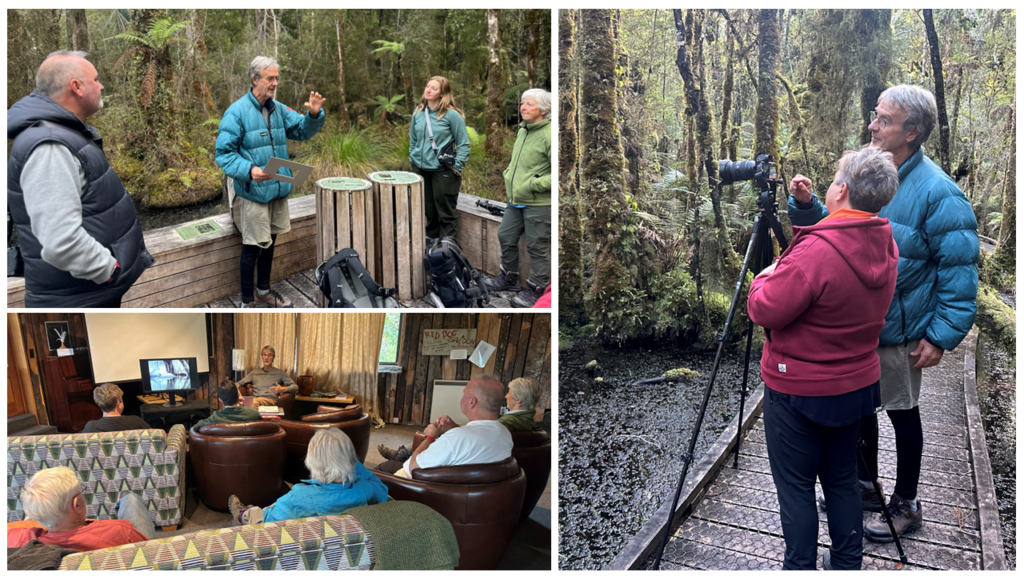
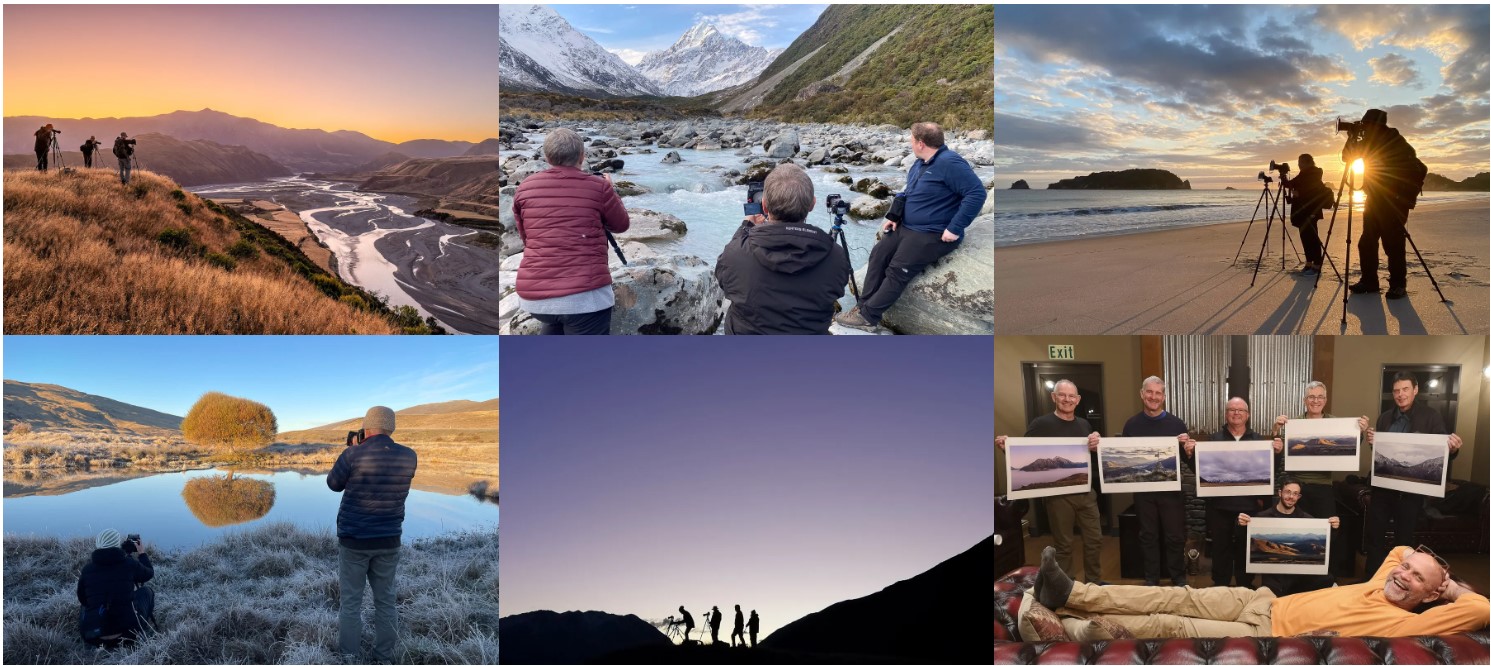
New Zealand Photography Workshops started out in 2013 and now offer unique tours and workshops across the country. Following a recent workshop in South Westland, they wanted to support the Trust's conservation work and made a generous donation.
Conservation for penguins from Coast photography workshop

New Zealand Photography Workshops started out in 2013 and now offer unique tours and workshops across the country. Following a recent workshop in South Westland, they wanted to support the Trust's conservation work and made a generous donation.
New Zealand Photography Workshops started out in 2013 and now offer unique tours and workshops across the country. Their principles are based on not only showcasing New Zealand at its very best but demonstrating to everyone who visits these beautiful places or takes photographs of our indigenous wildlife how special they are and why they need our help to protect and preserve them. Their very talented tutors and guides highlight efforts being made to conserve them for future generations for those on the workshops and tours, and, as a business, they collaborate with others who share their values and standards, including Qual Mark Gold. Craig Potton MNZM, West Coast Penguin Trust's Patron and one of New Zealand's elite photographers and conservationists, is one of the tutors, including for a recent workshop in South Westland.
NZ Photography Workshops founder, Richard Young, ran the workshop with Craig at the Lake Moeraki Wilderness Lodge, where owner and another of New Zealand's leading conservationists as well as penguin fan and long-standing supporter of the trust, Dr Gerry McSweeney CNZM, also contributed to the workshop.
Craig Potton MNZM, West Coast Penguin Trust's Patron and one of New Zealand's elite photographers and conservationists, is one of the tutors, including for a recent workshop in South Westland.
NZ Photography Workshops founder, Richard Young, ran the workshop with Craig at the Lake Moeraki Wilderness Lodge, where owner and another of New Zealand's leading conservationists as well as penguin fan and long-standing supporter of the trust, Dr Gerry McSweeney CNZM, also contributed to the workshop.
Being prepared for avian influenza or bird flu
May 30, 2024
Working with seabirds as we do, it is important for the Trust to be prepared and to play our part in minimising any risk of spreading avian influenza, should it arrive in New Zealand.
Being prepared for avian influenza or bird flu
Working with seabirds as we do, it is important for the Trust to be prepared and to play our part in minimising any risk of spreading avian influenza, should it arrive in New Zealand.

A variety of migratory shorebirds do return here and could bring avian influenza. The most numerous shorebirds are the bar-tailed godwit, red knot, ruddy turnstone and Pacific golden plover. The bar-tailed godwit flies directly from Alaska to New Zealand without stopovers.
Other species may visit estuaries along the Asian coastline, the Philippines and Australia on their annual migrations south from arctic Russia.
Seabirds such as Arctic and pomarine skuas arrive every spring and summer from the Arctic region. Arctic tern, little terns and common terns are also regular annual visitors to New Zealand, and many species of pelagic seabirds breed here after spending winter feeding in the Pacific and Southern Oceans.
DOC is working closely with Biosecurity NZ to ensure they are prepared to manage the effects on native species should the virus arrive. They believe that HPAI could "affect colony nesting birds such as red and black-billed gulls, gannets, terns and other seabirds", presumably including penguins, petrels, shearwaters, shags and prions, all found in colonies on the West Coast mainland or offshore islands.What to look for and how to report possible cases of HPAI Early detection is critical. Signs of HPAI vary but indicators include: sudden death, tremors, weakness, paralysis, difficulty breathing and diarrhoea. Do not touch or attempt to move any dead or dying wildlife. Report groups of three or more sick or dying birds, marine mammals or other wildlife to the Biosecurity New Zealand Exotic Pest and Disease hotline: 0800 80 99 66. Biosecurity New Zealand will take details and an incursion investigator will be in contact with you. Provide as much detail as you can, including:
Record a GPS reading or other precise location information.
Take photographs and/or videos of sick and dead birds.
Identify the species and estimate the numbers affected.
Note how many sick or freshly dead are present as well as total number present.
Other information New Zealand's main approach will be supporting strong, healthy populations of native wildlife at multiple locations as well as strong biosecurity and quarantine practices. Vaccination may be a way to protect some core breeding populations and DOC is trailing a new vaccine that has been shown to be safe and effective in zoos in Europe. Find out more about the trial here. The spread of the virus is overlapping with environmental changes due to climate change, and the latter could increase the problem of the former. In Chile, for example, the El Niño weather phenomenon had a strong impact last year on fish that birds rely on for food, placing more stress on animals and likely making them more susceptible to the virus. For now, we must all have a watching brief, and be absolutely prepared. The Trust is reviewing hygiene and other field protocols to ensure that we could not pick up or transmit the virus should we encounter it and has been acutely aware of the risk for some time, sharing this story in December 2022. DOC is developing regional plans to be as prepared as they can be. You can help by sharing this information with friends and family who walk our beaches. Thank you.Follow Biosecurity New Zealand instructions for handling of sick or dead birds.

Penguin Trust joins community partnerships hui
May 20, 2024
Enviroschools West Coast invited the West Coast Penguin Trust to join and present to a recent community partnerships hui for teachers.
Penguin Trust joins community partnerships hui
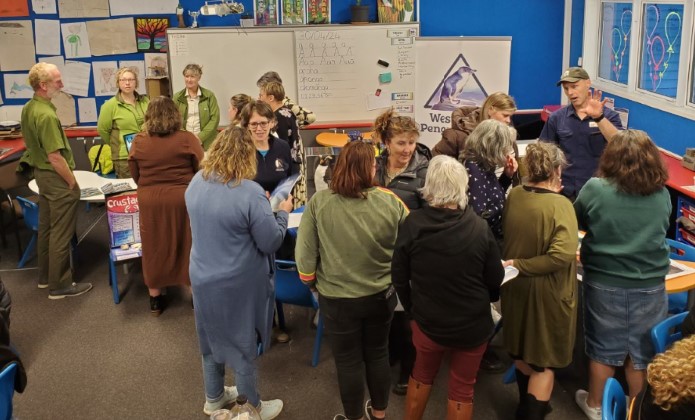
Enviroschools West Coast invited the West Coast Penguin Trust to join and present to a recent community partnerships hui for teachers.
Enviroschools West Coast invited the West Coast Penguin Trust to join and present to a recent community partnerships hui for teachers. The hui focussed on building strong community collaborations and partnerships. It was held at Kaniere School and nearly 30 teachers from across Grey and Westland districts attended along with our Manager, Inger Perkins, and representatives from Kai Puku Food Hub, Kiwi Conservation Club, the Paparoa Wildlife Trust, Conservation Volunteers NZ, the Department of Conservation, West Coast Regional Council, and Grey District Council.Feedback included: “This has been very valuable for our centre moving forward and inspiring us. Making connections has been great.”
Organiser and Enviroschools facilitator, Laura Neale said: "It was exciting to see everyone getting to know each other. From little things big things grow – we look forward to these conversations blossoming into rich learning opportunities for tamariki and collaborations that contribute to a more understanding, connected, and sustainable community."
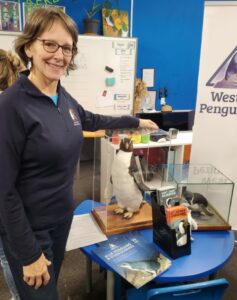
Bringing community groups to schools and connecting them in this way was an excellent initiative. The Trust has many connections to schools and to others involved in conservation across the region and it was a wonderful opportunity to connect with them and meet new teachers and new organisations with shared values including the new waste minimisation officer at Grey District Council and Kai Puku Food Hub, preventing usable food ending in landfill and instead sharing it where it is needed.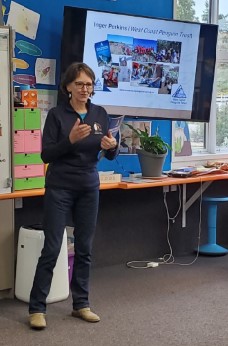
Penguins saved from digger as coastal vegetation cleared
April 25, 2024
Penguins saved from digger as coastal vegetation cleared
Penguins saved from digger as coastal vegetation cleared
Penguins saved from digger as coastal vegetation cleared
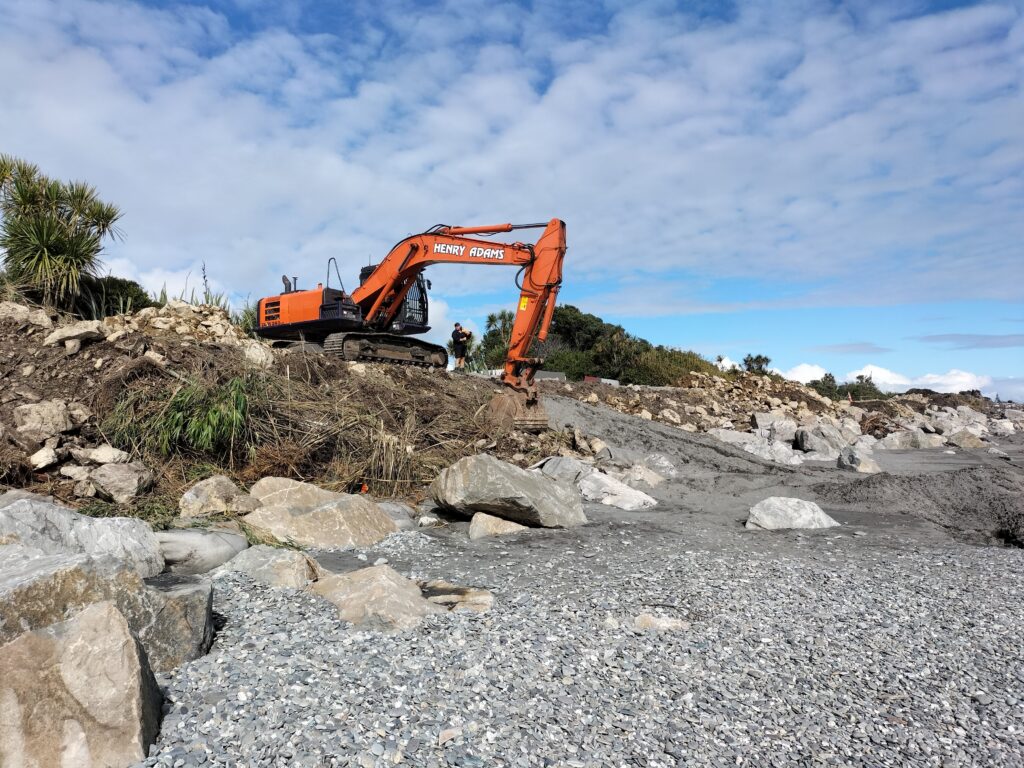
Recent storms coinciding with big seas and high tides led to erosion of the beach and temporary rock protection at Hokitika earlier this month. West Coast Regional Council Chair and Westland District Council Mayor approved emergency works on Friday 12th April. Although staff did think penguins, they failed to speak to either the West Coast Penguin Trust or DOC and a digger was sent in with a plan to create a road for the earth/rock moving vehicles behind the erosion face. That meant coastal vegetation needed to be cleared. That should have sent alarm bells ringing for everyone involved. Coastal vegetation is habitat for a variety of species and, in this area, that includes little penguins or kororā. Inexplicably, the decision had been made to access the rocks from the top of the erosion bank rather than, as they did before, make a ramp down to the beach and carry out repairs and rock placement from below, with no impact on vegetation.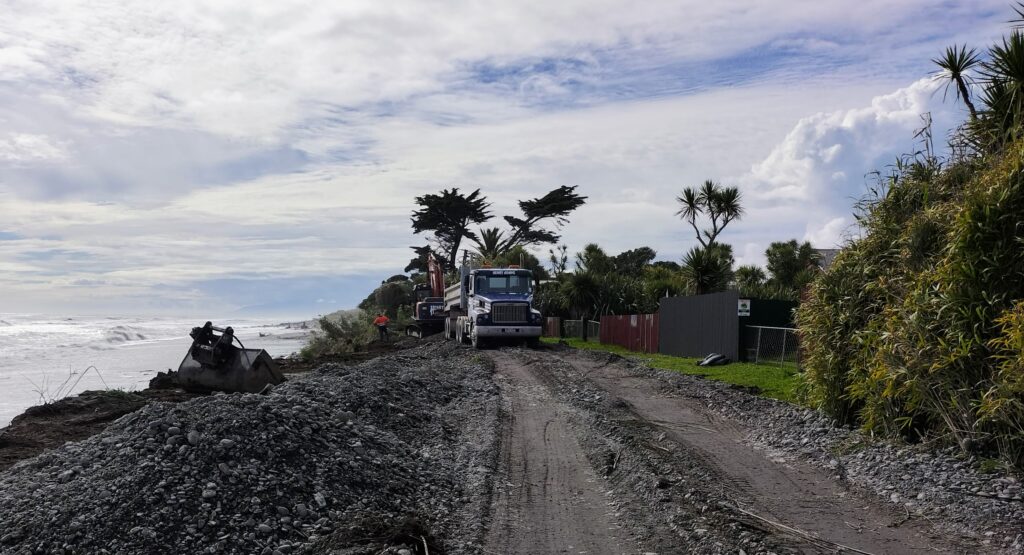
Recycled plastic art working doubly hard for conservation
March 19, 2024
Recycled plastic art working doubly hard for conservation
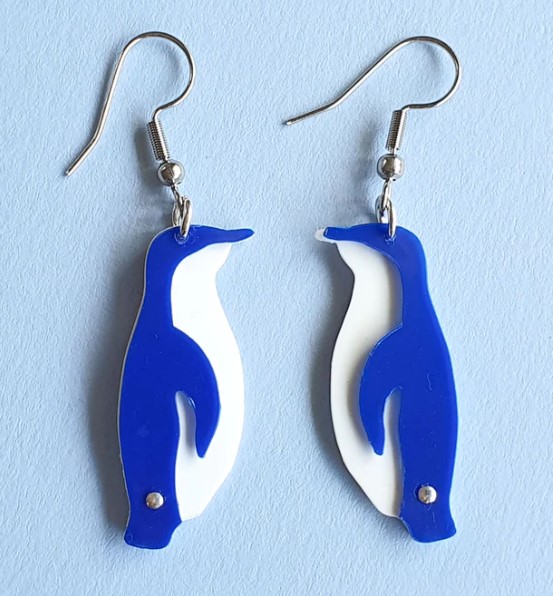
 Find out more and purchase kororā earrings here and the Remix Plastic website with other wonderful creations is here.
Anthea has also created a podcast about sustainability and a circular economy - find episodes here.
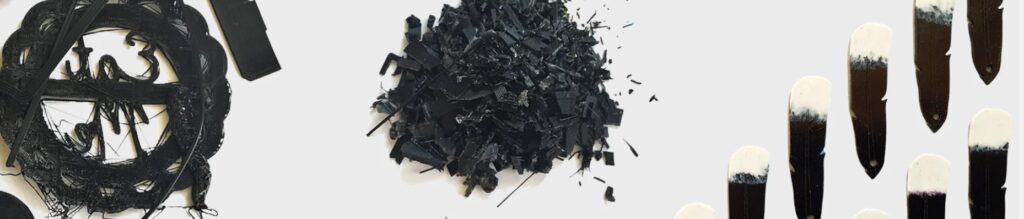
The three key principles are:
Find out more and purchase kororā earrings here and the Remix Plastic website with other wonderful creations is here.
Anthea has also created a podcast about sustainability and a circular economy - find episodes here.
The three key principles are:
- Design out waste and pollution
- Keep products and materials in use
- Regenerate natural systems
Conservation class at Westland High School saving local penguins
March 3, 2024
Conservation class at Westland High School saving local penguins
Conservation class at Westland High School saving local penguins
Conservation class at Westland High School saving local penguins
A big thank you to Peter Brailsford's conservation class at Westland High School for the new nest boxes and time spent designing and engineering penguin ramps to help solve the access problem last season at Hokitika Beach for our penguins. We saw a 10 foot wall erosion issue, even bigger than in previous years, and although up to 50 tracks were often counted going to and from the sea each morning, many were seen walking hundreds of metres along the foot of the erosion cliff trying to find an access point up into the dunes and their nests.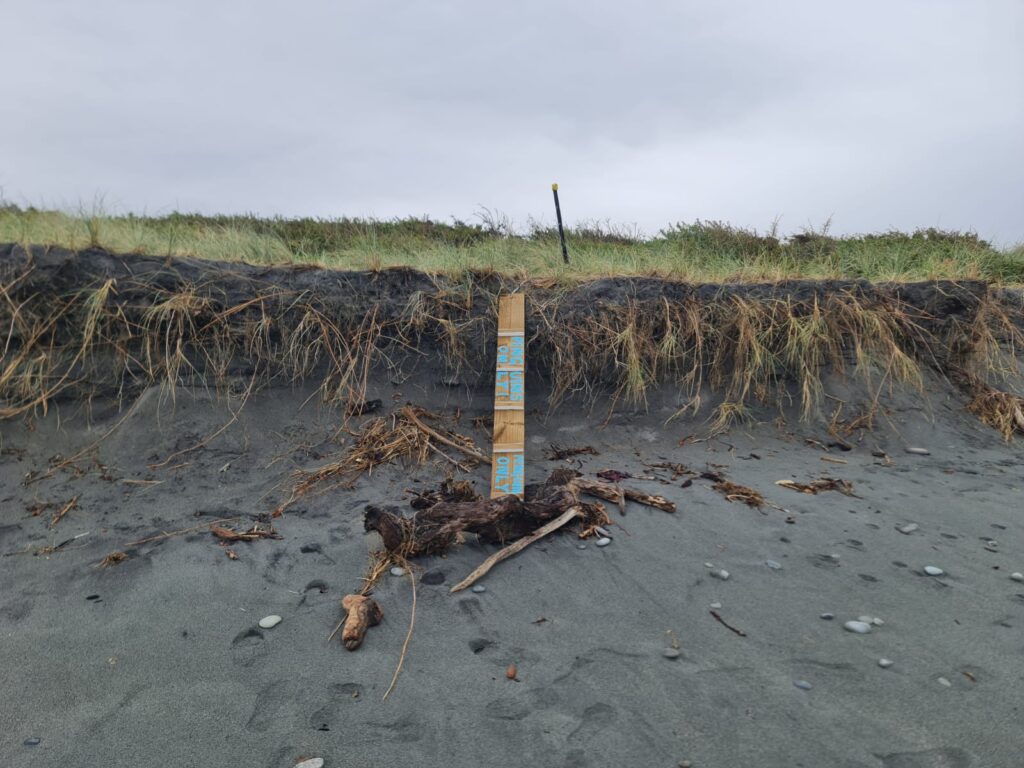 Many hours have spent by local people, the Trust team and Westland Milk Factory volunteers digging ramps for access, but it was a very time consuming and difficult challenge.
The debate is whether the penguins in this local area are used to the erosion issue by now and so will adapt and go elsewhere to breed or to just walk the long distances to get to their nests each day, in which case ramps may not be needed, or whether we will lose these penguins from this area or breeding may be disrupted, perhaps eggs abandoned, and so ramps will keep them here and support successful breeding, but also keep them more protected from threats such as dogs by not having to walk so far along the beach for nest access, out in the open.
Peter Brailsford and his class decided that perhaps they could come up with a design of ramp where the penguins could access their nests each day.
Many hours have spent by local people, the Trust team and Westland Milk Factory volunteers digging ramps for access, but it was a very time consuming and difficult challenge.
The debate is whether the penguins in this local area are used to the erosion issue by now and so will adapt and go elsewhere to breed or to just walk the long distances to get to their nests each day, in which case ramps may not be needed, or whether we will lose these penguins from this area or breeding may be disrupted, perhaps eggs abandoned, and so ramps will keep them here and support successful breeding, but also keep them more protected from threats such as dogs by not having to walk so far along the beach for nest access, out in the open.
Peter Brailsford and his class decided that perhaps they could come up with a design of ramp where the penguins could access their nests each day.
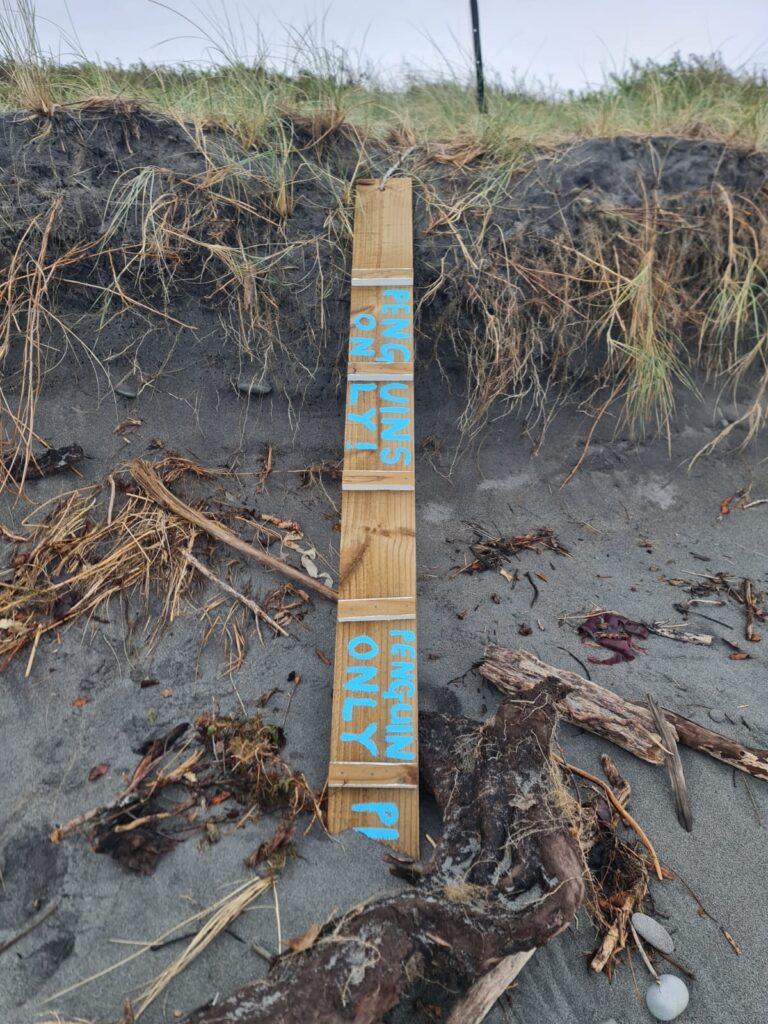 We put the new ramp out on the beach as a trial run, with a camera to record the usage, however with much technology issues with the camera, we didn't get a confirmed answer as to whether the ramp needed altering or not. Next season we will try again.
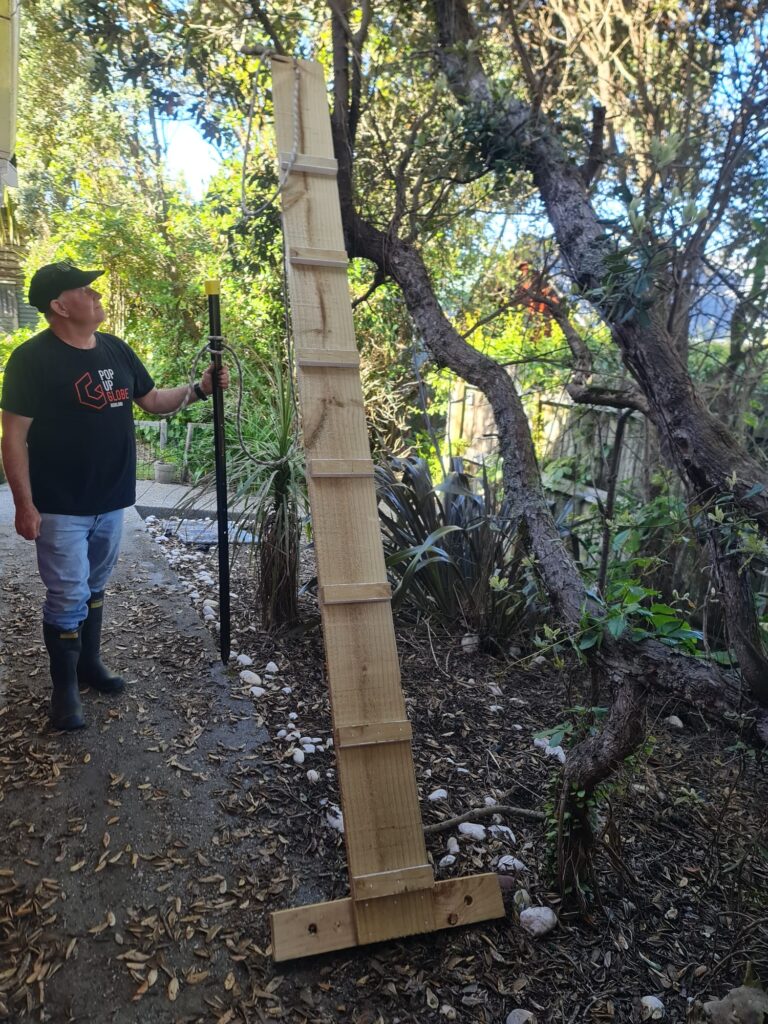
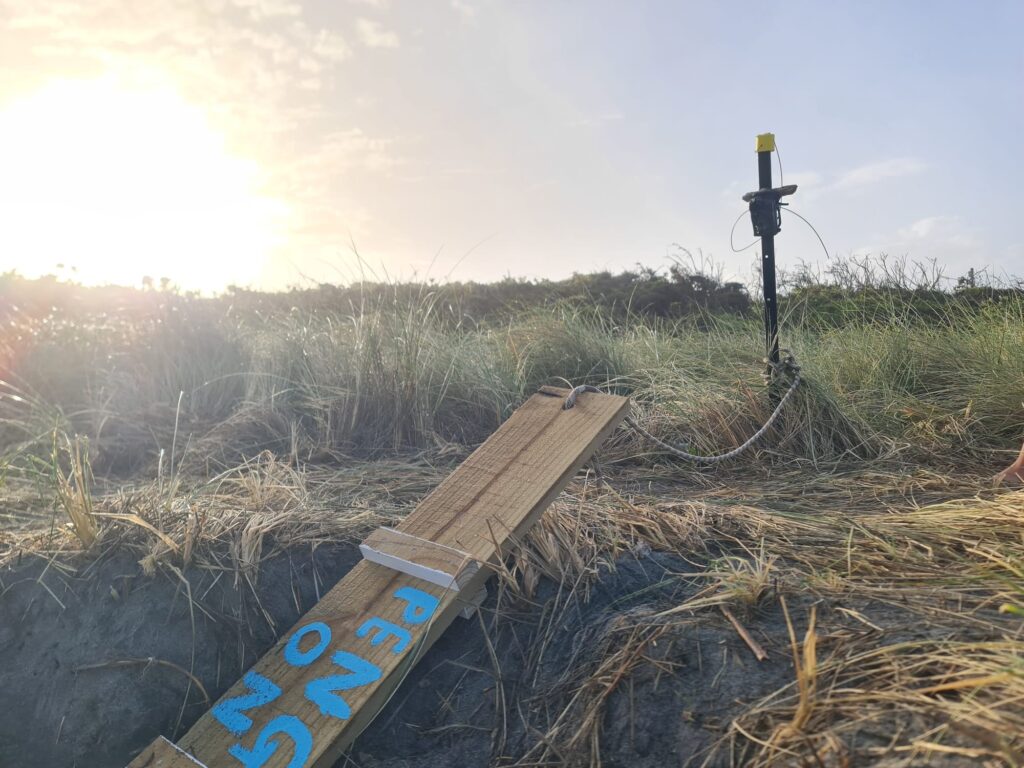 A big thank you to the students for their time and energy. But particularly to Peter, who turned up on a Sunday afternoon having built a huge ramp and a floatation system.
Watch this space!
A big thank you to the students for their time and energy. But particularly to Peter, who turned up on a Sunday afternoon having built a huge ramp and a floatation system.
Watch this space!
Where do the local kororā forage?
March 3, 2024
Following on from previous years of foraging studies in the Charleston area, last season we carried out a pilot study at Camerons Beach.
Where do the local kororā forage?
Following on from previous years of foraging studies in the Charleston area, last season we carried out a pilot study at Camerons Beach.
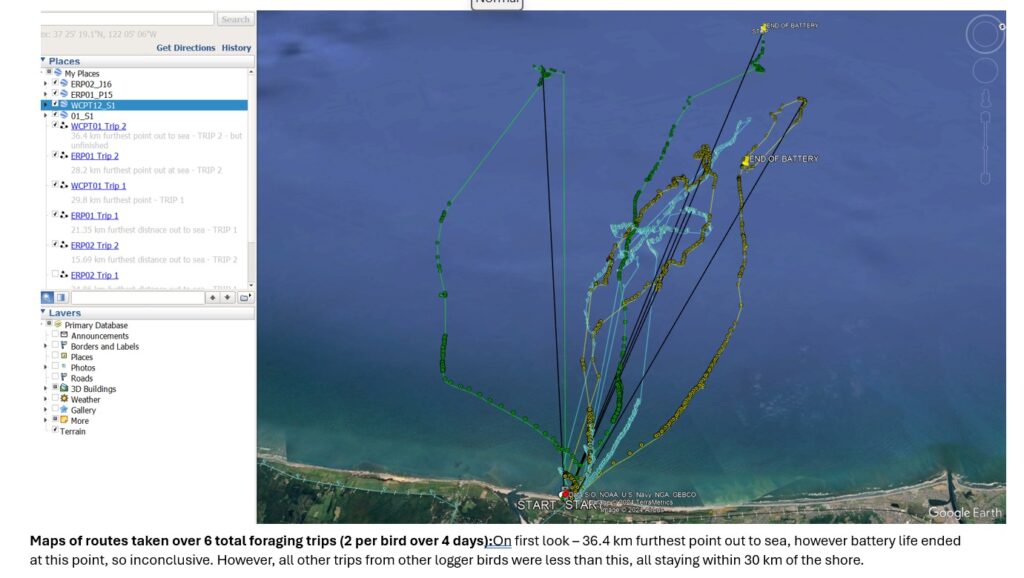
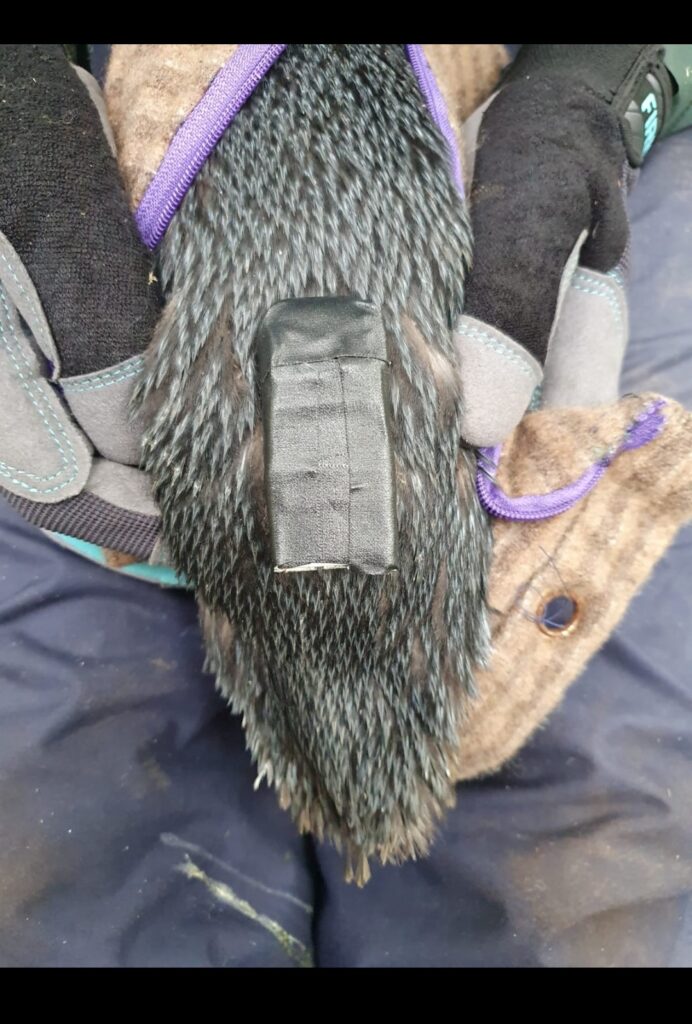
Following on from previous years of foraging studies in the Charleston area, during the 2023 season we carried out a pilot study at Camerons Beach, tracking the foraging paths of three blue penguins at chick guard stage, when one adult remains to guard and the other goes to sea to forage, over four days. We plan to carry out a more extensive study this coming season. This was the first time we have undertaken any study at the Camerons Beach colony and we plan to continue and expand this project during the 2024 season. We hope this will give us an insight into the foraging areas and patterns of our local penguins in this more residential area of the West Coast. Two important reasons for carrying out a foraging study are firstly, finding out what determines where the penguins are going to find their food source. Sea surface temperatures? Chlorophyll amounts? Different marine conditions? And secondly, to understand and map where penguins go, which will help us contribute to marine science and spatial planning, to discuss with fisheries and overall, help us to protect our wildlife and the marine ecosystems they rely on. We have carried out foraging studies in the past, at the Knoll and Rahui Colonies, close to the Nile River in previous years and it will be interesting to see the results of this year and make comparisons. Read about these previous studies here. Here are some maps and findings from the pilot study 2023 season: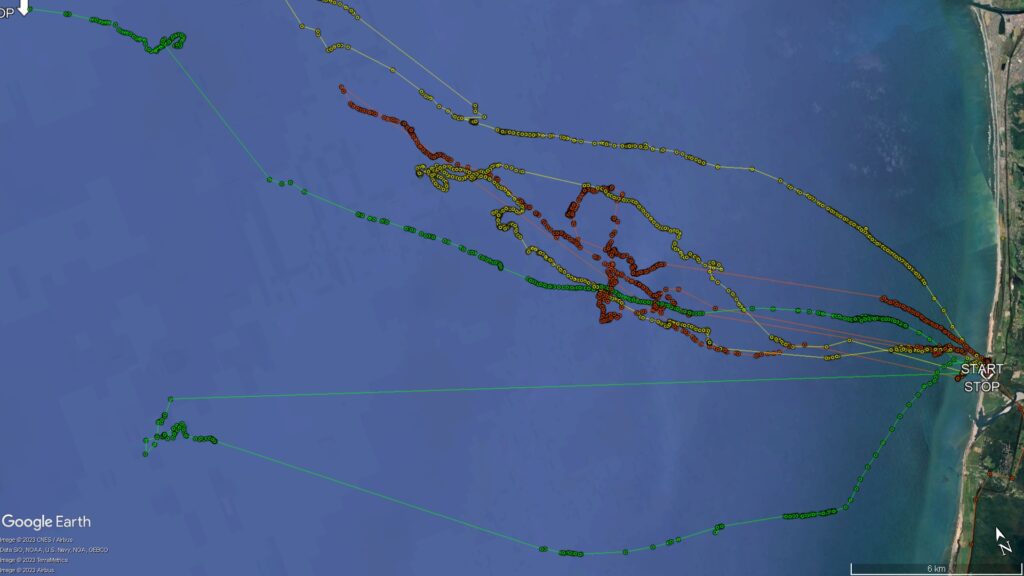
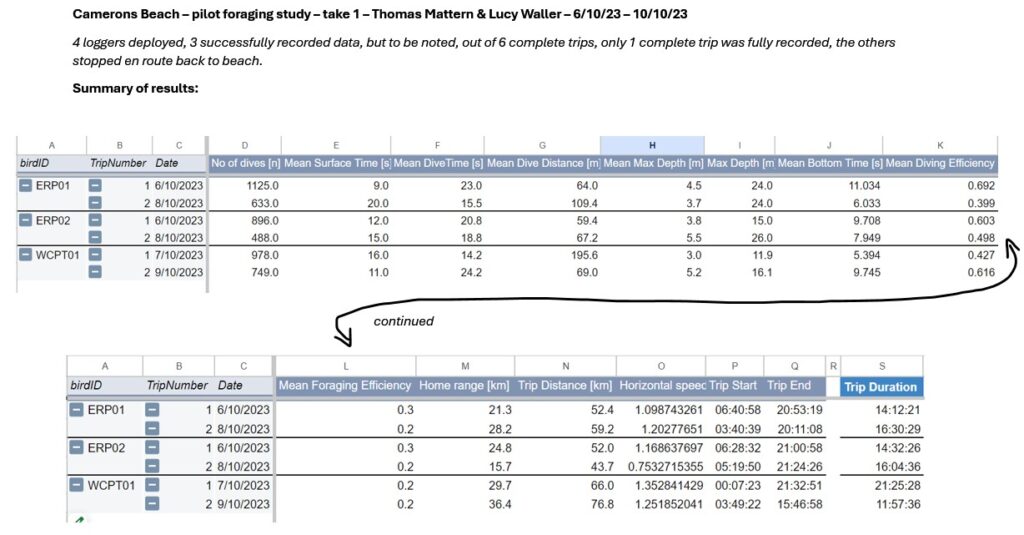
 Some key points were the average dive depth of 4.29m and average range from home of 26.02kms.
Just three dives of the several thousand recorded were over 20m. In ‘ordinary’ foraging conditions, penguins will generally not be diving deeper than 10m.
The furthest point from home reached by these three penguins was 36.4kms. Other data needs to be interpreted in light of battery failures before the loggers were recovered in 5 out of six trips.
The impact of climate change and marine heatwaves with likely increasingly adverse effects on little penguins is a concern. The adverse effect is possibly due to intensified stratification resulting in reduced mixing of surface and deeper water. Thus increases in turbidity after rain events take longer to dissipate because sediments are trapped at the surface. As a consequence, the penguins have to travel further away from the coast to reach cleaner water where they can see adequately to catch prey.
Stratification can also disrupt the usual vertical nutrient flow potentially resulting in higher productivity and algal blooms at the surface, which may also inhibit visibility.
Key insights from data obtained so far:
Some key points were the average dive depth of 4.29m and average range from home of 26.02kms.
Just three dives of the several thousand recorded were over 20m. In ‘ordinary’ foraging conditions, penguins will generally not be diving deeper than 10m.
The furthest point from home reached by these three penguins was 36.4kms. Other data needs to be interpreted in light of battery failures before the loggers were recovered in 5 out of six trips.
The impact of climate change and marine heatwaves with likely increasingly adverse effects on little penguins is a concern. The adverse effect is possibly due to intensified stratification resulting in reduced mixing of surface and deeper water. Thus increases in turbidity after rain events take longer to dissipate because sediments are trapped at the surface. As a consequence, the penguins have to travel further away from the coast to reach cleaner water where they can see adequately to catch prey.
Stratification can also disrupt the usual vertical nutrient flow potentially resulting in higher productivity and algal blooms at the surface, which may also inhibit visibility.
Key insights from data obtained so far:
- West Coast kororā showed very shallow foraging behaviour: mean maximum dive depth 4.29m. This could be due to a high proportion of travelling dives.
- Range for trips average 26.02 kms from home, the furthest being 36.4kms. Compared to a similar kororā tracking study that was conducted at the same time out of Port Taranaki, Camerons beach penguins travelled twice as far away from their nest sites to find food. This raises the question whether this is typical behaviour for the West Coast birds or a result of poor foraging conditions closer to the coast. Additional GPS tracking in 2024 will provide crucial insights.
- Results are similar to findings from an earlier study from the Charleston study colony with average an range from home of 26kms, some trips up to 36km from home with rare trips up to 60m from the colony, more parallel to coast than perpendicular.
- All tracks indicate foraging within 110m bathymetric contour approximately.
An average season for kororā on the West Coast this year
March 3, 2024
An average year this year for kororā at the different sites up the West Coast.
An average season for kororā on the West Coast this year
An average year this year for kororā at the different sites up the West Coast.
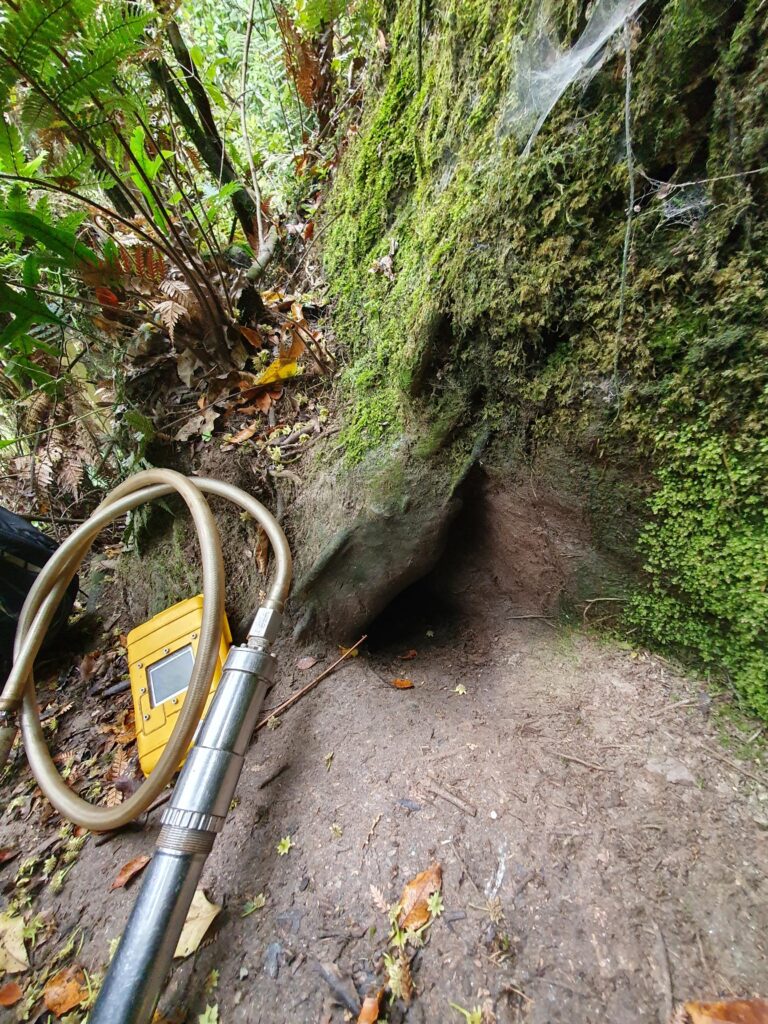
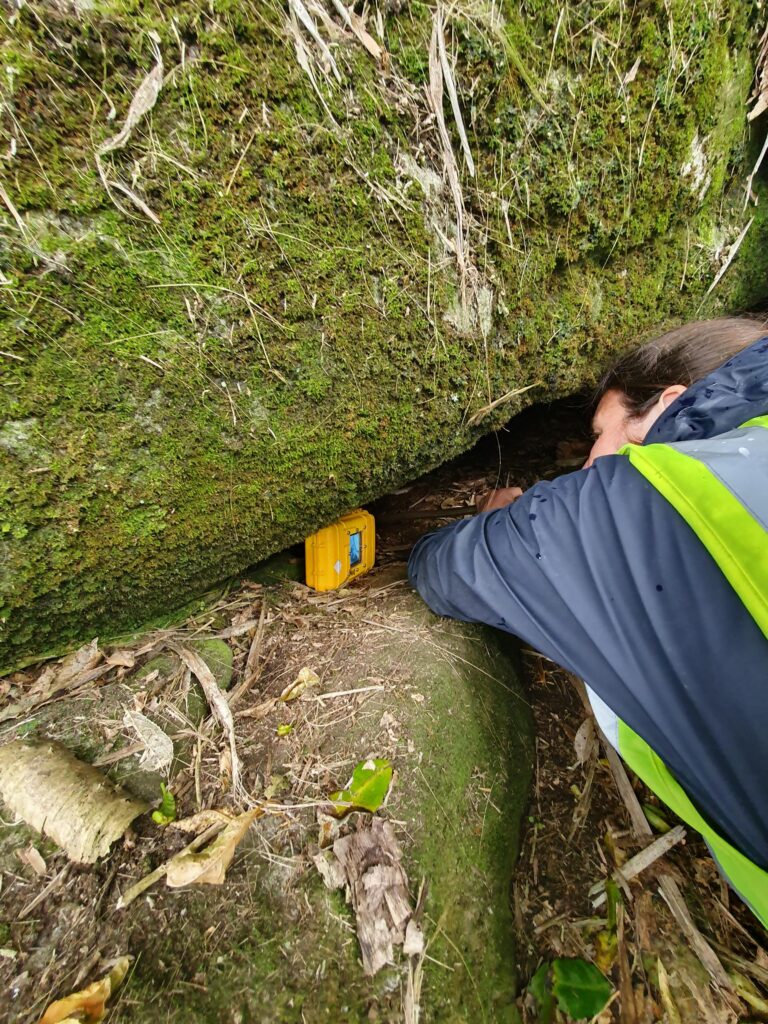
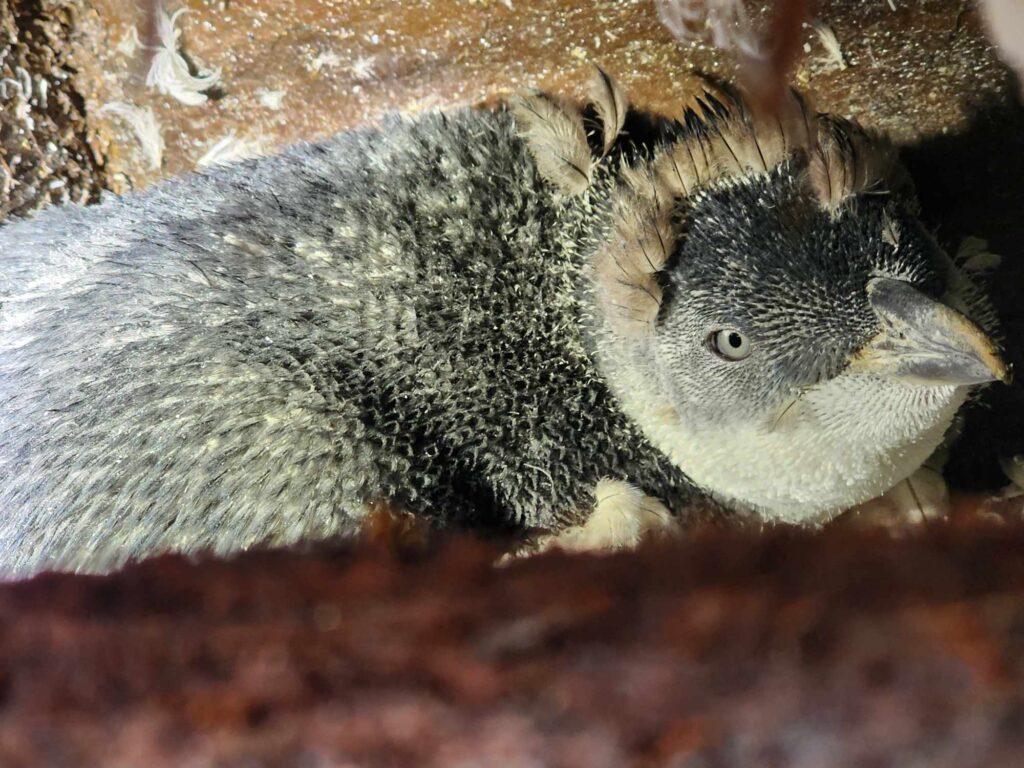
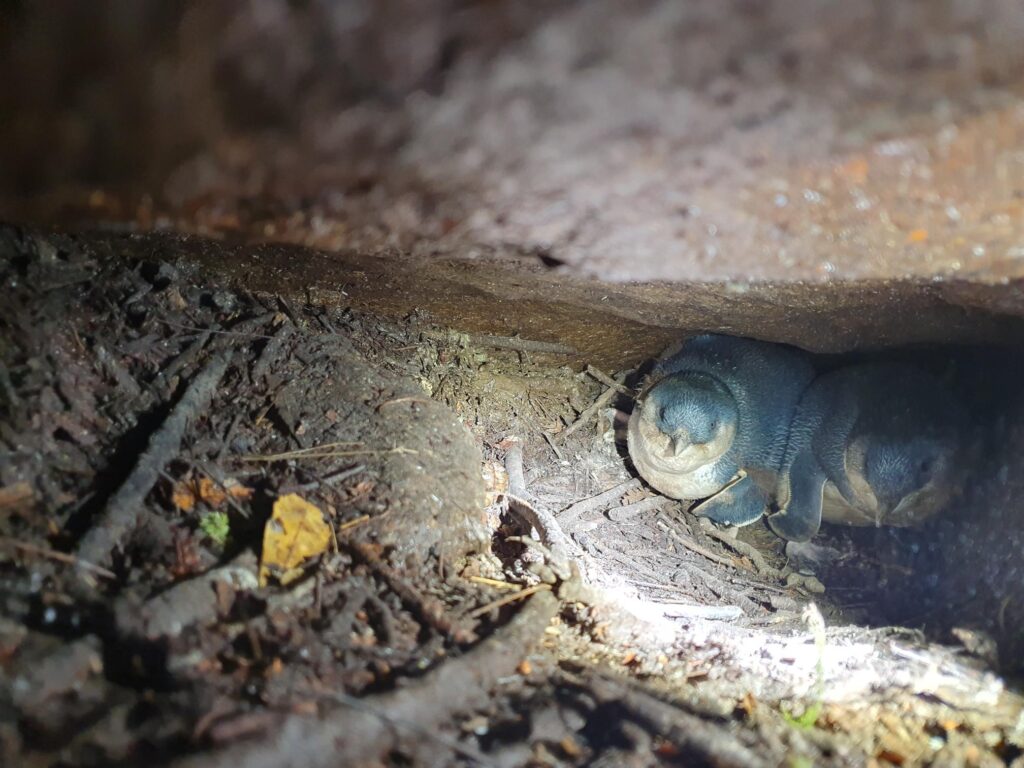
Knoll Colony, Nile River, Charleston Ranger Lucy reports an average year this year for kororā. At the Knoll, 57% eggs fledged, which was significantly higher than last season’s 35% and 2016 and 2017 seasons (37% & 43% respectively), but still significantly lower than the good seasons of 2020 and 2021 (73% & 82%). The time frame of the breeding season was very spread out this year, with some eggs laid as early as late July (but all failed) and some as late as late October/early November. The majority were laid mid-August/early September, which is comparable to other years.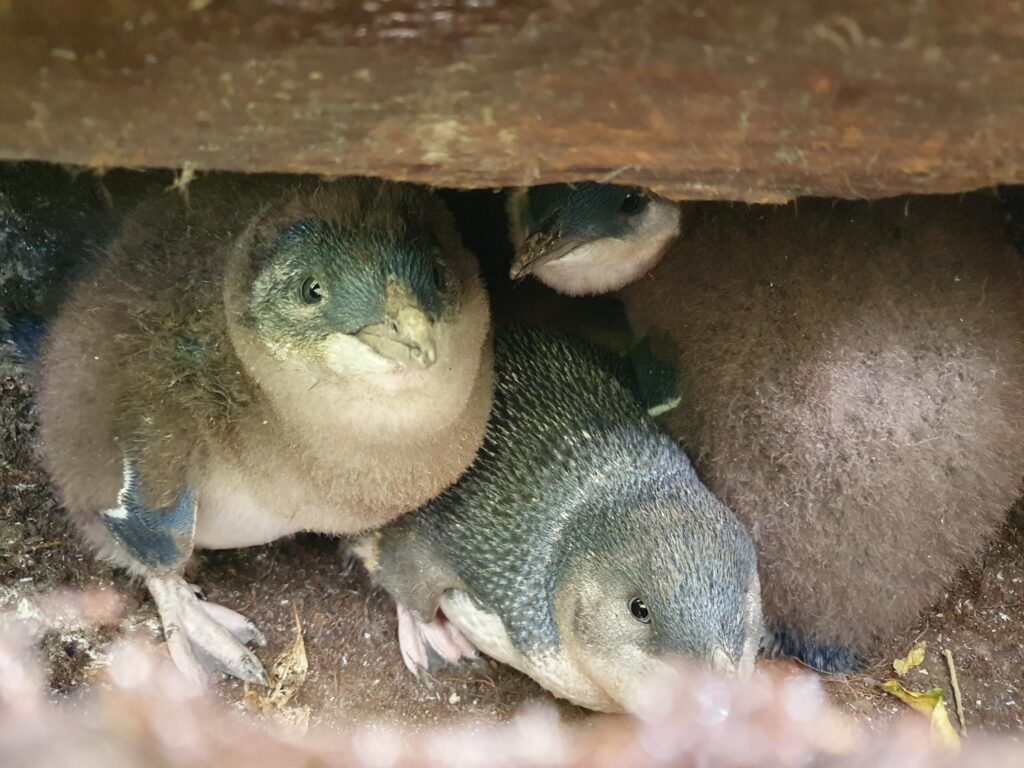
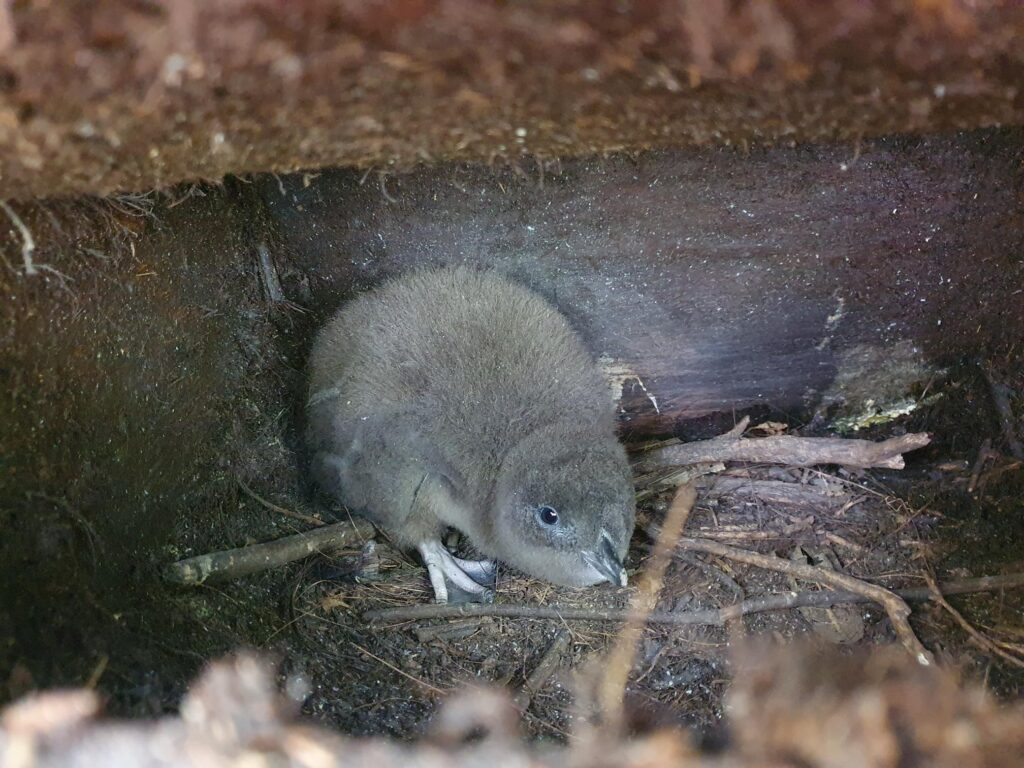
| Year | 1st egg laid | Majority of eggs laid | No. of eggs laid | Chicks hatched | Chicks fledged | Failed attempts | Breeding success % (chicks fledged/eggs laid) |
| 2020 | 17/8 | Mid/late Sept | 49 | 39 | 36 | 3 | 73% |
| 2021 | 13/8 | Mid/late Aug | 45 | 39 | 37 | 1 | 82% |
| 2022 | 27/8 | End Aug/start Sept | 48 | 22 | 17 | 13 | 35% |
| 2023 | 31/7 | Mid Aug/start Sept | 49 | 30 | 28 | 11 | 57% |
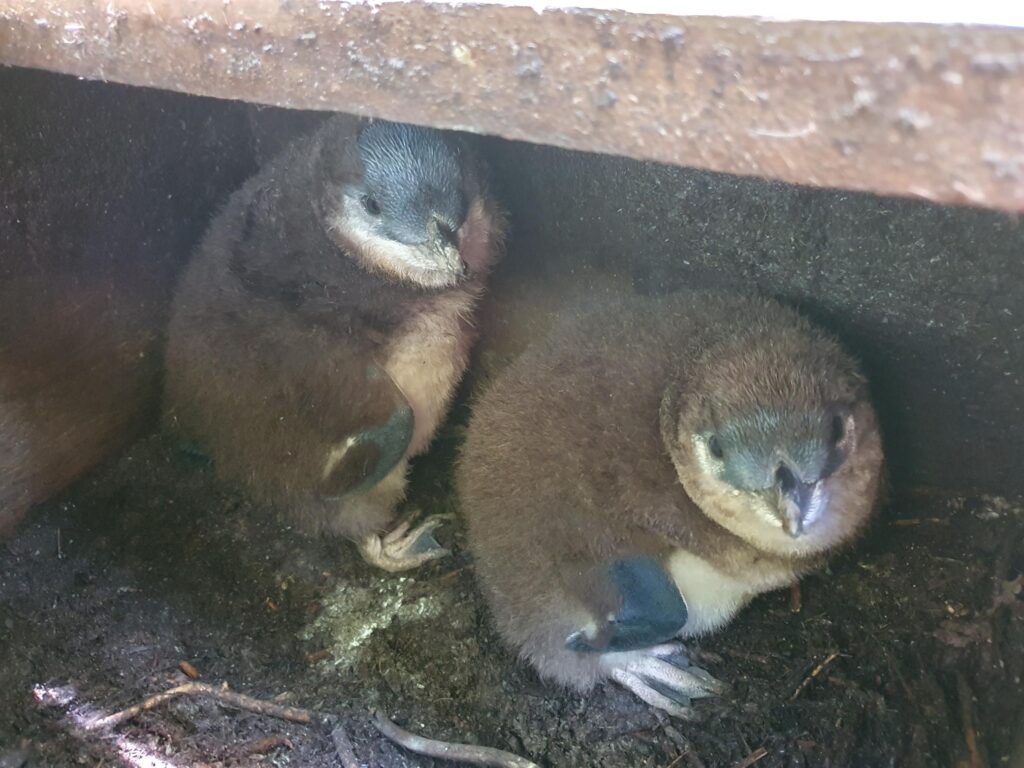
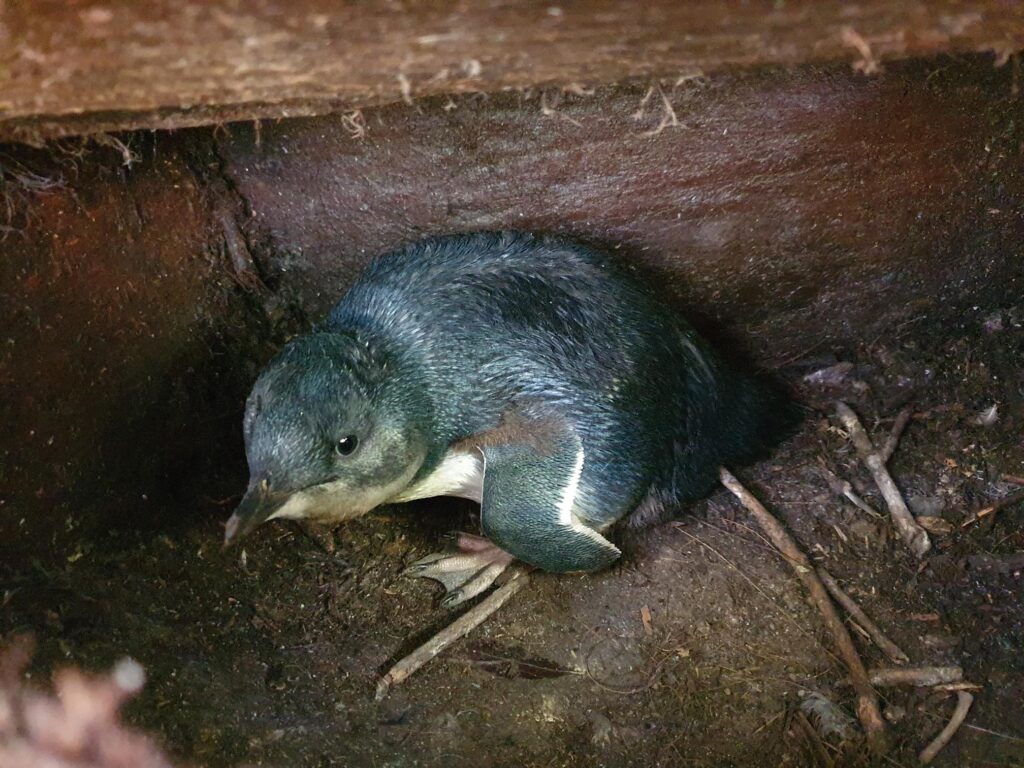
| Year | Nests monitored | Breeding attempts | Failures | Fledged chicks | First eggs seen | Breeding success % (chicks fledged/eggs laid) |
| 2021 | 44 | 31 | 1 | 57 | 11-Aug | 89.10% |
| 2022 | 45 | 19 | 7 | 19 | 22-Aug | 47.50% |
| 2023 | 28 | 23 | 3 | 37 | 8-Aug | 80.40% |
 Other Buller colonies
Joyce Bay, Whitehorse Bay, Punakaiki River, Bullock Creek are all monitored twice per season and they showed similar trends to previous years, with less failed attempts than last year.
We also maintain a 23 trap predator control line at Cape Foulwind to protect Wall Island and the sooty shearwaters there. There are penguins nesting there also and this year we had an interesting sharing of burrows with penguins nesting in sooty burrows and then sooties taking back their nests later on in the season. We look forward to setting some camera traps next year to find out what is going on there.
All in all, an average season for the Buller kororā, better than last year, but not as good as previous years.
Other Buller colonies
Joyce Bay, Whitehorse Bay, Punakaiki River, Bullock Creek are all monitored twice per season and they showed similar trends to previous years, with less failed attempts than last year.
We also maintain a 23 trap predator control line at Cape Foulwind to protect Wall Island and the sooty shearwaters there. There are penguins nesting there also and this year we had an interesting sharing of burrows with penguins nesting in sooty burrows and then sooties taking back their nests later on in the season. We look forward to setting some camera traps next year to find out what is going on there.
All in all, an average season for the Buller kororā, better than last year, but not as good as previous years.
Jackson Head and Knight’s Point Tawaki also have a good season despite El Niño conditions
March 3, 2024
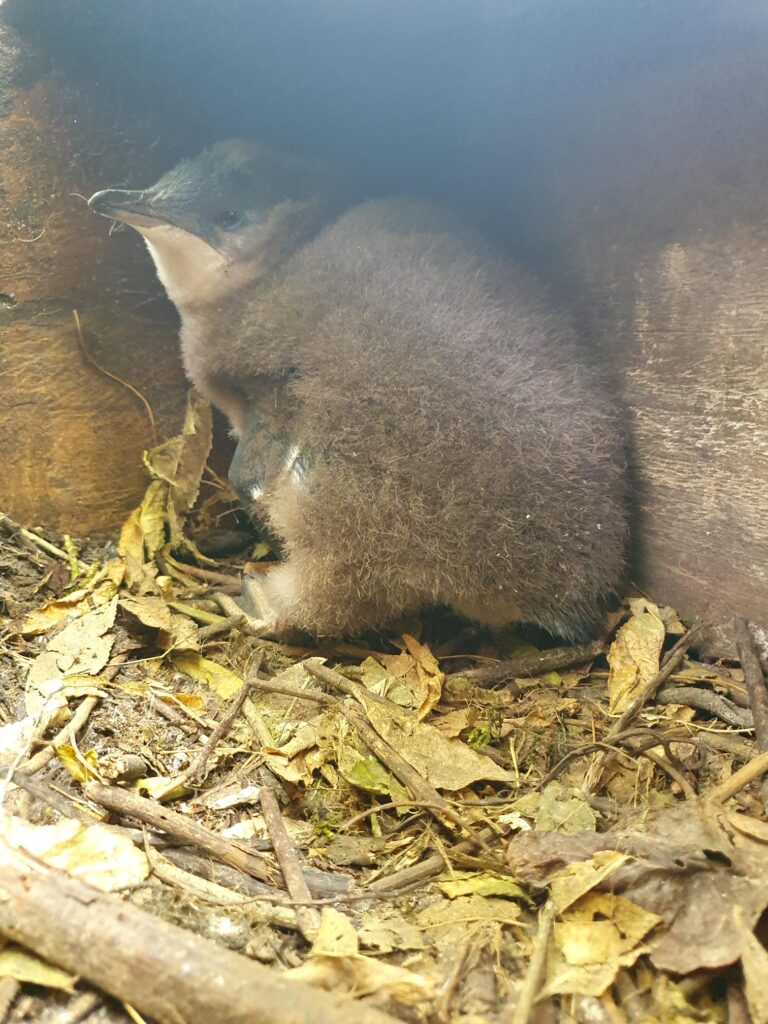
Rangers Sarah Kivi and Ranger Lucy Waller report back from Jackson Head and Knight's Point tawaki Colonies, also having a good season despite El Niño conditions.
Jackson Head and Knight’s Point Tawaki also have a good season despite El Niño conditions
Rangers Sarah Kivi and Ranger Lucy Waller report back from Jackson Head and Knight's Point tawaki Colonies, also having a good season despite El Niño conditions.
Rangers Sarah Kivi and Ranger Lucy Waller report back from Jackson Head and Knight's Point Tawaki Colonies, also having a good season despite developing El Niño conditions.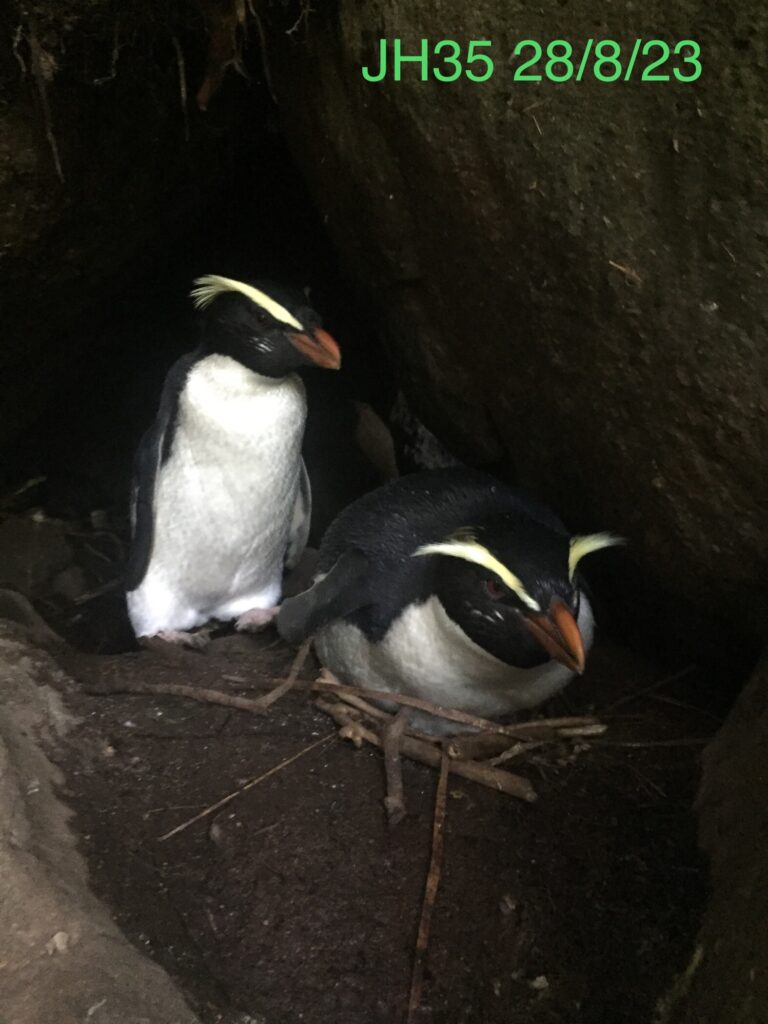
Jackson Head and Knight’s Point Tawaki Monitoring 2023
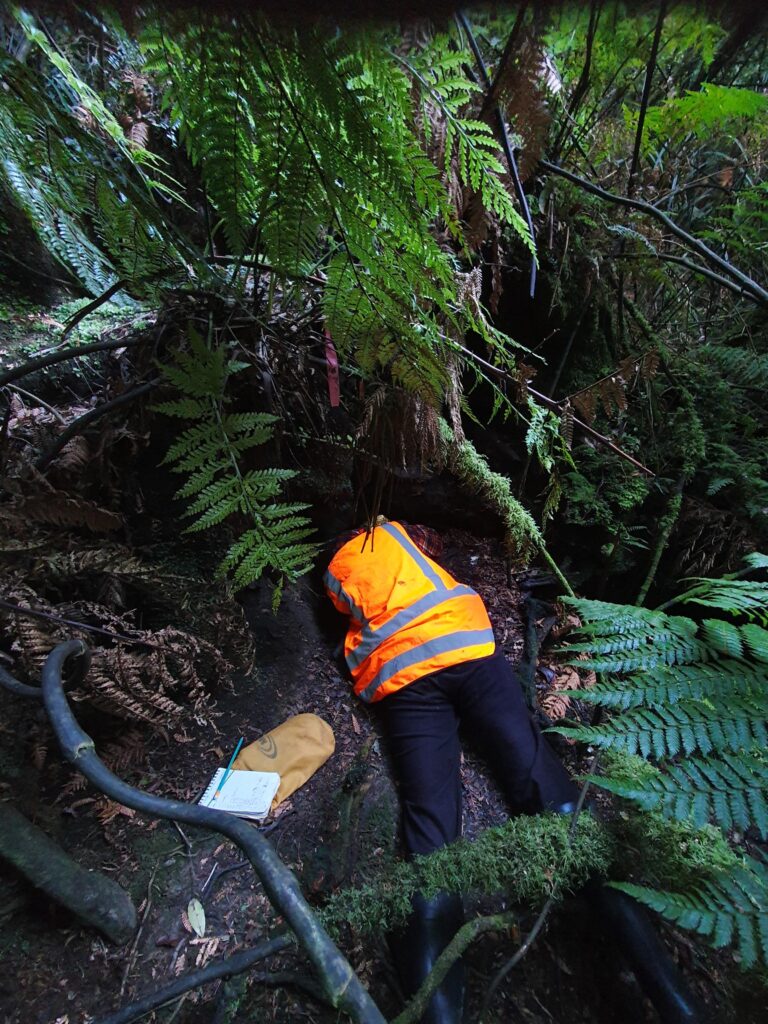
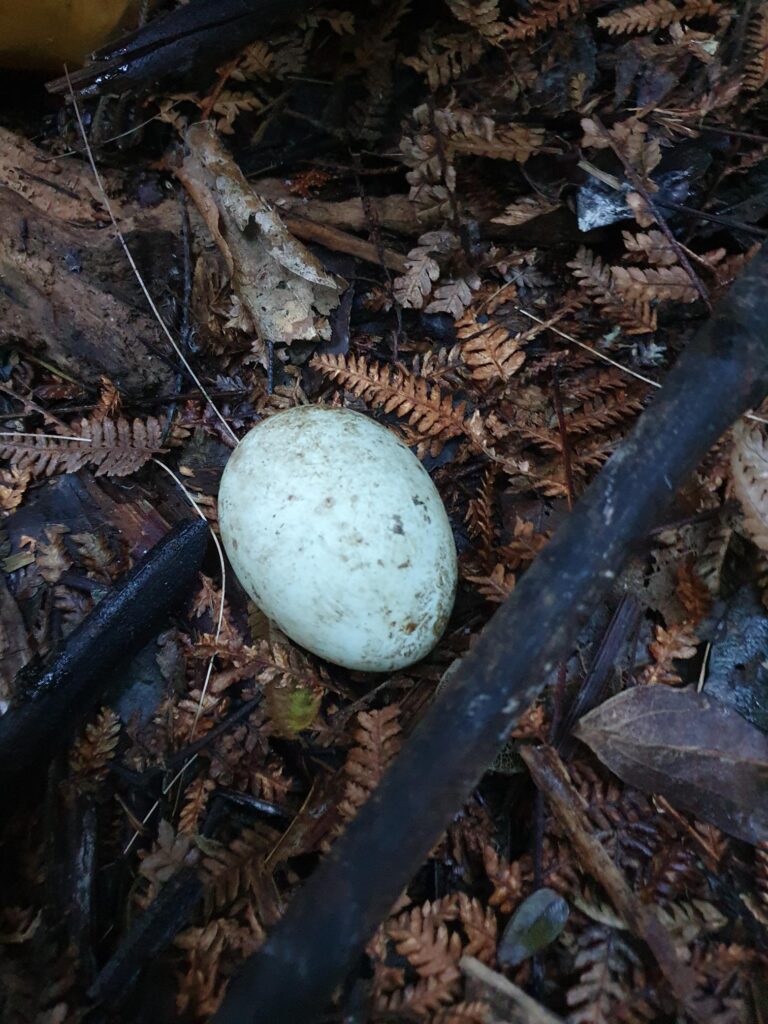
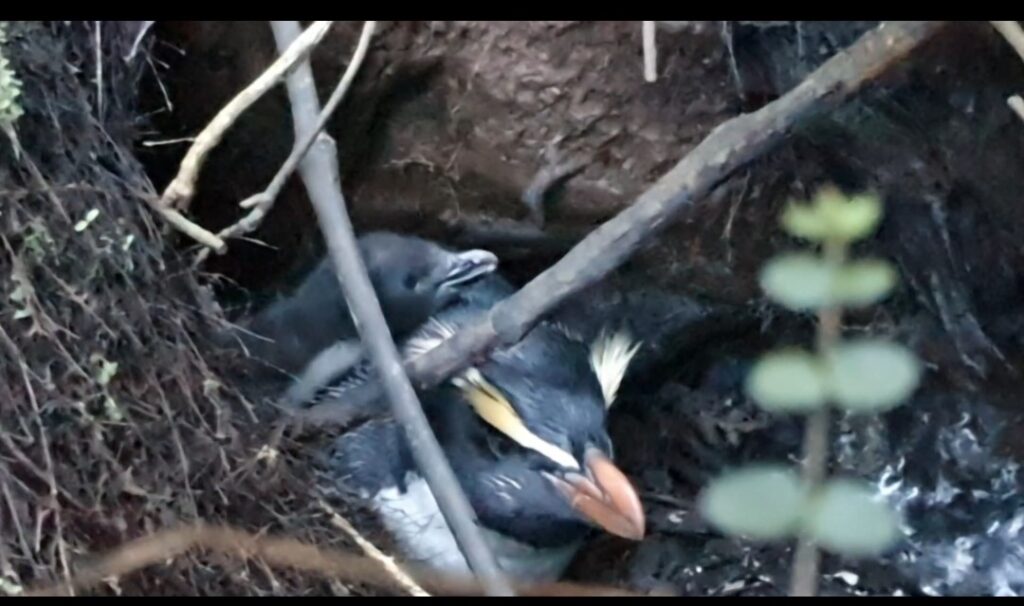
Jackson Head Aim: Tawaki nests were monitored for survival and breeding success or failure due to predation or other causes, and to assess general chick growth and apparent health as an indication of food supply, etc. Method: Jackson Head had 17 nest checks completed twice in the season, the first carried out during the egg-laying time, the second in chick guard stage, when one adult remains with the chick and the other goes to sea for food. Results/Conclusions for the season Nest checks The first check showed 16 nests occupied and 28 eggs total and the second check showed 17 nests occupied, 1 failed attempt, 18 chicks including 3 nests with 2 healthy, similar sized large chicks. A good season for Jackson Head.
 Knight’s Point
Aim: Tawaki nests were monitored for survival and breeding success or failure due to predation or other causes, and to assess general chick growth and apparent health as an indication of food supply, etc.
Method: Knight's Point had 14 nest checks completed twice in the season. The first at egg stage and second at guard stage.
Results/Conclusions for the season
Nest checks
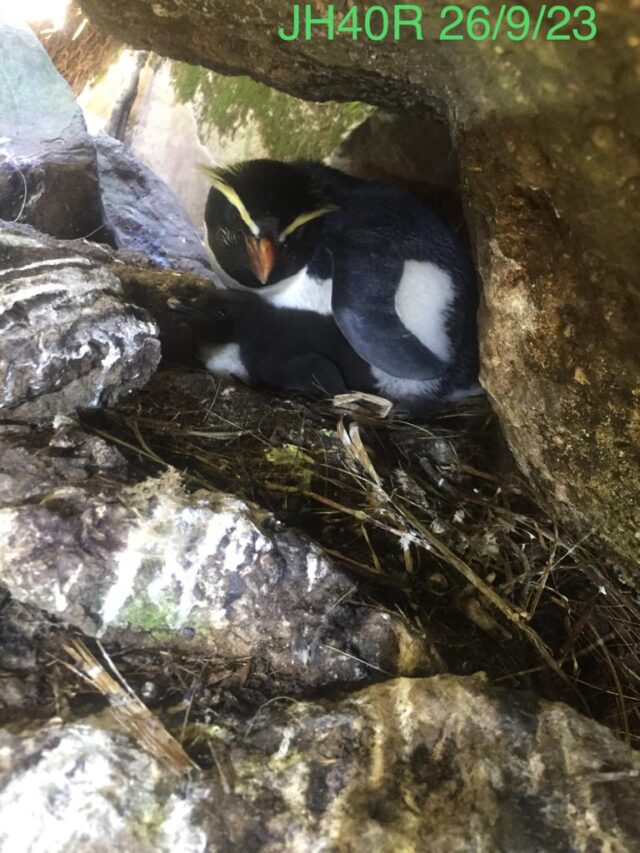
The first check showed 13 occupied nests and 20 eggs total and the second check showed 14 nests occupied, 2 failed attempts, 1 nest not breeding, 2 nests with eggs, and 13 chicks including 3 nests with 2 healthy, similar sized large chicks.
A good season for Knight's Point too.
Knight’s Point
Aim: Tawaki nests were monitored for survival and breeding success or failure due to predation or other causes, and to assess general chick growth and apparent health as an indication of food supply, etc.
Method: Knight's Point had 14 nest checks completed twice in the season. The first at egg stage and second at guard stage.
Results/Conclusions for the season
Nest checks
The first check showed 13 occupied nests and 20 eggs total and the second check showed 14 nests occupied, 2 failed attempts, 1 nest not breeding, 2 nests with eggs, and 13 chicks including 3 nests with 2 healthy, similar sized large chicks.
A good season for Knight's Point too.