Penguin protection fence extended
June 7, 2023
With penguins thriving on the side of the penguin protection fence north of Punakaiki, numbers appear to be growing and penguins are exploring beyond the ends of the fence through gaps. One of those gaps has just been filled.
Penguin protection fence extended
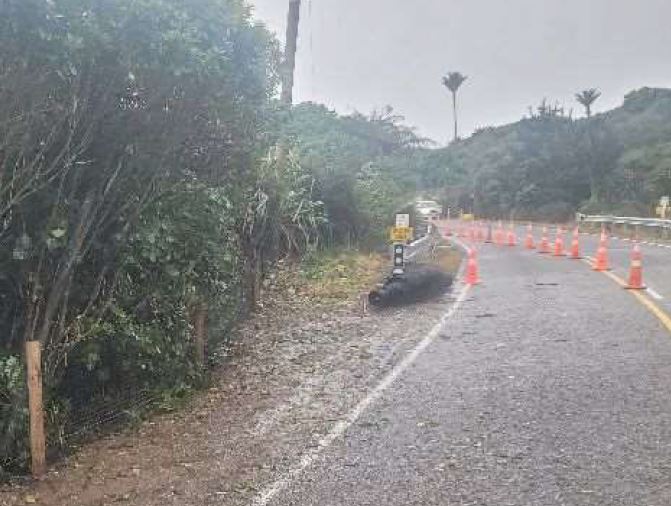
With penguins thriving on the side of the penguin protection fence north of Punakaiki, numbers appear to be growing and penguins are exploring beyond the ends of the fence through gaps. One of those gaps has just been filled.
With little penguins thriving on the sea side the West Coast Penguin Trust's penguin protection fence north of Punakaiki, penguins are starting to explore beyond the three colonies that were protected and finding their way past the ends of the fence through gaps. Sadly one penguin has been killed on the road and others have been rescued and returned to the sea side of the fence. We're therefore thrilled to report that one of those gaps in the fence has just been filled, protecting penguins at the northern end of the main fence line just in time for the new breeding season. Our thanks go to WestReef for getting the work done the minute they were able to including the traffic management and other safety measures, and to Waka Kotahi for both permission and support through an annual grant to help maintain the fence. We would also like to thank Geofabrics New Zealand for the very generous discount on the special fence mesh. Geofabrics (then Maccaferri) helped us out in the same way when we first installed the penguin protection fence back in 2014. The mesh has stood up to the coastal assaults of sun and salt brilliantly, just as expected.
Qualities of penguins embraced and extended to penguin conservation
April 13, 2023
Qualities of penguins embraced by pension company and extended through a donation to help penguin conservation
Qualities of penguins embraced and extended to penguin conservation

Qualities of penguins embraced by pension company and extended through a donation to help penguin conservation
Pension Insurance Corporation or PIC for short loves penguins and last year gave the West Coast Penguin Trust a very generous donation. This UK company has had emperor penguins at the centre of their brand from the start. Their website notes that the penguins are memorable and intrinsically appealing and of course the West Coast Penguin Trust knows that is true for all penguins. PIC has translated the qualities of emperor penguins into their own qualities and the PIC team strive to emulate them every day, loyalty, adaptability and resilience. Most penguins form lifelong partnerships - known as partner fidelity. Pairs work together to protect and nurture their young and some, including the emperor penguin, cooperate with others for the wellbeing of the group. This is translated to time invested in building long-term relationships, and being dependable and dedicated.
Penguins live in a variety of habitats and zones from equatorial Galapagos Islands to southern Australian and New Zealand coasts, South American and south African coasts to sub Antarctic islands and the Antarctic, in other words, they have evolved to live in many different climates and live successfully in water and on land. PIC too pride themselves on their adaptability, agility and providing innovative solutions.
The emperor penguin, the largest of the 18 species of penguins, are tougher than most species, withstanding long Antarctic winters and months without food. Again, PIC aligns itself with this remarkable bird in its strength in harsh economic conditions and volatile markets. The little or blue penguin, the main penguin on the West Coast, is the smallest of the penguin species, but resilient in its own small way.
PIC's charity partners are very relevant to their clients, focussing on older age and mental illness. But their charity committee also considers providing support to other charitable trusts and, late in 2022, the committee approved a generous donation to the West Coast Penguin Trust for penguin conservation. The approach to PIC was prompted by a personal connection in England, which just goes to show that you never know where any of us might bump into a new donor or sponsor, and we always need to be ready to invite and enable donors to help penguins!
The Trust is reliant on donations and grants and this year will be investing in improvements to the penguin protection fence north of Punakaiki and developing our foraging study to better understand the life of and threats to little penguins / kororā at sea off the Charleston coast. That is in addition to all the business as usual including monitoring breeding success and managing threats to both little penguins and Fiordland crested penguins / tawaki, and our education and awareness programmes. So the support from PIC is immensely valuable in maintaining and growing our penguin conservation efforts.
Not only does PIC recognise the wonderful qualities of penguins but they are also very strongly ethical and environmental in what they do, which the Trust values very highly.
PIC are investing in solar/renewable energy and decarbonising the economy, supporting social housing and universities, and has future generations in mind as they do business. PIC employees can also take two days paid leave each year to work on volunteer projects of their choosing.
The West Coast Penguin Trust is hugely grateful for the wonderful support from PIC and congratulates the company on their various community and environmental initiatives.
Most penguins form lifelong partnerships - known as partner fidelity. Pairs work together to protect and nurture their young and some, including the emperor penguin, cooperate with others for the wellbeing of the group. This is translated to time invested in building long-term relationships, and being dependable and dedicated.
Penguins live in a variety of habitats and zones from equatorial Galapagos Islands to southern Australian and New Zealand coasts, South American and south African coasts to sub Antarctic islands and the Antarctic, in other words, they have evolved to live in many different climates and live successfully in water and on land. PIC too pride themselves on their adaptability, agility and providing innovative solutions.
The emperor penguin, the largest of the 18 species of penguins, are tougher than most species, withstanding long Antarctic winters and months without food. Again, PIC aligns itself with this remarkable bird in its strength in harsh economic conditions and volatile markets. The little or blue penguin, the main penguin on the West Coast, is the smallest of the penguin species, but resilient in its own small way.
PIC's charity partners are very relevant to their clients, focussing on older age and mental illness. But their charity committee also considers providing support to other charitable trusts and, late in 2022, the committee approved a generous donation to the West Coast Penguin Trust for penguin conservation. The approach to PIC was prompted by a personal connection in England, which just goes to show that you never know where any of us might bump into a new donor or sponsor, and we always need to be ready to invite and enable donors to help penguins!
The Trust is reliant on donations and grants and this year will be investing in improvements to the penguin protection fence north of Punakaiki and developing our foraging study to better understand the life of and threats to little penguins / kororā at sea off the Charleston coast. That is in addition to all the business as usual including monitoring breeding success and managing threats to both little penguins and Fiordland crested penguins / tawaki, and our education and awareness programmes. So the support from PIC is immensely valuable in maintaining and growing our penguin conservation efforts.
Not only does PIC recognise the wonderful qualities of penguins but they are also very strongly ethical and environmental in what they do, which the Trust values very highly.
PIC are investing in solar/renewable energy and decarbonising the economy, supporting social housing and universities, and has future generations in mind as they do business. PIC employees can also take two days paid leave each year to work on volunteer projects of their choosing.
The West Coast Penguin Trust is hugely grateful for the wonderful support from PIC and congratulates the company on their various community and environmental initiatives.

We say a farewell and a huge thank you to Linden as Trust Ranger
April 12, 2023
We say a farewell and a huge thank you to Linden as trust ranger.
We say a farewell and a huge thank you to Linden as Trust Ranger

We say a farewell and a huge thank you to Linden as trust ranger.
Linden Brown joined the trust in the middle of the 2021 breeding season and, with some guidance from our previous ranger, Matt Charteris, we were delighted that he hit the ground running. Field work is his passion and he brought considerable field work experience from his monitoring roles with the Department of Conservation. Completing the monitoring and reporting for the 2021 season enabled Linden to approach the 2022 season with clarity and preparedness. It was a big disappointment to him and to us all when the pin had to be pulled on the foraging study due to the unusual and clearly stressful conditions the penguins were in, apparently due to the marine heat wave. Although his heart was in the field work, Linden provided excellent insights and advice for the behind the scenes work of the trust, including funding applications and reports and advocacy. While Education Ranger, Lucy Waller, was stuck overseas due to COVID travel restrictions, Linden also stepped up to help lead education and awareness opportunities in the classroom at the beach, proving that he could be the all rounder needed as a ranger. Sadly though, a couple of things drew him away, firstly wanting to do more field work and less time at a desk and secondly, building a new home. He is the Trust's third ranger to have resigned to put time into building a home! The Trust is grateful to Linden for his contribution and flexibility and wishes him well in future endeavours.

Ōkārito kororā colony gets a visit
February 2, 2023
Healthy, safe penguin colony south of Ōkarito is thriving without disturbance.
Ōkārito kororā colony gets a visit

Healthy, safe penguin colony south of Ōkarito is thriving without disturbance.
The West Coast Penguin Trust has maintained an active interest in the Ōkārito kororā colony since it was first surveyed in 2008 and has resurveyed the colony every few years since then.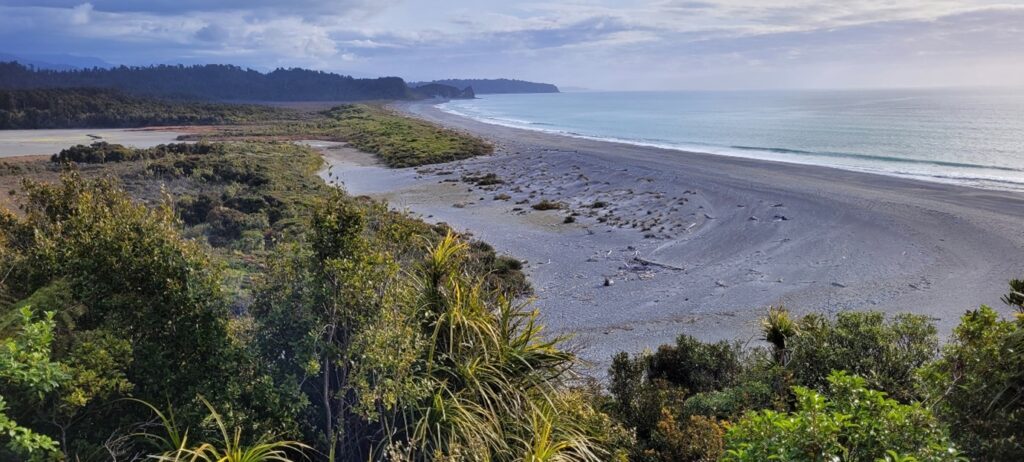

| 2008 | 2013 | 2015 | 2018 | 2022 | |
| Ōkārito North | 18 | 21 | 13 | 10 | 17 |
| Ōkārito South | 33 | 34 | 26 | 14 | 22 |
| Total | 51 | 55 | 39 | 24 | 39 |

A poor breeding season for blue penguin/kororā
February 2, 2023
2022 proved to be a challenging season for kororā on the West Coast.
A poor breeding season for blue penguin/kororā

2022 proved to be a challenging season for kororā on the West Coast.
The 2022 breeding season proved to be a challenging one for kororā on the West Coast. Our monitored sites at Charleston had a late start to the breeding season, with the first eggs laid in late August, two to three weeks later than normal. From then on kororā bred in a slow trickle, with eggs still being laid in late October. Sadly, over half of these eggs did not reach hatching after being abandoned by the adults. Lack of easily available food is the likely cause of this poor breeding season, with the adults having to take long foraging trips at sea whilst the other parent stayed on the eggs. If the changeover time is too long then the adult on the eggs will have to abandon the eggs in order to feed themselves. This meant we had a low rate of breeding success, with only 35% of eggs successfully fledging in one colony and 45% in the other. This is comparable to some previous poor seasons such as 2016 and 2017 (37% & 43%), but significantly lower than the last two seasons (80-90%). Kororā lay two eggs and two chicks will fledge in good years - two chicks fledged from two eggs would be 100% breeding success. We also record chicks per nest, and this year, over the 27 monitored breeding burrows, the average was less than one chick fledged per nest.| Site | Breeding burrows | Breeding attempts | Eggs laid | Chicks hatched | Chicks Fledged | Chicks per breeding attempt | Breeding Success | Failed attempts |
| Rahui | 20 | 21 | 42 | 23 | 19 | 0.90 | 45 % | 6 |
| Nile | 27 | 24 | 48 | 22 | 17 | 0.71 | 35 % | 13 |
| Site | Number of breeding burrows |
| Joyce Bay | 8 |
| Whitehorse | 9 |
| Bullock Creek | 4 |
| Punakaiki River | 1 |

A great season for tawaki in South Westland
February 2, 2023
Tawaki wrapped up their breeding season for 2022 in late November, and it proved to be a good year.
A great season for tawaki in South Westland

Tawaki wrapped up their breeding season for 2022 in late November, and it proved to be a good year.
Tawaki wrapped up their breeding season for 2022 in late November, and it proved to be a good year. The Trust aims to monitor nests for breeding success and to determine whether there is any predation by stoats. As was the case with kororā in the Buller region, tawaki breeding started 2-3 weeks later than normal this season. However, it seems that food was abundant for tawaki this year, with chicks rapidly gaining weight and adults observed going on short foraging trips, presumably returning with full bellies. Although the numbers of breeding pairs were lower this year compared with previous years, both the Jackson Head and Knights Point colonies recorded a high rate of breeding success, with only one monitored nest at Knights Point failing at an early stage. As with other crested penguins, tawaki lay two eggs and the norm will be to raise one chick, with two chicks surviving and fledging only in exceptional circumstances with readily available and abundant food sources close by. Success is therefore measured against a standard of one chick fledged per nest or 100%. We'll add an update from Gorge River soon.| Site | Nests monitored | Chicks seen at nest | Breeding success |
| Knight’s Point | 11 | 10 | 91% |
| Jackson Head | 14 | 14 | 100% |

20th January brings Penguin Awareness Day!
January 17, 2023
Penguins are aquatic birds native to the Southern Hemisphere. There are about 18 known species of penguins, the largest of which are the emperor penguins, the lead stars of the documentary, March of the Penguins. The smallest are our local birds right here on the West Coast.
20th January brings Penguin Awareness Day!

Penguins are aquatic birds native to the Southern Hemisphere. There are about 18 known species of penguins, the largest of which are the emperor penguins, the lead stars of the documentary, March of the Penguins. The smallest are our local birds right here on the West Coast.
Penguins are aquatic birds native to the Southern Hemisphere. There are about 18 known species of penguins, the largest of which are the emperor penguins, the lead stars of the documentary, March of the Penguins. The smallest are our local birds right here on the West Coast. January 20th each year is Penguin Awareness Day, and considering we share our beaches and forests with two different species of penguin, all up the West Coast, this day is very relevant to us Coasters. Did you know that we have the World's smallest penguin living on our beaches and in our forests on the West Coast? The little blue penguin, or Kororā, are found all around New Zealand coastlines and we have a good number of colonies, here on the West Coast. We cannot be certain of exact numbers, however, our mission, with the help of Mena the Penguin Dog, our Great Annual Blue Penguin Count each October, observations from the public and our regular monitoring, is to keep an eye on the numbers and their whereabouts, put things in place, such as nest boxes, signs, fencing and to raise awareness in the local communities, to help protect their future. The little penguin/blue penguin/kororā stand at approximately 30 cm high and weigh around 1 kg. Despite their size, they are a feisty bunch and do very well at braving the rough West Coast seas, extreme weather and natural predators, to protect their young each year. The threats that they struggle with here on the Coast are the unnatural threats - humans! (cars, dogs, cats, rats, stoats, roads, development). The next time you drive the West Coast road, or into Hokitika, have a look out for our penguin fences. These fences have stopped many penguin deaths and we hope to keep building more in the areas that are needed. We also have hundreds of nest boxes up and down the Coast, in areas where perhaps there has been erosion or less protection for the birds, to stay protected in breeding and moulting season (June - February). Blue penguins are labelled as "At risk-declining' on the conservation status, so we need to keep on doing what we can to protect the smallest penguins in the World. We also have Fiordland Crested Penguins, or Tawaki, on the south coastlines of the West Coast. These birds stand much taller than our blue penguins at 60cms and weigh 4 times as much at 4kg. Most of the tawaki population reside further south in Fiordland round to Stewart Island and can nest along rocky and forest clad shorelines. These birds do not like to be disturbed by humans, so they tend to find areas that are inhospitable for humans. However they are still affected by us in certain areas, so we are always on the mission to protect these birds as best we can. Tawaki were classified as Threatened - Nationally vulnerable until recently and Threatened - Nationally Endangered until a few years ago, but with more penguins recorded, largely through Robin Long's survey work (see 2021 Notornis journal article here), they are now also classified as At Risk - Declining. Classifications are reviewed every three years and can change depending on their changing environmental and very often, the efforts humans put into conservation on one hand or the damaging effects they are having on the other.
- the fastest penguins – the Gentoo – can swim at the speed of 22 miles or 35 kilometers an hour?
- a group of penguins in the water is called a raft but on land they're called a waddle!
- the black and white (or blue and white in the little penguin's case) “tuxedo” look donned by penguin species is called countershading - find out why here, and it's not camouflage!
- most birds have hollow, air-filled bones to help them stay light for flight? However penguins adapted with solid bones instead. This helps them swim and dive down!
- you can find them in Antarctica and Antarctic islands, the Galapagos Islands off the coast of Ecuador, South Africa, New Zealand, Australia, Peru and Chile?
- the only penguin found north of the equator is the Galapagos penguin, found in the Galapagos Islands, Ecuador. (This means a penguin has never met a polar bear! Contrary to all the cartoons and films!)
 They are amazing birds that have been around a very long time! Please help us protect them and keep them around for centuries to come, as they deserve!
Want to help?
Things you can do year round, but particularly between July and February:
They are amazing birds that have been around a very long time! Please help us protect them and keep them around for centuries to come, as they deserve!
Want to help?
Things you can do year round, but particularly between July and February:
- Keep your dogs under control at the local beaches. Do not let them run up into the sand dunes and bushes behind - this is nesting and moulting area for penguins.
- Pay attention on the coastal roads, particularly where there are penguin signs; they may be crossing at dusk and dawn.
- Look out for crossings when driving on the beach, particularly early in the morning and late at night.
- If you see a penguin, keep your distance. Do not approach it and if possible, hide and watch from afar. This way, you will not disturb the penguin, which could potentially lead it to abandon it's nest and chicks, but also you will enjoy a much longer and fulfilling viewing too.
- If you hear sounds or see tracks, do not follow them up into the bushes, as this will clear the pathway for other predators. Just enjoy the tracks and the knowledge that you have found penguins!
- If you find a sick or injured penguin, please call the DOC hotline 0800 362 468. Please note, at this time, the birds will be moulting, so they will be looking rather scruffy and stressed. They are unable to go to sea for two weeks, therefore unable to eat or drink, making them weak and vulnerable. It is very important at this time that we leave them alone to complete this natural annual process.
- If you find a dead penguin please report it on our database so we know where the dead birds are found - the bigger picture of when and where penguins have died can be invaluable in protecting them. www.westcoastpenguintrust.org.nz/contact/


Memorial event for Kerry-Jayne Wilson MNZM
January 5, 2023
Almost a year after she died and close to what would have been her 74th birthday, a memorial event has been arranged for Kerry-Jayne Wilson MNZM in Charleston on Saturday 4th March 2023.
Memorial event for Kerry-Jayne Wilson MNZM

Almost a year after she died and close to what would have been her 74th birthday, a memorial event has been arranged for Kerry-Jayne Wilson MNZM in Charleston on Saturday 4th March 2023.
Almost a year after she died and close to what would have been her 74th birthday, a memorial event will be held for Kerry-Jayne Wilson MNZM in Charleston on Saturday 4th March 2023. The venue will be the Charleston Goldfields Hall, 7348 Camp Street/Coast Road aka State Highway 6 and the party will start at 2pm. Yes, party. To celebrate Kerry-Jayne and her life. "Kerry-Jayne wanted no fuss, she said, no speeches, ... Just have a party, she said. Well, there will likely be speeches (for once without fear of Kerry-Jayne’s right of reply :o). Otherwise it will be an informal event with time for socialising over light food and fluids afterwards." Dr Euan Kennedy, a great friend of Kerry-Jayne's, added that he's planning a later event at or near Christchurch for former colleagues, academics and research associates. Euan and Bruce McKinlay, President of the Ornithological Society of New Zealand, wrote a wonderful obituary, which was published in the journal of the OSNZ last month and they have kindly allowed us to share it here. Kerry-Jayne Wilson MNZM - Notornis - Obituary_69_274-278.v3 For all those who knew, loved, respected and valued Kerry-Jayne, there are three things you could do.- Share any photos of Kerry-Jayne with the West Coast Penguin Trust (via email here or via WeTransfer to info@westcoastpenguintrust.org.nz) so that they may be shared during the afternoon, and
- You may like to make a donation to the Trust in her memory. A very generous sponsor has offered to match any such donations up to $5,000. Our huge thanks to supporters who have already donated over $1,500 in memory of Kerry-Jayne after she died: our sponsor has kindly already matched that amount.

- Please share this with people you know who knew Kerry-Jayne and may have missed this.

Grey High School students raise $432 with sustainable initiative
December 20, 2022
Education for Sustainability students at Grey High School chose fast fashion as their issue to research and address. They addressed it in a very creative way, upcycling old material destined for landfill to make new tote bags. They also wanted to raise money for a good cause and they chose the West Coast Penguin Trust.
Grey High School students raise $432 with sustainable initiative

Education for Sustainability students at Grey High School chose fast fashion as their issue to research and address. They addressed it in a very creative way, upcycling old material destined for landfill to make new tote bags. They also wanted to raise money for a good cause and they chose the West Coast Penguin Trust.


Sharing news from the Trust with France
December 16, 2022
French actors-cum-reporters, Laetitia Hipp and Emmanuel Suarez, are travelling the world looking for marine conservation stories to share via the podcasts on the French public media service. While staying right at the beach in Waihaha bach near Fox River, they found information about the West Coast Penguin Trust and got in touch.
Sharing news from the Trust with France

French actors-cum-reporters, Laetitia Hipp and Emmanuel Suarez, are travelling the world looking for marine conservation stories to share via the podcasts on the French public media service. While staying right at the beach in Waihaha bach near Fox River, they found information about the West Coast Penguin Trust and got in touch.
French actors-cum-reporters, Laetitia Hipp and Emmanuel Suarez, are travelling the world for three months looking for marine conservation stories to share via podcasts on the French public media service. While staying right at the beach in Waihaha bach near Fox River, they found information about the West Coast Penguin Trust and got in touch. Laetitia and Emmanuel interviewed Trust Manager, Inger Perkins, about the origins of the Trust, local blue penguins, penguin research and conservation as well as everything else that the Trust does including education and advocacy.